AI Protecting Nature: How Neural Networks Are Helping the Environment
Justin Kay, a researcher at MIT, is developing AI-based systems for ecosystem monitoring. Computer vision analyzes data, helping to detect changes and support biodiversity. This is an important step toward preserving nature through technology.
AI-processed from MIT News; edited by Hamidun News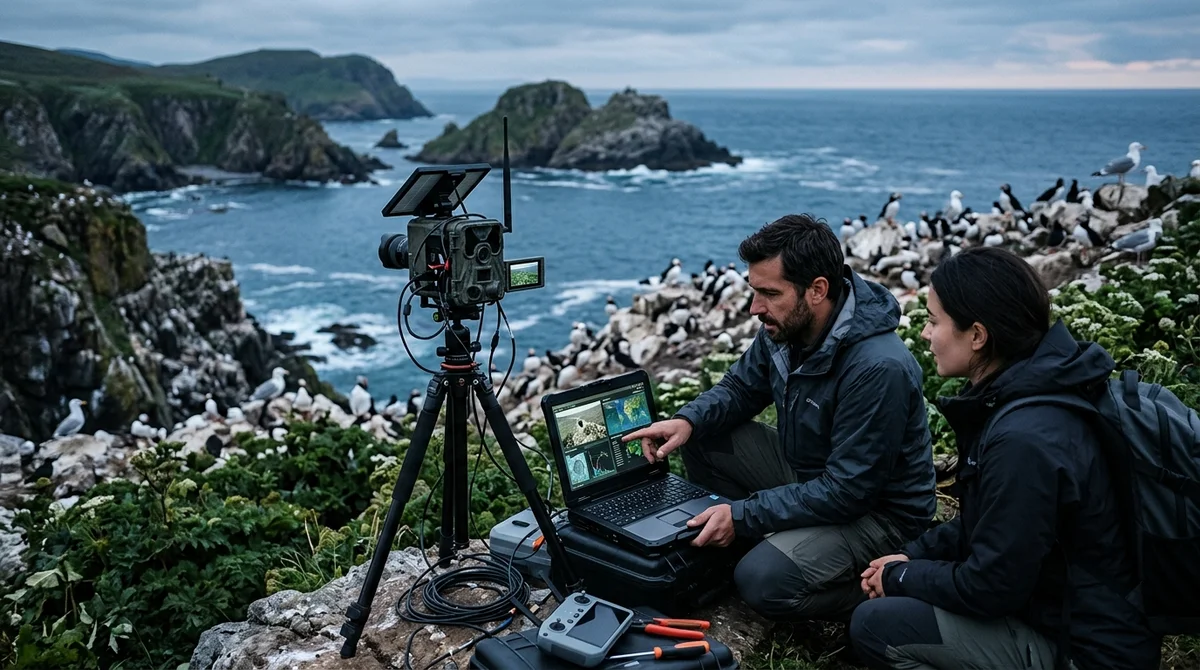
Preserving biodiversity and maintaining ecosystem health is one of the most critical challenges of our time. In the context of global climate change and anthropogenic impact, monitoring and supporting vulnerable natural zones have become critically important. Justin Kaye, a PhD student and researcher at MIT CSAIL, proposes an innovative approach to solving this problem by combining artificial intelligence and computer vision.
Traditional ecosystem monitoring methods are often labor-intensive, costly, and do not allow real-time data collection. They require the involvement of numerous specialists, regular field research, and analysis of collected samples. The use of AI and computer vision allows automating this process, significantly improving its efficiency and reducing costs.
The essence of Justin Kaye's approach lies in creating systems capable of analyzing images and videos obtained from drones, satellites, and cameras installed in natural areas. Computer vision algorithms recognize various plant and animal species, assess vegetation conditions, identify signs of pollution and other ecosystem changes. The obtained data is used to create detailed maps and models that allow scientists and conservation organizations to track the dynamics of change and make informed decisions.
The application of AI in ecosystem monitoring opens new possibilities for identifying threats and taking timely preventive measures. For example, AI-based systems can detect signs of poaching, illegal logging, or water pollution. They can also be used to monitor populations of rare and endangered species, assess the effectiveness of conservation measures, and predict the consequences of climate change.
The development and implementation of such systems requires close cooperation between scientists, engineers, ecologists, and conservation organizations. It is necessary to develop specialized algorithms adapted to specific ecosystem types and monitoring tasks. It is also important to ensure accessibility of data and tools for a wide range of users so they can use them to make informed decisions in nature conservation.
The implementation of AI in environmental monitoring has enormous potential for preserving biodiversity and maintaining the health of our planet. The developments of Justin Kaye and his colleagues demonstrate how modern technologies can be used to solve the most urgent ecological problems. This is an important step toward a sustainable future where nature and technology coexist harmoniously.
In conclusion, Justin Kaye's work emphasizes that AI is not just a tool for automating routine tasks, but a powerful resource for solving global problems, such as ecosystem preservation. In the future, we can expect even greater application of AI in the field of ecology, which will allow us to protect our planet more effectively.
Need AI working inside your business — not just in your newsfeed?
I build production AI for companies — custom CRM, internal tools, autonomous agents, workflow automation. Owned by you, shaped to your process, no per-seat tax. Built by Zhemal Khamidun, CPO of AlpinaGPT (AI platform, 6,000+ users).
The AI world, distilled — once a week
Seven stories that actually mattered, hand-picked. No noise, no reposts, no press releases.
Done! Check your inbox for a confirmation.