Musk lawsuit against OpenAI and Microsoft to proceed, though $134 billion figure deemed arbitrary
Elon Musk's lawsuit against OpenAI and Microsoft is moving forward, but with an important caveat: the judge found the $79–134 billion damages estimate too…
AI-processed from 3DNews AI; edited by Hamidun News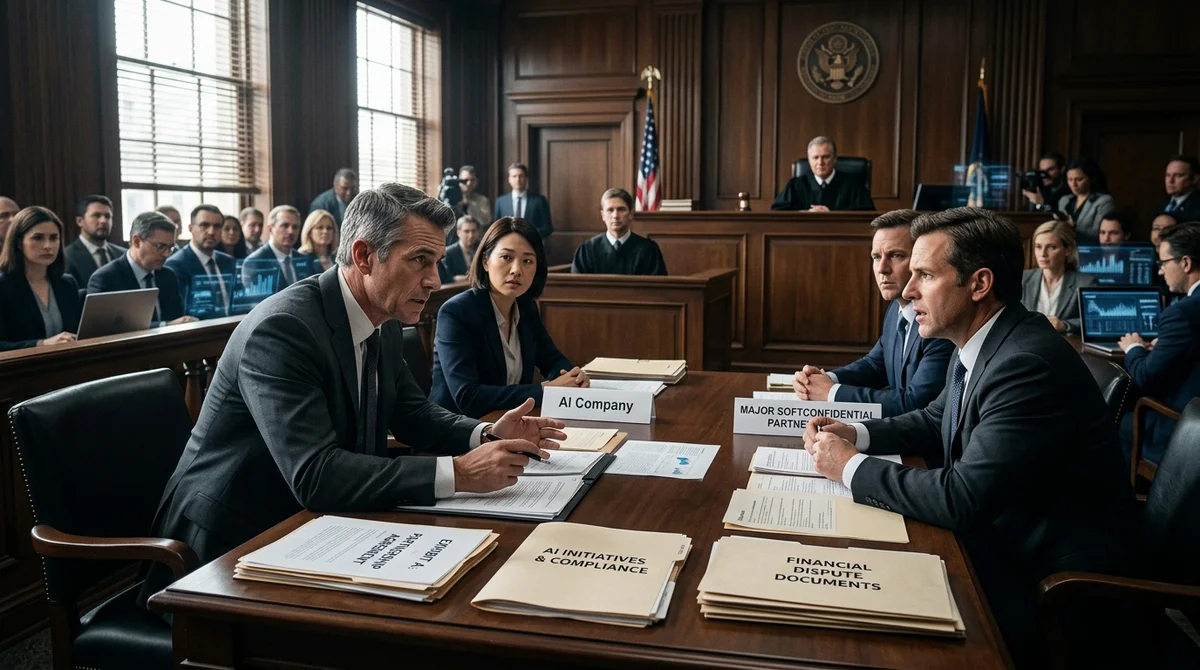
The court did not dismiss Musk's dispute against OpenAI and Microsoft, but cast doubt on the main element of the claim — the amount of alleged damages. The judge called the estimate of $79–134 billion overly arbitrary, but decided that this question should ultimately be evaluated by a jury.
What the Court Decided
In January, it became known that Musk was seeking compensation from OpenAI and Microsoft in the range of $79 to $134 billion. The basis for the lawsuit — the assertion that OpenAI departed from its original intentions to create AI for the benefit of humanity and, having drawn closer to Microsoft, changed its development trajectory. At this stage, the court did not support the damage figure itself: the judge made it clear that the calculation looked insufficiently convincing and did not rest on solid logic that could be accepted without question right now.
However, what matters is not just the criticism of the sum, but also what the judge did not do. A complete rejection of the claim did not occur: instead, the question was referred for further proceedings with jury participation. This means the dispute is not reduced to one loud figure in a headline.
The court effectively separated two things: how convincing the stated amount of damages looks now and whether the conflict itself deserves full consideration. As for the second part, the door for Musk remains open for now.
What Musk's Claim Is About
The logic of the lawsuit revolves around OpenAI's original mission. According to Musk, the startup was created as a project with a more public orientation, and later shifted toward a different model after the alliance with Microsoft. The plaintiff is trying to turn this pivot into a legally significant violation, which, as he believes, should be the responsibility of both OpenAI itself and its key corporate partner. For a court of this level, what matters is not general statements about the "right path," but a specific link between companies' decisions and measurable harm.
- the subject of dispute — departure from the original idea of developing AI for the benefit of humanity
- a separate line of claims is connected to the OpenAI and Microsoft union
- the stated compensation covers a very wide range — from $79 to $134 billion
- the court did not fully dismiss the question, but made it clear that one large sum in the claim is insufficient
Therefore, the key problem becomes not the emotional force of the accusation itself, but provability. In the public arena, the thesis about "betrayal of the mission" sounds loud, but in court it needs to be broken down into understandable elements: what exactly changed, who exactly benefited, who exactly was harmed, and how to count this harm in money. The weaker this chain, the easier it is for the defendants to show that the issue is more about a dispute over principles and influence than a legally verifiable loss.
Why the Amount Matters
In cases of this scale, the amount of compensation is not just a detail, but the center of gravity of the entire structure. If the judge directly says that the damage estimate looks "pulled out of thin air," this undermines confidence in the calculation methodology and the overall impression of the plaintiff's position. For OpenAI and Microsoft, such wording is a strong argument that the opponent inflated the requirements. For Musk, it is a signal that without a clearer explanation of the origin of the sum, convincing the jury will be noticeably more difficult.
"Pulled out of thin air" — that's exactly how the judge characterized the damage estimate.
From here on, everything will come down to whether the plaintiff's side can turn the general conflict over OpenAI's mission into a coherent financial story. The jury will not be discussing abstract philosophy about the development of AI, but understanding whether there is a causal link between companies' actions and the stated losses. In other words, the loud range of $79–134 billion in itself no longer works as evidence. Now it is, rather, becoming a weak point that will need to be re-justified.
What This Means
History shows that loud AI conflicts increasingly move from the field of public statements into the realm of boring, but decisive legal mathematics. For the industry, this is an important signal: discussions about mission, governance structure, and alliances with major corporations can end not only in reputation disputes, but in multi-billion-dollar lawsuits, where rhetoric does not decide, but the quality of evidence does.
Want to stop reading about AI and start using it?
AI News is a curated feed of AI/tech news. Hamidun Academy teaches you to use AI systematically in your work.