OpenAI could enter U.S. military systems against Iran — from target selection to drone defense
OpenAI's deal with the Pentagon is becoming more concrete. The company's technologies could be used in the conflict around Iran for target prioritization…
AI-processed from MIT Technology Review; edited by Hamidun News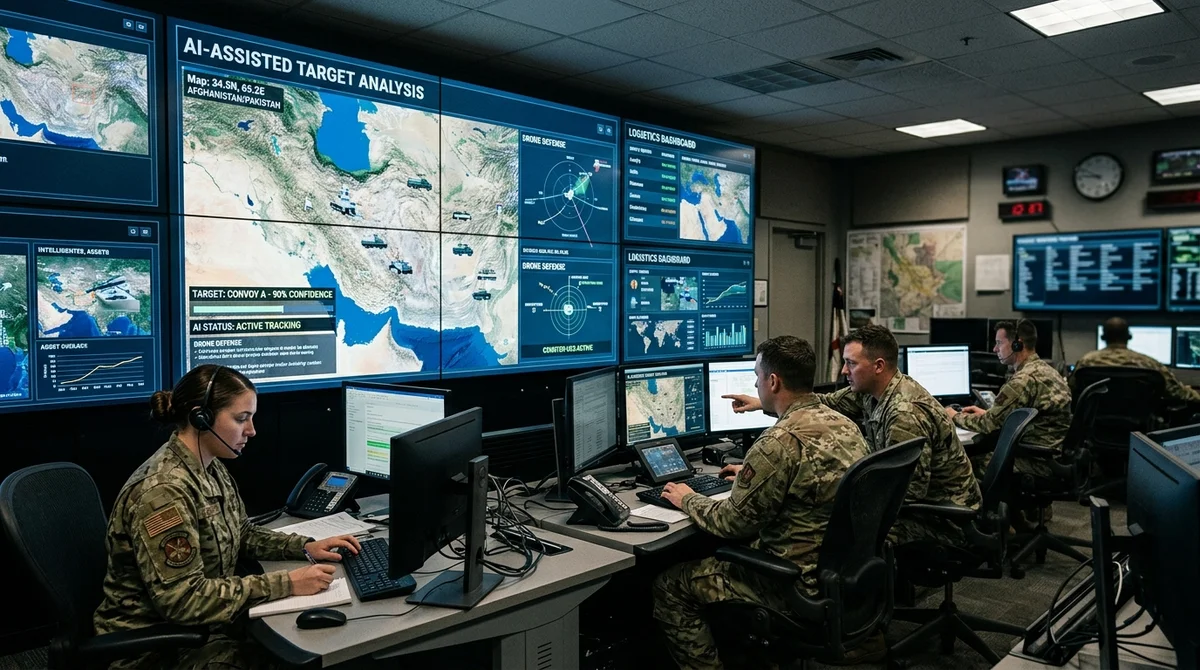
After the OpenAI deal with the Pentagon, the question is no longer whether the company will permit military applications of its models. The question is different: where exactly might these technologies appear in a conflict around Iran — from target selection to anti-drone defense and everyday US Department of Defense infrastructure.
Targets and Strikes
One of the most sensitive scenarios is linked to analyzing targets for strikes. The logic looks like this: military analysts upload lists of potential objects into the model, and the system helps set priorities by matching intelligence data, logistics, images, videos, and text reports. Formally, the final decision should be made by a human, but the very value of such a tool is built on accelerating the cycle of assessment and selection.
The higher the confidence in the model's suggestions, the stronger AI's influence on the actual sequence of military operations. This is a notable shift compared to previous military AI systems. Previously, algorithms like Maven mostly highlighted objects in drone videos and helped sort large data arrays.
Now we're talking about a generative model you can converse with in natural language and get not just analysis, but recommendations: which targets are more important, where is equipment located, what factors change the urgency of a strike. The transition from a recognition tool to an advisor on combat decisions is what makes the OpenAI story particularly controversial.
"Military forces will not be able to use our technology to create autonomous weapons."
On paper, this boundary looks rigid, but in practice it's less clear-cut. If the system doesn't pull the trigger itself but only helps a human choose a target faster, the dispute about permissibility becomes instantly more complicated. In the context of a prolonged conflict, pressure to accelerate such processes is almost inevitable, and that means the boundaries of the model's application will be tested not in theory but within actual strike-decision procedures. It is here that the sharpest line of dispute around such contracts runs.
Defense Against Drones
The second probable channel is OpenAI's partnership with Anduril, announced in late 2024. It's related to real-time analysis of attacking drones and assistance in their interception. OpenAI explains such a scenario by saying the company's policy prohibits systems for harming people but permits use of technologies against unmanned aircraft as technical targets.
It is precisely this formulation that opens the way to very close contact between a civilian generative model and military infrastructure. Anduril is already building large anti-drone defense systems and developing the Lattice interface, through which military forces control sensors, platforms, and elements of autonomous systems. If OpenAI's models prove useful within such a system, they could become another layer atop existing military data and commands.
The stakes here are not abstract: after Iran's drone attack on March 1, 2026, which resulted in American military deaths in Kuwait, the demand for accelerating and automating such decisions has only grown.
From Headquarters to Field
The third scenario looks less dramatic but may turn out to be the broadest: OpenAI implementation in the Pentagon's everyday work through the GenAI.mil platform. Initially, it was created for safer access to commercial models in tasks like contracts, procurement, logistics, and document preparation. But such tools gradually make AI a familiar part of the entire military machine — first in administrative processes, then closer to operational tasks, where trust in the system's suggestions is already higher. If we look at the bigger picture, the situation looks like this:
- OpenAI can help rank targets and analyze intelligence data.
- Partnership with Anduril provides access to anti-drone defense systems.
- GenAI.mil embeds models in the Pentagon's everyday processes.
- Military forces become accustomed to interfaces where AI becomes part of the working solution.
- The boundary between "office" and "combat" applications gradually blurs.
This is an important shift not only for a single conflict. Not long ago, the main question sounded like this: should large AI companies work with the military at all. Now the question is different: at what point in the decision-making chain will the model end up tomorrow — in document flow, in an anti-drone system, or near target analysis for strikes. And the deeper such models enter the infrastructure, the harder it becomes later to separate support software from combat circuits and the management logic of war.
What This Means
The OpenAI story shows that the boundary between corporate AI and US military infrastructure is rapidly thinning. For the market, this signals that the dispute over military applications of models no longer comes down to corporate ethics declarations: it moves into concrete contracts, product integrations, and real scenarios where the cost of error is far higher than in ordinary corporate software. Which means we'll have to discuss not the companies' intentions, but the actual role of their models in combat systems.
Want to stop reading about AI and start using it?
AI News is a curated feed of AI/tech news. Hamidun Academy teaches you to use AI systematically in your work.