Gecko Robotics Wins $71M U.S. Navy Contract for Ship Digital Twins
Gecko Robotics has signed a $71 million contract with the U.S. Navy. The company will deploy robots capable of traversing vertical surfaces to Pacific Fleet…
AI-processed from TNW; edited by Hamidun News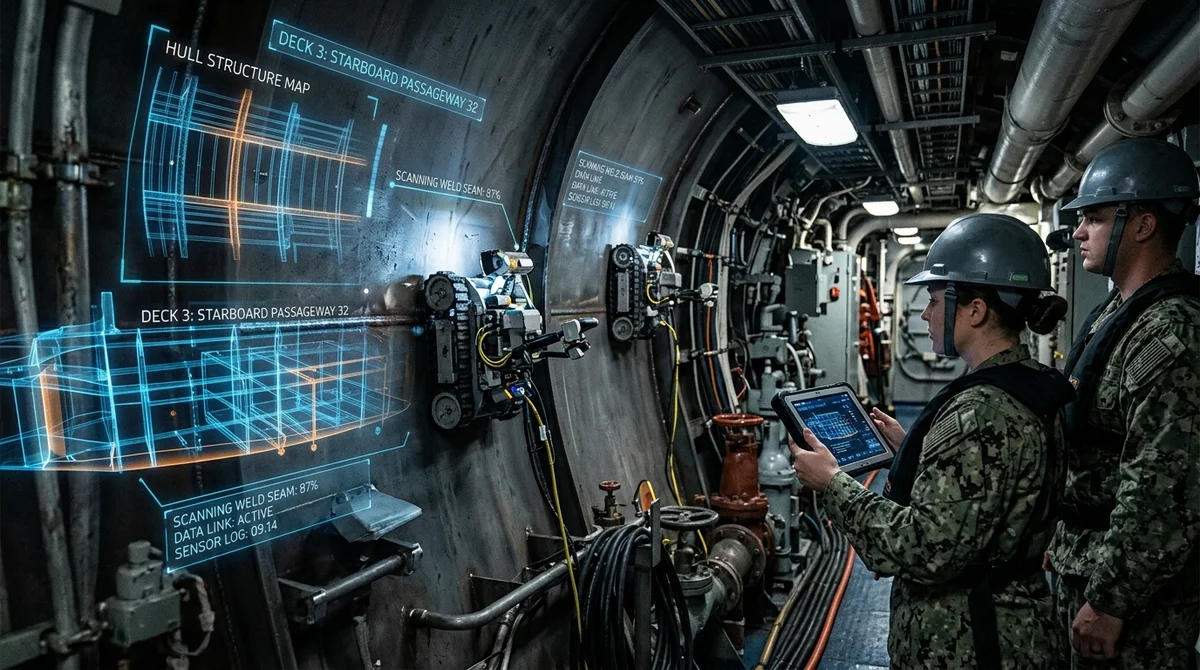
Gecko Robotics has won a $71 million US Navy contract to create digital twins of ships in the Pacific Fleet. The project will start with 18 vessels and aims to help the American fleet tackle a prolonged maintenance crisis that has left a significant portion of ships regularly out of service.
Contract and Scope
Pittsburgh-based Gecko Robotics has won a major order from the US Navy. The project is built on robots capable of moving along vertical surfaces and an AI platform that will build digital twins of Pacific Fleet ships based on the collected data. The first phase involves 18 ships.
For the startup, this is a notable defense contract, and for the fleet, an attempt to transition ship maintenance from a slow, reactive mode to a more precise model where equipment condition is visible based on current data, not after the fact. The significance of the deal goes beyond purchasing another inspection tool. The US Navy is effectively investing in a decision-making system: if each ship has an up-to-date digital copy, repair services and command can quickly understand what requires immediate attention, what can be planned in advance, and where resources don't yet need to be spent.
Against the backdrop of high fleet stress, such an approach looks not like an experiment for fashionable technology, but as an attempt to get more ships back into service without endless expansion of dock queues.
Why This Is Urgent
The urgency is explained by figures from the material itself. The maintenance crisis currently facing the US Navy costs the system up to $20 billion per year. At the same time, approximately 40% of the American fleet is unavailable for operations at any given moment.
Ships sit in queues in dry docks, and maintenance cycles are stretching longer than the fleet can afford. For a military structure, this means not only rising costs but direct reduction in operational readiness against growing requirements for presence in different regions. Digital twins in such a situation are not needed for pretty dashboards.
Their value lies in relying on the actual condition of a specific ship rather than only on the calendar or standard regulations. If the model is regularly updated after inspections, the fleet has a chance to notice the accumulation of problems earlier, plan maintenance windows more precisely, and reduce cases where a serious defect is discovered too late. Even a slight acceleration here produces significant effect, because each extra day of downtime for such an asset is very costly.
How the System Will Help
The headline emphasizes the most visible element of the project—robots capable of climbing walls and working inside combat ships. This is important not only as an impressive engineering detail. Such machines help collect data in hard-to-reach places and transmit it to an AI platform, which then assembles the digital twin of the vessel. It's unclear from the brief description which specific subsystems will be prioritized at the start, but the "robot + model + analytics" combination is well-suited for regular inspections without unnecessary manual routine. If the project works as the military expects, the system could help with several practical tasks:
- record the current condition of internal surfaces and ship structures
- compare inspection results and see changes between inspections
- identify areas needing repair or deeper checks earlier
- more accurately prioritize between docking, shipyard work, and ship availability
The main question now is not whether a digital twin can be made, but how quickly it will start saving time and money at fleet scale. If the system gives command a more reliable picture of the condition of the first 18 ships, the project will have a strong argument for expansion. In the defense sector, such solutions are typically evaluated not by technology beauty, but by a very simple metric: how many units of equipment were returned to service earlier than would have been achieved under the old scheme.
What This Means
Gecko Robotics is moving out of the category of interesting industrial startups into the zone of strategic contractors. For the AI market, this is another signal: the most valuable implementations today are happening where a model is linked to physical infrastructure, expensive assets, and measurable effect—in this case in the form of reducing downtime of the military fleet.
Want to stop reading about AI and start using it?
AI News is a curated feed of AI/tech news. Hamidun Academy teaches you to use AI systematically in your work.