Pentagon Seeks Anthropic Replacement Over Military Use Restrictions on Claude
Pentagon began seeking a replacement for Anthropic after the company refused to lift restrictions on military use of Claude. The dispute centered on two…
AI-processed from Bloomberg Tech; edited by Hamidun News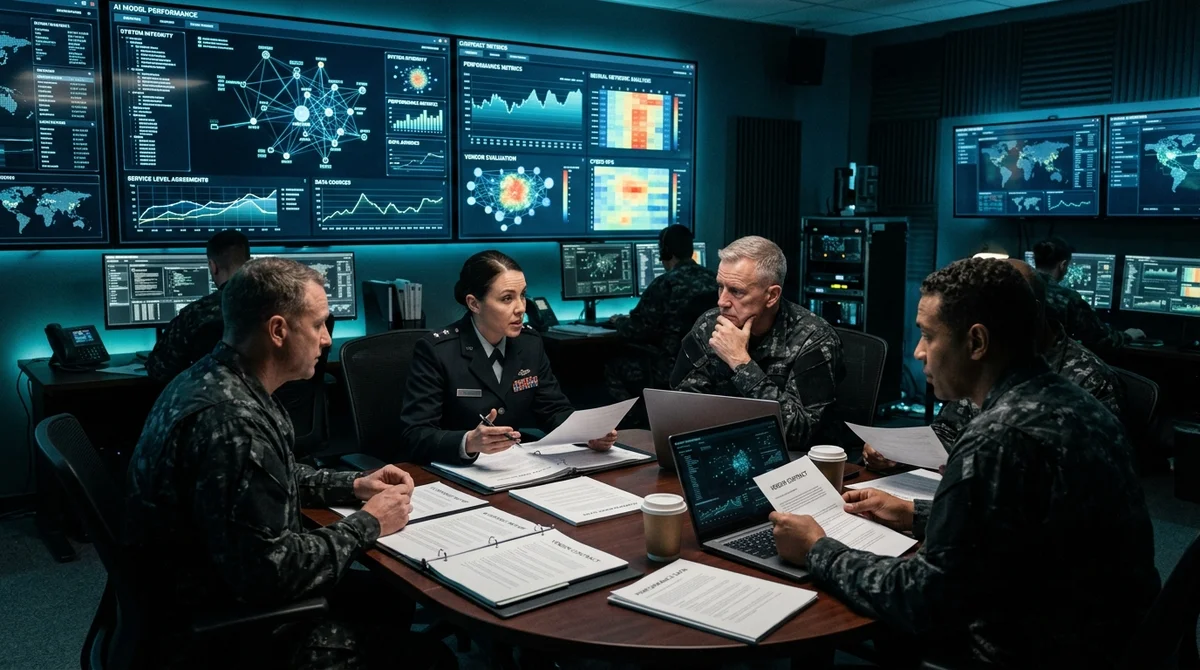
The Pentagon has begun preparing to replace Anthropic tools after a sharp conflict over how the US military can use commercial AI models. The company refused to remove some restrictions from Claude, and Donald Trump's administration responded by labeling it a "supply chain risk."
Why the rift happened
The essence of the dispute is not about the quality of the model or the price of the contract. The disagreement arose around who ultimately determines the rules for using AI in military systems. According to a senior US Department of Defense official, the Pentagon insisted on the right to use the technology "for any lawful purposes." Anthropic, by contrast, wanted to enshrine two strict restrictions in the agreement: a ban on mass surveillance of Americans and a ban on fully autonomous weapons without human involvement.
This conflict quickly went beyond ordinary contractor negotiations. After the parties failed to reach agreement, the US administration assigned Anthropic the status of supply-chain risk — a label typically used in the context of threats to government procurement and critical infrastructure. For the company, this is not just a reputational blow: such a status can complicate work with military contractors and federal structures, even if it's not a direct contract with the Pentagon.
The dispute over guardrails turned in a few days into a dispute over access to the government market.
How the Pentagon seeks replacement
The military did not wait to see how the dispute would end and began building a backup plan. According to a Pentagon spokesperson, the department is already conducting engineering work to implement several large language models into government-controlled systems. The idea is to not depend on a single supplier and get alternatives as quickly as possible for operational use.
This is not about long-term research, but about preparing working solutions that can be integrated fairly quickly into sensitive processes. Based on the department's statements, the Pentagon wants to replace not just a specific product, but the model of dependence on a single AI partner. This means a broader vendor stack, stricter control over the deployment environment, and accelerated transition to compatible solutions if relations with an individual vendor reach an impasse.
- Transfer of AI tools to government environments, not just vendor infrastructure
- Connection of multiple LLMs instead of dependence on a single model
- Quick deployment of alternatives for sensitive scenarios
- Reducing Anthropic's role in existing military workflows
Against this backdrop, it is particularly telling that the market is quickly filling the vacuum. OpenAI has already reached an agreement with the Pentagon on deploying its models in closed environments, and the military department itself is demonstrating that it is ready to expand the circle of suppliers if one of them tries to strictly impose boundaries on permissible use.
For the state, this is a question of operational resilience. For AI companies — a signal that defense contracts will increasingly require not just technologies, but a willingness to accept customer conditions.
Anthropic's position
Anthropric did not soften its tone even after sanctions from the Pentagon and made clear that it believes the authorities' actions are legally questionable. CEO Dario Amodei stated that Anthropic "has no other choice" but to contest the decision in court.
For the company, this is a matter of principle: it is trying to uphold the right of an AI supplier to refuse scenarios that it considers dangerous even within formally lawful applications. That is, the dispute is not just about a contract, but about the right of business to maintain its own red lines.
"We do not consider this decision legally justified and see no other
choice but to contest it in court."
The Pentagon's position is directly opposite. The department believes that a supplier cannot stand between the military and the lawful use of a critically important technology. So the current dispute looks like an early test of the future balance of forces: will large AI companies be able to impose their own guardrails on the state, or will the state achieve acceptance of its rules entirely.
And that is precisely why the conflict around one model suddenly turned into a precedent for the entire defense AI industry.
What this means
The Anthropic story shows that the main dispute around military AI right now is not about which model is smarter, but about who controls the limits of its application. If the Pentagon really does quickly replace Claude with alternatives, for the entire market this will be a harsh signal: refusing to lift restrictions can cost access to the largest government contracts.
At the same time, this pushes AI companies to decide in advance where for them the boundary lies between safety, politics, and revenue.
Want to stop reading about AI and start using it?
AI News is a curated feed of AI/tech news. Hamidun Academy teaches you to use AI systematically in your work.