Jensen Huang of Nvidia called OpenClaw the 'next ChatGPT' for the era of AI agents
Jensen Huang publicly backed OpenClaw and called the project the 'next ChatGPT.' This is not about a new chatbot, but about a shift to agents that carry out…
AI-processed from 3DNews AI; edited by Hamidun News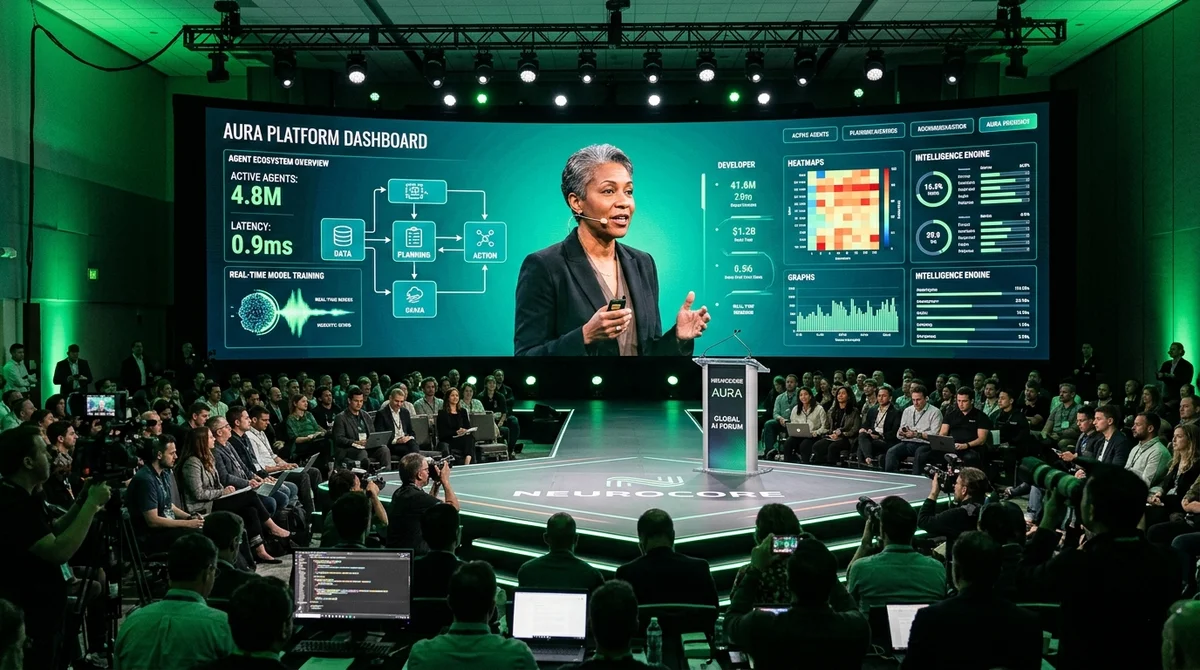
Nvidia CEO Jensen Huang compared OpenClaw to ChatGPT and essentially announced the next phase of the AI market: from bots that respond to agents that act. For Nvidia, this is not just a bold comparison, but a bet on a new layer of software on top of the AI computing boom.
Why This Is an Important Signal
When such statements come not from a startup or venture investor, but from Nvidia's leadership, the market listens particularly carefully. The company has become one of the main beneficiaries of the AI boom, and Huang himself has become one of the most influential voices in the industry in recent years. In an interview with CNBC, he explained OpenClaw's popularity by a shift in user behavior: people no longer settle for just getting an answer from a model; they want to delegate real actions to the system — from information gathering to executing a chain of tasks without constant oversight.
"This is definitely the next ChatGPT."
In this comparison, what matters is not the literal similarity of products, but the scale of the possible impact. ChatGPT made the very format of communication with a language model mainstream. OpenClaw and similar platforms claim the next step: to make work with autonomous agents mainstream — agents that don't just suggest, but open websites, write files, run commands, and bring tasks to completion. If this model takes hold, the AI market will shift once again — this time from assistants to executors.
What OpenClaw Can Do
OpenClaw is an open-source platform for autonomous AI agents and simultaneously a personal assistant that can run on a user's computer or in the cloud. Unlike a regular chatbot, it connects to large language models and gains access to tools: messengers, a browser, a file system, a terminal, and external APIs. Because of this, OpenClaw can not only respond to requests but actually perform work in the background, maintaining context and memory between sessions.
- Work through Telegram, WhatsApp, Slack, and other familiar channels
- Read and write files, run commands and scripts
- Autonomous background tasks and continuous workflows
- Local execution with greater control over data
- Support for different LLMs instead of rigid binding to a single model
Huang particularly emphasized the low barrier to entry: according to him, one's own agent can be created with literally one line of code, and then you simply ask it to perform the needed work. As an example, he described kitchen design: the agent first studies other solutions and tools, then offers options and iteratively improves them. The idea is that the user states a goal, and the agent itself gathers the intermediate steps and works toward the result.
Why Nvidia Supports This
Nvidia's interest in OpenClaw quickly moved from compliments to products. At GTC 2026, the company unveiled NemoClaw and the Agent Toolkit — tools that simplify the deployment of agent systems and add enterprise-grade mechanisms for security, privacy, and control. NemoClaw deploys OpenClaw together with Nvidia's Nemotron models and the OpenShell environment with a single command.
Essentially, Nvidia is offering not a competitor, but an infrastructure layer: taking a virally growing open-source project and making it production-ready on RTX PCs, DGX systems, and server clusters. For Nvidia, this is a logical move. The more popular autonomous agents become, the higher the demand not just for models, but for compute, local GPUs, enterprise guardrails, and orchestration tools.
OpenClaw creates interest among developers and enthusiasts, while Nvidia aims to occupy the position of a full-stack provider — from hardware and runtime to models and secure deployment. That's why Huang's words about "the next ChatGPT" sound not like outside commentary, but as strategic positioning of an entire market.
What This Means
The AI market is increasingly moving away from the "ask the model" mode toward the "delegate the task to the system" mode. If OpenClaw and similar projects maintain momentum, competition will no longer hinge on the quality of a single answer, but on an agent's ability to act reliably, safely, and with minimal human involvement. For business, this signals the need to look not just at new models, but at tools that transform them into actual operational power.
Want to stop reading about AI and start using it?
AI News is a curated feed of AI/tech news. Hamidun Academy teaches you to use AI systematically in your work.