Spotify launches a Verified badge for real artists amid a surge of AI music
Spotify is introducing the green Verified by Spotify checkmark for artists the platform considers authentic. The badge will appear on profiles and in search…
AI-processed from Guardian; edited by Hamidun News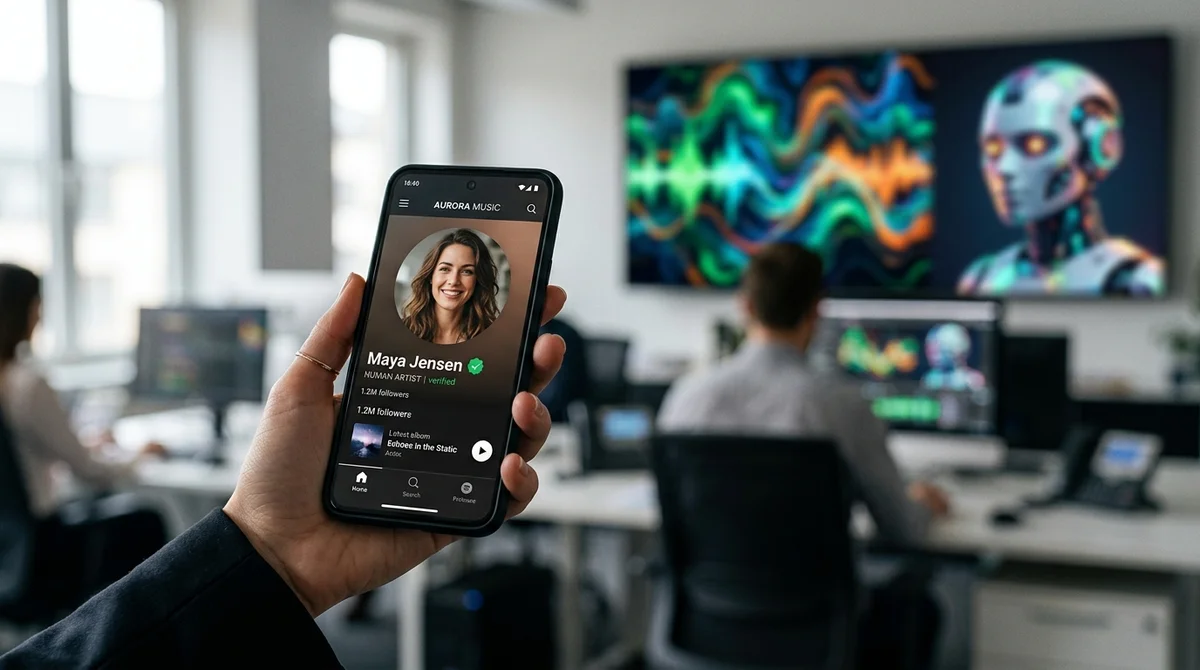
Spotify launches a new artist verification system to separate real musicians from the growing stream of AI-generated tracks on the platform. In the coming weeks, a green Verified by Spotify checkmark will appear on some profiles and in search results.
How verification works
The new badge means that Spotify has verified the profile and considers it compliant with its own authenticity and trust criteria. The label will be visible not only on the artist's page but also next to the name in search results. The rollout is gradual: verification will happen in waves because there are millions of profiles on the platform. Therefore, the absence of a checkmark in the first few weeks does not mean the listener is facing a fake or AI project — it simply means that particular account hasn't reached review yet.
To get the badge, an artist must pass not a formal but a combined verification: through platform signals and manual review. Spotify says it looks not at a one-time spike in listens but at an artist's sustained presence and signs that a real person or group is behind the page.
- Consistent listener interest and organic activity over time
- Compliance with platform rules and no violations
- Signs of real presence outside Spotify — concerts, merchandise, social media
- Absence of dominant connection between the profile and AI-generated music or AI personas
Why this was needed
Spotify's decision comes against the backdrop of an increasingly heated conflict over AI-generated music. Streaming services are already filled with synthetic releases, music farms, and accounts masquerading as existing artists. For listeners, this is a trust problem: if a profile looks plausible, it becomes increasingly difficult to understand who actually released a track.
For artists, the problem is more serious — fake releases can appear on their pages, confuse fans, and blur payouts. According to data cited in the report, Deezer recently reported that synthetic tracks already make up 44% of all new music uploaded to the service daily. Sony, for its part, stated that it has been working to remove over 135,000 AI songs that imitated its artists on streaming platforms.
Against this backdrop, Spotify is essentially acknowledging that the problem has ceased to be niche and requires a separate interface signal visible to ordinary users immediately.
"In the age of AI, it's especially important to trust the authenticity
of the music you listen to."
What changes for artists and listeners
In addition to the checkmark, Spotify is adding a new information block to artist pages — even if they don't yet have Verified by Spotify status. It will display career milestones, release activity history, and concert life data. The company compares this section to "nutritional labeling": a concise set of facts by which you can quickly determine whether a profile looks live and consistent rather than hastily assembled for streaming spam.
Spotify specifically emphasizes that at launch, over 99% of artists whom platform users actively search for should receive verification. This refers to hundreds of thousands of musicians from different countries and genres, with a significant portion of them being independent artists. The logic is straightforward: the service first covers the most in-demand and culturally prominent profiles, then continues verification of the rest.
In parallel, Spotify is deploying new mechanisms to protect artist pages and is betting on a combination of algorithms with manual moderation. The scale of the rollout is also important. The company announced the news almost simultaneously with its first quarter 2026 earnings report, which stated that the service already has 293 million paid subscribers. At such a scale, even a small percentage of incorrect profiles becomes a notable problem both for the platform's reputation and for musicians' incomes. Therefore, verification here looks not like a decorative option but part of basic trust infrastructure.
What this means
Spotify is not banning AI-generated music outright but introducing a new layer of navigation and trust. For the market, this is an important shift: streaming services are beginning not just to host any content but to publicly distinguish human authorship, AI personas, and background music factories.
Want to stop reading about AI and start using it?
AI News is a curated feed of AI/tech news. Hamidun Academy teaches you to use AI systematically in your work.