Elon Musk called himself a fool in court as OpenAI's lawyers dissected his correspondence
On the third day of Musk's case against OpenAI, tensions escalated: during cross-examination, company lawyers presented old letters, unfulfilled financial…
AI-processed from TNW; edited by Hamidun News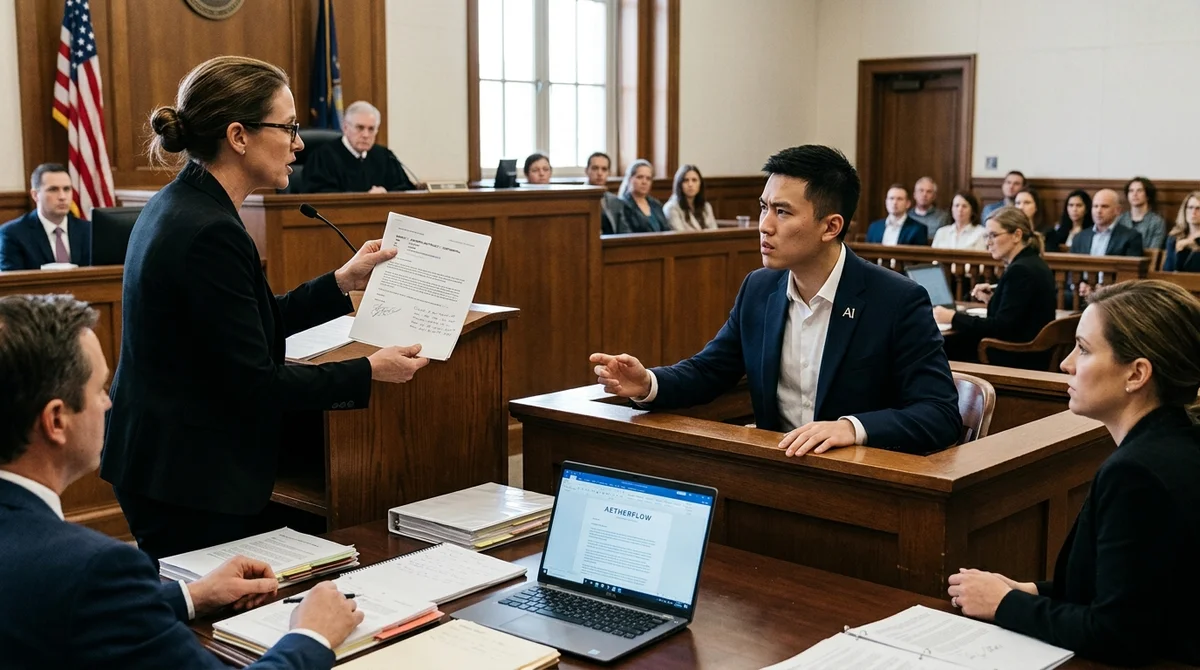
On the third day of the Musk vs. OpenAI trial, the dispute over the company's nonprofit mission turned into a harsh examination of his own words and actions. OpenAI's lead attorney tried to show the court that behind the lawsuit lies not a defense of principles, but accumulated competitive resentment.
A day of tough questions
The day's key moment was the cross-examination of Elon Musk by OpenAI's leading attorney William Savitt. Instead of an abstract debate about what the company's structure should be, the defense focused on specific documents: letters, financial commitments, and correspondence. The defense's line was simple: if Musk truly advocated for preserving OpenAI's original charitable logic, his own actions should confirm this.
Savitt, in essence, tried to deconstruct this narrative piece by piece, using not external assessments, but materials directly related to the billionaire himself. Musk, in turn, did not soften his rhetoric. On the witness stand, he called himself a "fool" for financing OpenAI at the time, and accused the company's leadership of having "looted the nonprofit organization."
But emotional formulations did not address the main question: why did the claims arise now and how much are they connected to how the AI market has changed. Based on the hearing's description, OpenAI's defense built its pressure precisely on this point—not disputing Musk's discontent, but showing that his motives could be less idealistic than he claims.
What the defense was built on
One of the central tasks of OpenAI's attorneys was to shift focus from the question of mission to the question of consistency. To do this, they raised several sensitive topics at once: the lack of promised financing, old email discussions, and messages from Shivon Zilis. In this frame, the lawsuit looks not like an attempt to preserve the nonprofit model, but as a dispute between a former cofounder and an organization that took a trajectory that does not suit him personally or strategically. For OpenAI, this is an important move: if the court sees the lawsuit primarily as a commercial conflict, the plaintiff's moral position will weaken noticeably.
- Musk's own letters were used as arguments against his current version of events Unfulfilled financial promises showed a gap between statements and actions Messages from Shivon Zilis helped restore the internal context of the conflict * The defense tried to present the lawsuit as a competitive claim disguised as a dispute about principles The strongest detail of the day was that OpenAI's lawyers, apparently, did not try to build their defense solely on formal legal formulations. They attacked Musk's narrative with his own documents. This technique often works more powerfully than loud statements, because it transforms the process from an ideological discussion into a check for internal contradictions. Against this background, Musk's admission that he feels deceived and even looks like a "fool" because of his early involvement could have sounded striking to the public, but at the same time it played into the hands of opponents who wanted to show the personal, rather than public, nature of the conflict.
"I was a fool," Musk said about his financing of OpenAI.
What this means
The trial increasingly looks not like a dispute about the pure philosophy of AI development, but more like a check on motives, documents, and old agreements between early figures at OpenAI. If the defense manages to establish the idea that Musk's lawsuit is primarily a reaction to a loss of influence and a change in the balance of power in the market, the company's position will become significantly stronger. For the entire industry, this is also a reminder: in the era of big AI companies, early ideals and current commercial interests almost always collide in court, not just in public posts.
Want to stop reading about AI and start using it?
AI News is a curated feed of AI/tech news. Hamidun Academy teaches you to use AI systematically in your work.