A2A Protocol: How Google Standardizes Orchestration of Multi-Agent AI Systems
Multi-agent AI systems don't fail because models are "dumb"—the root problem is lack of orchestration. Agents lose context, enter infinite loops, and burn…
AI-processed from Habr AI; edited by Hamidun News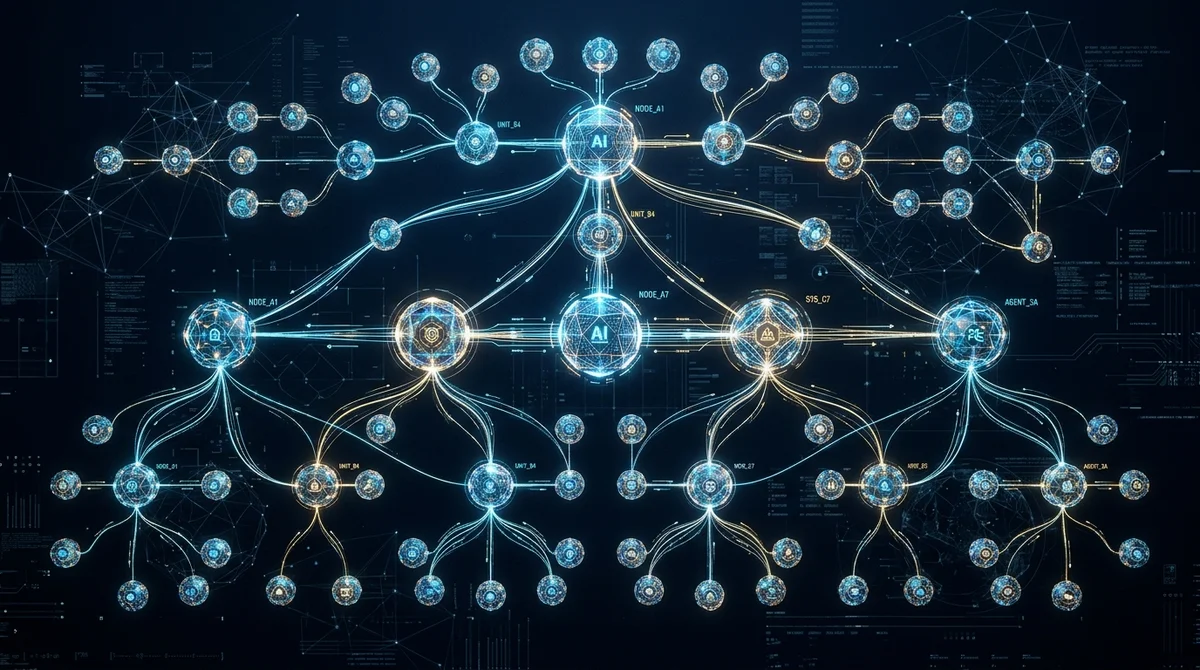
Multi-agent AI systems often fail not because of the "stupidity" of models, but because of poor orchestration. Google's A2A protocol and its extension AGP are an attempt to solve this problem at the standard level, not with workarounds.
Why Agents Break
Multi-agent systems are tempting: one agent analyzes data, another writes code, a third verifies results — all in parallel and efficiently. But as soon as there are more than two or three agents, chaos begins. Developers repeatedly describe the same failures: agents lose task context when passing between each other, get into endless coordination loops, and burn through token budgets without results. Meanwhile, the orchestrator has no idea which step the system is stuck on or whether to intervene.
The root of the problem is not in the quality of LLMs, but in the absence of infrastructure:
- No standard for declaring agent capabilities
- No unified format for passing tasks between agents
- No mechanism for signaling execution status
- No protocol for error handling and task resumption
Every team solved this their own way — and spent weeks "gluing" agents together instead of developing real logic.
How the A2A Protocol Works
A2A (Agent-to-Agent) is an open protocol from Google, supported by Microsoft and IBM. Its goal is to standardize agent interaction at three levels: discovery, communication, and state management.
The central concept is Agent Card. Each agent publishes a card describing its capabilities: what tasks it accepts, in what format, what it returns. The orchestrator reads these cards and routes tasks without hardcoding. If an agent's competencies change — it updates the card, and the orchestrator immediately takes this into account.
Interaction occurs through standard HTTP requests with JSON bodies. The protocol supports both synchronous calls and asynchronous streams with events — an agent can report progress in real time, not just provide a final answer.
"A2A removes the task of inventing a protocol from developers.
Now they focus on what agents do, not how they communicate."
AGP: Order Instead of Chaos
A2A solves communication, but doesn't control the order of execution. AGP (Agent Gateway Protocol) adds exactly this management layer: who speaks, when, and in what order.
AGP introduces managed sessions and message queues. This eliminates race conditions — situations where two agents simultaneously try to change one resource or respond to one request. With AGP, an agent must explicitly signal completion of its part before the orchestrator passes the task to the next one.
Together A2A and AGP cover the full lifecycle of multi-agent interaction: from discovering the needed agent to controlled completion with a predictable final state. Chaotic multi-agent systems become managed pipelines.
What This Means
Google, Microsoft, and IBM are already embedding A2A in their AI platforms — this moves the protocol from "experimental" to "emerging industry standard."
For developers building multi-agent systems today, familiarity with A2A is not getting ahead of time, but basic architectural hygiene. Better to lay the right foundation now than to rewrite orchestration after agents "loop again and burn through the budget."
Want to stop reading about AI and start using it?
AI News is a curated feed of AI/tech news. Hamidun Academy teaches you to use AI systematically in your work.