Elon Musk acknowledged that xAI used OpenAI models to train and improve Grok
Elon Musk confirmed in court that xAI “partly” used OpenAI models to improve Grok. The issue is distillation — an approach in which a stronger model helps…
AI-processed from The Verge; edited by Hamidun News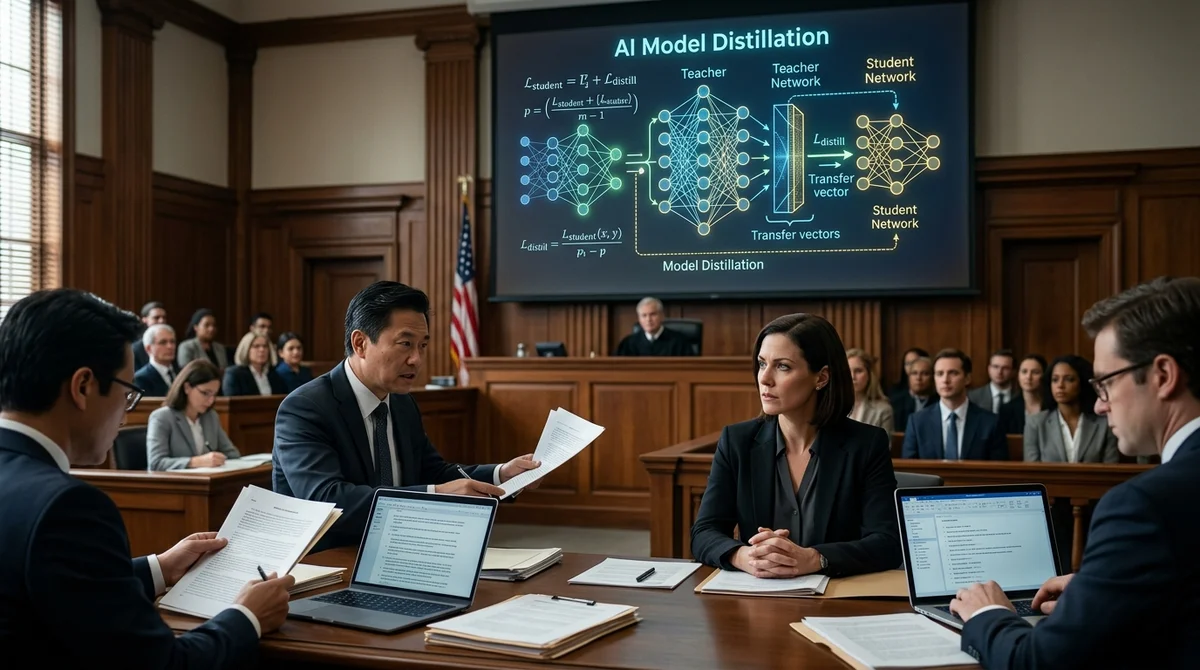
Elon Musk Admits xAI Used OpenAI Models to Train and Improve Grok
During hearings on his lawsuit against OpenAI, Elon Musk confirmed that xAI used OpenAI models to improve Grok. In court, he called this only a "partial" practice, but that was enough to expose one of the most controversial AI training methods of our time.
What Musk Acknowledged
At a federal court hearing in California, Musk was asked whether he knew what model distillation is and whether xAI applied this approach to OpenAI's technologies. Initially, he answered evasively and noted that in any case, "all AI companies" do something similar. When lawyers pressed whether this meant "yes," Musk replied briefly: "partially."
This is an important admission not only because of xAI itself. It came during a lawsuit where Musk is trying to prove that OpenAI has abandoned its original mission and acts contrary to what he helped the company achieve. Against this backdrop, the admission of using competitors' models appears politically and legally sensitive.
In fact, this is an acknowledgment of a practice that market participants increasingly level as public complaints against each other.
How Distillation Works
Model distillation is a scheme where a larger, more powerful system acts as a "teacher," and a more compact model acts as a "student." Instead of training a new model solely on raw data, developers use the answers, assessments, or behavioral patterns of a more powerful model and transfer them to the student. This helps improve quality faster and save computational resources.
"Using other AI to validate your own AI is standard practice."
Within a single company, this approach has long been considered normal: labs regularly compress their flagship models to release cheaper and faster versions. The problem begins when a competitor's model plays the role of the "teacher." Then the question is no longer just technical but legal: is this fair optimization or an attempt to cheaply copy someone else's capabilities? This is precisely where the main tension lies between development speed and protection of competitive advantage.
Why the Dispute Is Growing
This is exactly why distillation has become one of the most sensitive topics in the AI market. Formally, the method itself is not prohibited, but acceptable boundaries often depend on user agreements, internal policies, and how exactly training data was collected. Because of this gray area, companies increasingly accuse each other not of direct code copying but of transferring model behavior. There are few legal precedents, so the rules of play in this zone are essentially being formed in real time.
- Distillation reduces training costs and accelerates the release of new models.
- It allows smaller labs to catch up with market leaders faster.
- Using an external model may contradict the service terms of its owner.
- It is very difficult to prove where "validation" ends and copying capabilities begins.
Previously, OpenAI had already publicly expressed concern that its models could be used for such purposes, and Anthropic separately named DeepSeek, Moonshot, and MiniMax among companies raising questions. Google is also trying to protect itself against what it calls "distillation attacks" and violations of its terms of service. Now it turns out that even participants in the loudest legal conflicts in the industry themselves are not standing aside from this practice.
What It Means
The xAI story shows that distillation has become the norm on the market — even if companies publicly criticize it in competitors. For the industry, this is a signal: disputes over AI will increasingly focus not only on data and copyrights but also on whether one can "learn" from another's model without breaking the rules. And it is precisely such disputes that may determine where the boundary will lie in the coming years between competitive intelligence, engineering optimization, and platform rule violations.
Want to stop reading about AI and start using it?
AI News is a curated feed of AI/tech news. Hamidun Academy teaches you to use AI systematically in your work.