Elon Musk: Tesla and SpaceX AI will continue buying Nvidia chips in bulk despite AI5
Elon Musk said Tesla and SpaceX AI will continue buying Nvidia chips in bulk despite the development of their own AI5 processor. According to him, AI5 will…
AI-processed from 3DNews AI; edited by Hamidun News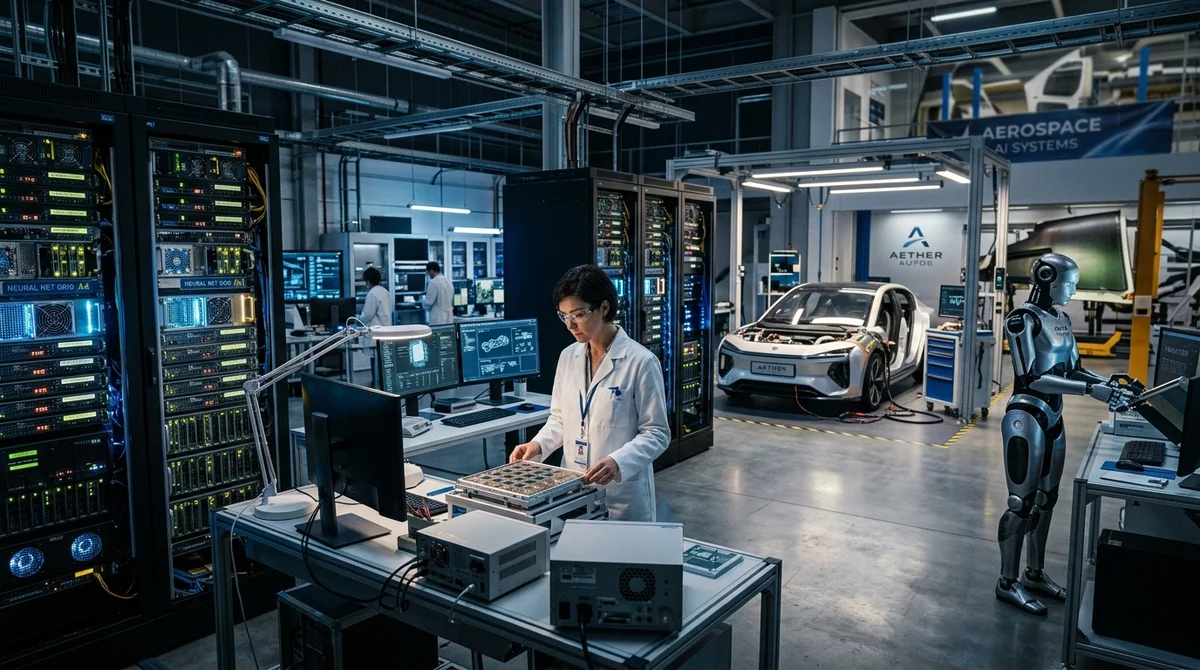
Elon Musk stated that SpaceX AI and Tesla are not planning to abandon Nvidia, despite active development of their own AI chips. The comment appeared on March 19, 2026 amid discussions about Tesla wanting to produce new processors using Samsung facilities in the US.
Why Musk clarified this
The market began interpreting news about Tesla's own chips as a signal that the company was preparing to gradually abandon external accelerator suppliers. Therefore, Musk specifically wrote that both Tesla and SpaceX AI will continue purchasing Nvidia solutions in large volumes. This is an important caveat: the custom silicon at Musk's companies is developing rapidly, but the demand for computing is already so large that closing it with only internal developments in the foreseeable future won't be possible.
The reason for such clarification is also understandable. Investors and the industry are closely monitoring Tesla's plans to place the production of its AI chips at Samsung facilities in the US, and such news is easily interpreted as a course toward independence from Nvidia. But Musk's words show different logic: he views custom production not as an immediate replacement for current supplies, but as an additional layer of computational strategy.
It's also notable that he publicly used the name SpaceX AI for the enlarged structure after the merger of SpaceX and xAI for the first time.
What Tesla is betting on
Musk separately clarified that the Tesla AI5 chip is being designed not only as a component for data centers. It can indeed be applied to training large language models, but the main scenario is different: edge AI computations directly in devices and machines, where latency, energy efficiency, and cost are critical. In other words, Tesla is developing a processor not for the sake of an abstract chip race, but for specific products that it needs to scale quickly, including such:
- humanoid Optimus robots
- Tesla autonomous taxis
- FSD autonomous driving systems
- parts of internal AI loads in data centers
This shows that Tesla is building not just an alternative to Nvidia, but a vertically integrated platform for its own tasks. If Nvidia dominates as a universal accelerator supplier, then Tesla is trying to design a chip for specific scenarios where it controls the hardware, software, and end product itself. Such an approach can provide a win in cost and efficiency, but doesn't resolve the question of production scale and capacity availability today.
Why Nvidia remains needed
Even with custom processor design, Musk's companies still need enormous volumes of external chips. The reason is simple: demand for model training, autopilot, robotics, and related services is growing faster than new production can be deployed. Therefore, Nvidia remains not a temporary stopgap, but a critically important partner for the near term.
In this model, custom chips solve some specialized tasks, while ready-made Nvidia accelerators allow current projects not to stall and quickly scale computing clusters. Musk also reminded that within the coming weeks he plans to show a major FSD update — the software stack for Tesla's autopilot. In parallel, he promised to soon reveal more details about the project of a giant factory for producing AI chips for Tesla and related companies.
Earlier, he already said that the needs of his ecosystem are so large that current contract manufacturers of components won't be able to fully meet the demand. In other words, the strategy is dual: buy massively from Nvidia and simultaneously accelerate the creation of your own production circuit.
What this means
For the market, this is a signal that the era of "either your own chips or Nvidia" has not yet come. Large AI companies will combine both approaches: build their own silicon for key products and at the same time purchase ready-made accelerators to not slow down growth.
Want to stop reading about AI and start using it?
AI News is a curated feed of AI/tech news. Hamidun Academy teaches you to use AI systematically in your work.