Mike Pepi in the Guardian proposed a 1% tax on AI-slop to protect creative labor
Guardian columnist Mike Pepi proposes a simple policy move: impose a tax of about 1% on the largest AI companies that produce and publish generative content…
AI-processed from Guardian; edited by Hamidun News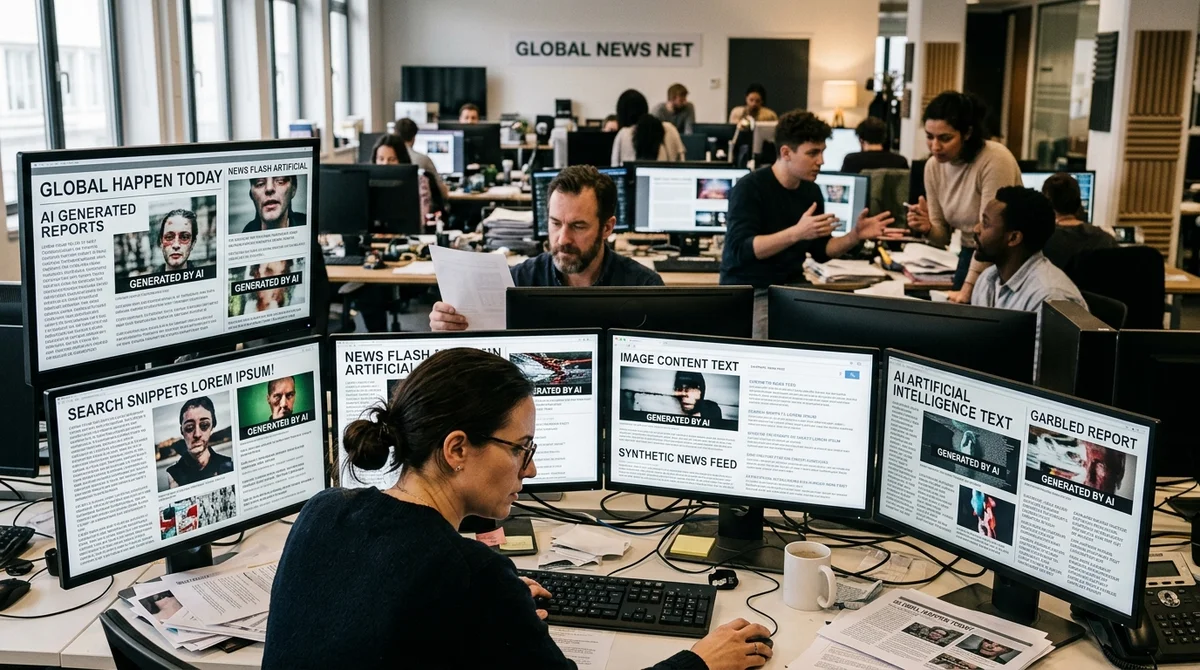
In Guardian, a column was published with a radically simple proposal: to impose a small tax on the largest AI companies for the stream of low-quality generative content that the author calls AI-slop. According to Mike Peppi's thinking, this is not an attack on machine learning research, but an attempt to return money to culture, education, and media, which are already losing attention and revenue due to machine fakes.
Why concern is growing
The reason for conversation didn't come from nowhere. Before the midterm elections in the US, the AI issue became political: according to an NBC News poll, 57% of registered voters believe that the risks of AI outweigh its benefits. Pew Research separately recorded concern among young people: 61% of American adults under 30 think that the further spread of AI will worsen people's ability to think creatively. Even harsher is the Quinnipiac poll: 74% of respondents believe that the government regulates the industry insufficiently.
The author links this reaction not only to technological fears, but also to how the industry itself sells its products. The main message of major AI companies, according to his version, sounds like this: either you implement generative tools right now, or you'll fall behind. Against this backdrop, promises of colossal productivity growth so far look controversial. Peppi refers to research suggesting that the real effect of AI on productivity is noticeably more modest than advertising claims, and in return, the market received a new layer of bureaucracy — so-called workslop, when a model quickly produces text, presentations, and reports that still have to be corrected by a person.
"AI-slop is a bet that society will accept the worst fake instead of
human creativity".
How the tax works
Under AI-slop in the column is understood digital garbage: cheap, massive, and often unreliable content created by generative systems. The author gives recognizable examples: fake music groups in streaming services, absurd cooking recipes with hallucinations, books on marketplaces assembled from prompts, and search results where AI answers cover normal links and often make mistakes.
The problem, in his view, is not in the existence of the tool itself, but in the economy of scale: machine copies fill distribution channels faster and cheaper than living authors manage to make them. The proposal is simple. If a company creates, places, or monetizes generative content, it pays an annual fee of approximately 1%. For Big Tech, which promises "abundance" thanks to AI, this is a small price, Peppi believes. He separately reminds us that the five largest public players — Nvidia, Google, Apple, Microsoft, and Meta — are collectively worth about $18 trillion. Even such a modest percentage, according to his logic, would give a noticeable resource for culture and science.
He proposes directing the collected funds into a public fund, and then distributing them back to those whose institutions and professions have come under pressure:
- local newspapers, radio, and independent publications
- artists, musicians, writers, and designers
- educational programs and public cultural venues
- researchers working on new formats of creativity and technology
The text separately emphasizes that this is not about a universal ban on AI or a pause in research. The author also disputes more abstract ideas like universal basic income: even if automation hits some professions, simply handing out money to consumers is not enough if cultural institutions themselves continue to lose audience, income, and meaning. The logic of the tax is different: not to subsidize demand in general, but to compensate for specific damage to those sectors from which generative models have already extracted value — both training data and user attention.
What this means
This is not a bill and not a consensus program, but a political idea that tries to move the conversation about AI from the realm of fantasies about superintelligence to a more practical plane. If generative models really build a business on large-scale replacement of human cognitive labor, then the question is already not just about the convenience of the product, but about the redistribution of value. For media, education, and creative industries, such an approach is important because it for the first time offers not just to complain about AI-slop, but to present it with a specific bill.
Want to stop reading about AI and start using it?
AI News is a curated feed of AI/tech news. Hamidun Academy teaches you to use AI systematically in your work.