Nvidia CEO Jensen Huang urged AI companies not to scare people with apocalyptic rhetoric
At GTC 2026, Jensen Huang urged the AI industry to stop scaring people with disaster scenarios. He said models are not an 'alien' but a tool, and that…
AI-processed from 3DNews AI; edited by Hamidun News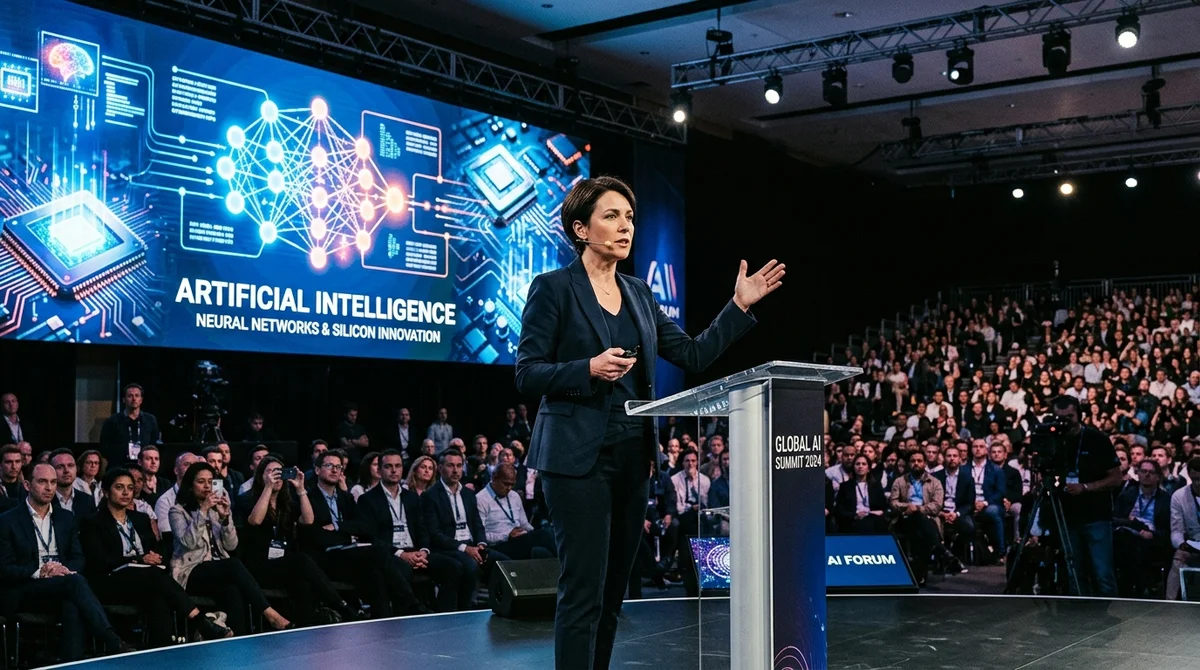
Nvidia CEO Jensen Huang has publicly spoken out against apocalyptic rhetoric surrounding AI. At the GTC 2026 conference, he stated that technology companies should warn about risks, but should not turn the conversation about generative models into scare stories — especially against the backdrop of the Anthropic-Pentagon conflict.
Why Huang Got Involved
The impetus came from a prolonged story about how to safely and ethically use AI in the military sphere. The Anthropic-Pentagon conflict made the topic too loud for one of the main beneficiaries of the AI boom to ignore. Huang did not dispute that warning society about the capabilities of the technology is useful. But, according to him, there is a clear boundary between discussing risks and deliberately stoking fear, and it is important for the industry not to cross it.
According to Huang, the problem is no longer just how people view individual models, but how fear affects the pace of AI adoption overall. He directly linked this to U.S. national security: if the country becomes more afraid of new technology than it is to master it, it risks slowing itself down in the face of global competition. In this logic, the harm may come not so much from AI itself, but from the panic around it.
"This is not an alien.
It has no consciousness. It is a computer program."
Where the Line Is
Huang is essentially proposing a more pragmatic language for talking about AI. He does not reject safety questions and does not mock those who discuss limitations for generative models. His thesis is different: if AI company leaders describe technology as something almost alive, uncontrollable and catastrophic, this distorts the real picture. In his view, extreme scenarios, for which there are no clear prerequisites, can harm society and the industry more than is commonly believed.
- Warning about risks is normal
- Scaring people with apocalyptic scenarios is already harmful
- AI, according to Huang, is not a "biological" entity
- Current systems have no consciousness and their own will
- Catastrophic rhetoric can slow down the adoption of technology
Notably, Huang did not attack Anthropic against the backdrop of its public conflict with American authorities. On the contrary, he suggested that in financial terms, the company will be fine, even if the dispute with the defense department drags on. Moreover, the Nvidia chief said that by 2030, Anthropic's revenue could exceed $1 trillion, and he considers Dario Amodei's forecasts on this account too cautious. For an outside observer, this sounds like criticism of the rhetoric, but not a rejection of faith in the business itself.
Taiwan and Chips
Huang did not stop there and shifted the conversation from the plane of AI ethics to geopolitics. He urged the United States not to push China toward capturing Taiwan and to act more restrainedly. For the Nvidia chief, this is not an abstract story: Taiwan remains a key node in the global semiconductor supply chain, which means that any escalation around the island affects not only regional security, but the entire AI industry. In his formulation, it is better to reduce tension than to create new reasons for crisis.
At the same time, Huang advocated for gradually reducing dependence on Taiwan by expanding the production of advanced chips in the United States, Japan, and South Korea. But this did not sound like a call to turn away from the island. On the contrary, he emphasized that Taiwan's experience in chip manufacturing deserves friendship and support. Essentially, his position boils down to two theses: do not fuel fears around AI and in parallel, faster build a more resilient infrastructure for the entire industry.
What This Means
Huang's statement shows that the dispute over AI goes beyond the usual confrontation of "accelerate or slow down." Now in one conversation are model safety, military contracts, U.S.-China competition, and the vulnerability of chip supply chains. For the market, this is a signal: the tone of discussion around AI is becoming as important a factor as the models and hardware themselves.
Want to stop reading about AI and start using it?
AI News is a curated feed of AI/tech news. Hamidun Academy teaches you to use AI systematically in your work.