Elon Musk launches Terafab in Austin: Tesla, xAI and SpaceX prepare a chip factory
Elon Musk said Terafab will be built in Austin. It is a factory project that is expected to eventually produce in-house chips for robotics, AI systems and…
AI-processed from Bloomberg Tech; edited by Hamidun News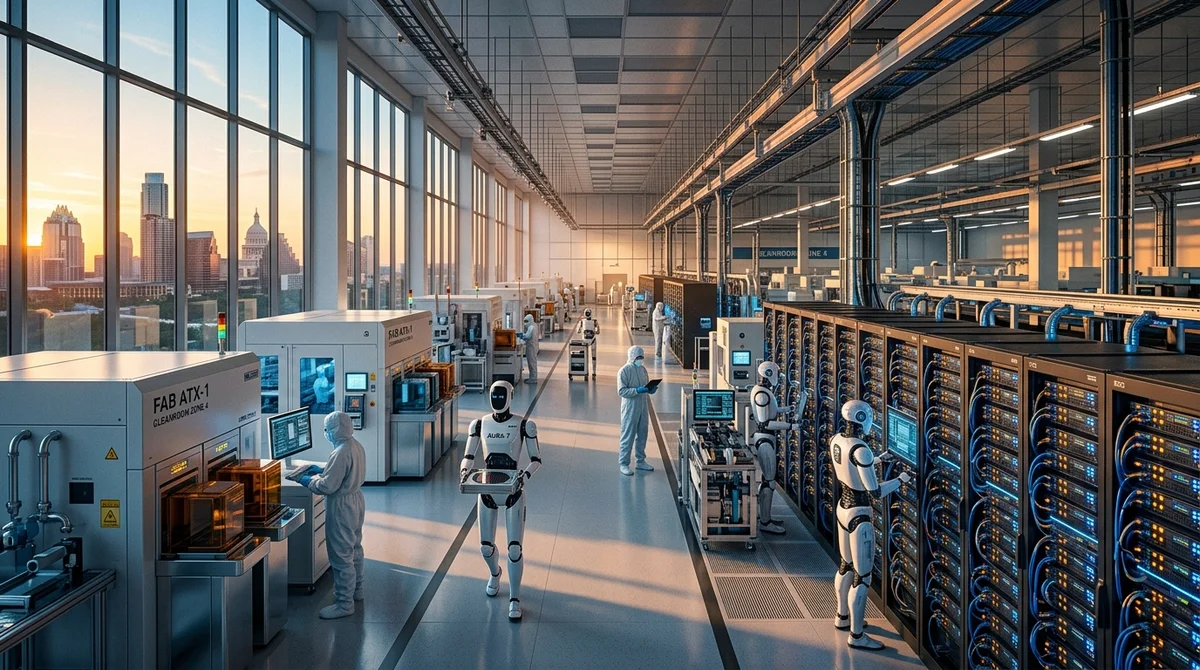
Elon Musk announced that the Terafab project will be built in Austin. This is a facility where, in the future, they plan to produce proprietary chips for robotics, artificial intelligence systems, and space data centers, with Tesla and SpaceX set to manage the project initially.
Why Terafab Is Needed
If the project reaches its stated scale, Terafab will be another step by Musk toward full vertical integration of his companies. Tesla is already developing Optimus robots and its own computing systems for autopilot, xAI needs ever-increasing capacity to train models, and SpaceX is building infrastructure where reliable and specialized components are critical. Against this backdrop, the idea of producing chips within its own ecosystem makes sense: it reduces dependence on external suppliers, gives more control over the roadmap, and allows hardware to be adapted faster to specific tasks.
It's also important that Musk is not talking about one type of semiconductor. Terafab's description involves three areas at once: chips for robotics, for AI workloads, and for space data centers. This is not production for the sake of scale, but an attempt to close different levels of a single technology chain—from physical machines and onboard systems to large computing clusters.
This approach is expensive and risky, but if successful, it could give Musk's companies an advantage in the speed of product deployment.
Why Austin Specifically
Austin's selection looks logical. The city has long been one of Musk's key centers for projects in Texas: Tesla already has large-scale manufacturing there, the region actively attracts technology and industrial companies, and local authorities are betting on high-tech industry development. For Terafab, this means easier access to engineering talent, manufacturing contractors, electricity, and logistics.
When it comes to a chip factory, the ecosystem around the facility is usually no less important than the building itself. It's particularly telling that Musk speaks of joint launch by Tesla and SpaceX. This means the project was conceived from the outset not as an isolated experiment, but as a shared resource for multiple businesses.
The announcement headline includes xAI, but in the available description, the role of this company has not yet been revealed as detailed as that of Tesla and SpaceX. It's reasonable to assume that xAI will become one of the internal customers for computing chips and capacity if the factory reaches its stated scale.
"Terafab will be built in
Austin and jointly managed by Tesla and SpaceX."
What Signal to the Market
For the semiconductor and AI infrastructure market, this is an important signal: major technology players are increasingly trying to control not only models and software, but also basic hardware. This is especially important at a time when demand for accelerators, servers, and specialized components is growing faster than supply, and access to cutting-edge hardware is becoming a competitive advantage in itself. For Musk, such a strategy can yield several direct effects.
- Less dependence on external chip manufacturers
- Faster adaptation of architectures for robots, models, and space systems
- A unified production base for multiple companies in one ecosystem
- Potential cost savings at scale, if the project is truly rolled out on a large scale
For now, this is more of a strategic announcement than a ready-made factory with clear timelines and production volumes. But the direction is already clear: Musk is trying to assemble a complete technology stack—from models and data centers to the equipment on which these systems will run. If the project advances beyond the idea stage, competitors will gain another player who is competing not just for AI products, but for control over their physical foundation.
What This Means
Terafab shows that the next phase of AI competition is going deeper than the application level. Winners will be not only those with stronger models, but also those who control computing, components, and supply chains. If Musk succeeds in bringing the project to industrial scale, Tesla, xAI, and SpaceX will get not just a new factory, but their own foundation for robots, AI services, and space infrastructure.
Want to stop reading about AI and start using it?
AI News is a curated feed of AI/tech news. Hamidun Academy teaches you to use AI systematically in your work.