OpenAI discusses buying 5 GW of fusion energy from Helion by 2030
OpenAI could become one of the largest future buyers of fusion energy. The company is discussing a 5 GW supply by 2030 and up to 50 GW by 2035 with Helion…
AI-processed from TNW; edited by Hamidun News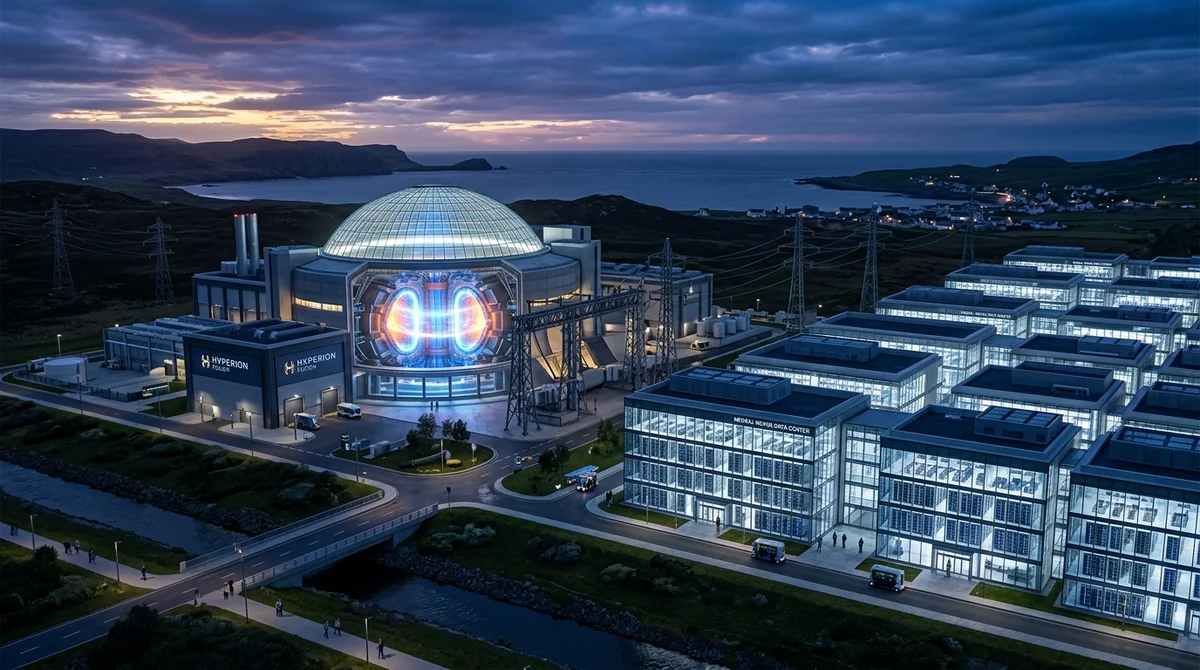
OpenAI is discussing a major electricity purchase from Helion Energy — a startup that promises to bring fusion energy into commercial operation. If the framework agreement is reached, it will involve capacity comparable to the energy systems of entire regions, not a pilot experiment.
Deal Parameters
According to Axios, the parties are discussing a scheme in which OpenAI could receive the equivalent of 5 gigawatts of capacity by 2030 and scale the volume to 50 gigawatts by 2035. At the first stage, companies may reserve approximately 12.5% of Helion's future generation for OpenAI. For now, this is not a final contract, but a basic framework for the deal: there are still conditions that need to be met, including the selection of a site where Helion can produce and deliver this energy to the grid.
For OpenAI, this is not simply a bet on "green" generation. The main reason is the sharp increase in energy consumption from AI infrastructure. Training and maintaining large models require increasingly more data centers, and with them — increasingly more stable capacity. Against this backdrop, interest in fusion energy looks logical: if the technology works on an industrial scale, it will provide an almost carbon-free electricity source without dependence on weather, unlike some renewable sources.
Scale and Context
The most important thing about this story — not the fact of the negotiations, but their scale. This is not about a demonstration purchase, but about a possible reservation for volumes that are orders of magnitude larger than Helion's current commercial commitments. Until now, the company has announced much more modest agreements: with Microsoft and Nucor. That is why the discussed figures look like a claim to an entirely different class of business — both for Helion itself and for the market of energy for AI.
- 5 gigawatts — 5,000 megawatts of capacity by 2030
- 50 megawatts — volume of supply under Helion's agreement with Microsoft, announced in 2023
- 500 megawatts — capacity of the project that Helion is developing with steelmaking company Nucor
- 2028 — Helion's target date for launching its first commercial station for supplies to Microsoft
- approximately 50 megawatts — declared capacity of one Helion reactor
If we rely on Helion's own estimates, one of its reactors should deliver approximately 50 megawatts. Then 5 gigawatts for OpenAI means roughly a hundred such installations, and 50 gigawatts — already around a thousand. This is an extremely aggressive scaling scenario even for a mature energy company, let alone a startup that is still bringing its technology to the commercial stage. And it is precisely here that the news stops being merely corporate: it becomes a test of the realism of timelines for the entire fusion industry.
Conflict and Risks
A separate line of the story — corporate governance. Sam Altman has long been connected with Helion: he was chairman of the company's board of directors from 2015, participated in its major rounds, and is considered the project's largest private investor. In the context of negotiations with OpenAI, he stepped down from Helion's board and, according to Axios, removed himself from the discussion of the deal itself.
This repeats last year's scenario with Oklo, where Altman also stepped back from his role as chairman to reduce conflicts of interest. But even if the conflict of interest issue is formally resolved, the technological risk does not disappear. No private company has yet demonstrated commercially functioning fusion generation.
In February 2026, Helion reported new milestones for its Polaris prototype: work with deuterium-tritium fuel and achieving plasma temperatures of 150 million degrees Celsius. This is a strong research signal, but the path to stable, cheap, and scalable power delivery to the grid is still long.
What This Means
OpenAI is increasingly competing not only in models and chips, but also in access to electricity. Even if negotiations with Helion do not turn into a final deal in the near future, their scale alone shows that the next major race in AI may no longer be for model parameters, but for guaranteed energy to power them.
Want to stop reading about AI and start using it?
AI News is a curated feed of AI/tech news. Hamidun Academy teaches you to use AI systematically in your work.