OpenAI Discusses Buying Fusion Energy for Future AI Networks and Data Centers
OpenAI is discussing the purchase of tens of gigawatts of fusion energy from a startup backed by Sam Altman. Commercial fusion doesn't yet exist, but the…
AI-processed from CNews AI; edited by Hamidun News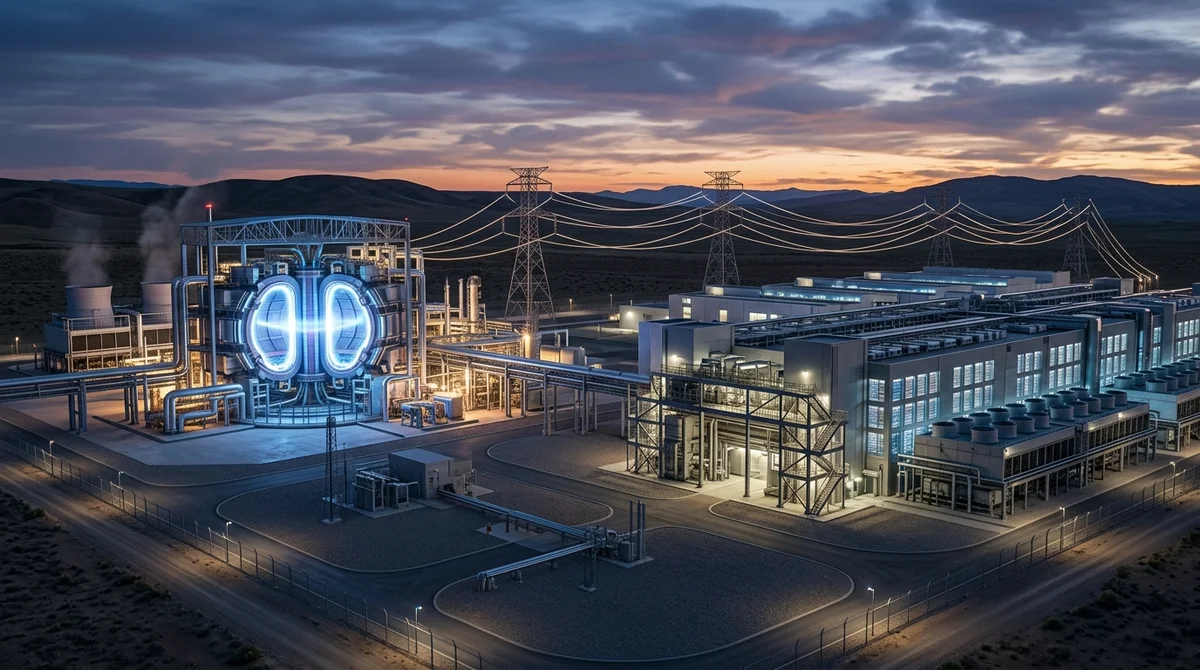
OpenAI is discussing the purchase of thermonuclear energy for future computing of its neural networks. If the deal ever comes to fruition, it will be a rare case where an AI company is trying in advance to secure itself a huge volume of still non-commercial energy.
Why OpenAI needs energy
The story looks unusual even by the standards of the AI infrastructure race. OpenAI is negotiating with a startup, which its CEO Sam Altman has notably invested in, about purchasing tens of gigawatts of thermonuclear fusion energy. The scale itself is as important as the technology itself: this is not about a local contract for a single data center, but about a potential resource for future generations of models that will require increasingly expensive training and maintenance.
Currently, the largest players on the AI market are already hitting not only chip deficits, but also the limits of energy infrastructure. Building new computing clusters without guaranteed access to electricity is becoming increasingly difficult. Therefore, OpenAI's interest can be read as a bet in two directions at once: on a sharp increase in its own computing appetite and on the search for an energy source that theoretically could meet this demand in the long term.
It's also important that AI energy consumption is growing not only because of training new models. Huge resources are needed for the daily operation of services: responses in chats, image generation, video, voice functions, corporate APIs. The more users and the more complex the models, the more expensive each next layer of infrastructure becomes.
Against this backdrop, talks about energy stop being a secondary topic for tech companies and move into the center of business strategy.
Why this is still an idea
Thermonuclear fusion has long been considered one of the most desirable energy scenarios: lots of power, fewer emissions, and less dependence on traditional fuel. The problem is that this technology does not yet have commercial maturity. This is precisely why the news is important not as a sign of imminent reactor launches for AI, but as a signal about what scenarios the largest technology companies are seriously considering.
Even if negotiations advance, there is a huge distance between discussion and actual delivery. You need to not only confirm the technology's viability in laboratory or pilot conditions, but transform it into a stable industrial system with predictable costs, reliability, and clear timelines. For OpenAI, this is so far more of an option on the future than a ready energy foundation for today's products.
A separate layer of this story is the startup's connection with Altman. When the head of an AI company invests in an energy project that could potentially supply the same AI infrastructure, it shows how tightly technology, capital, and energy interests are now intertwined. Even without a final deal, the mere fact of negotiations underscores: leaders of AI companies are thinking not only about the quality of models, but also about where to get electricity for the next stage of growth.
What scale tells us
The phrase about tens of gigawatts by itself shows how quickly AI companies are beginning to think in categories that previously were closer to states, energy giants, and heavy industry.
- AI models require increasingly more computing power for training and operation
- Data centers are becoming the main limiting factor for growth along with electricity supply
- Major players are beginning to reserve future energy resources in advance
- Thermonuclear fusion is being considered not as abstract science, but as a possible part of AI infrastructure
- Energy strategy is becoming for AI companies the same kind of asset as models and chips
In practice, this does not yet mean a rapid transition of AI to thermonuclear energy. But the very emergence of such negotiations shows a change in scale: neural network developers are thinking not only about models, chips, and data, but about basic physical infrastructure, without which the next leap in quality and size of systems may simply not happen. If previously the main question was which laboratory would assemble the best stack of data, engineers, and accelerators, then now a new one is added: who will be able to provide themselves with energy for years to come.
And that is precisely why such news is important even at a very early stage. It shows where the next front of AI competition is happening.
What this means
The AI market is becoming increasingly dependent on energy, and therefore the struggle between leaders will go not only for the best models, but also for access to electricity. OpenAI's negotiations around thermonuclear fusion show that the future of neural networks is beginning to be planned at the level of power plants, not just data centers.
Want to stop reading about AI and start using it?
AI News is a curated feed of AI/tech news. Hamidun Academy teaches you to use AI systematically in your work.