Entrepreneur built auto service CRM with ChatGPT and Cursor
An entrepreneur without technical background started with a late-night CRM prototype in Python and SQLite, then developed it into a web service, Telegram bot…
AI-processed from Habr AI; edited by Hamidun News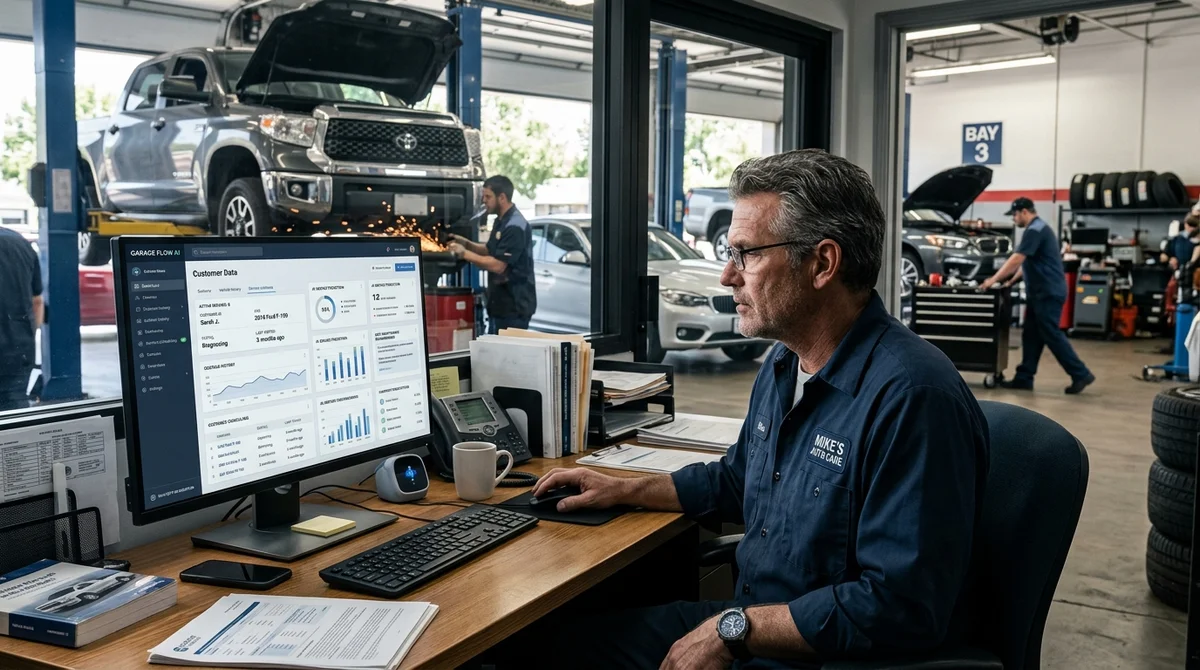
An entrepreneur from an offline business told how over two years he turned AI from a curious toy into a working tool for his auto repair service and related projects. Without a technical background, he first assembled a simple CRM through prompts, then developed it into a web service, Telegram bot, and Android application.
First CRM in one night
The story began in 2022 when an auto repair service owner tried to figure out whether AI could solve his very real problems: chaos in record-keeping, weak accounting, lack of analytics, and inconvenient off-the-shelf CRMs for master mechanics who work simultaneously as managers. After one of the conversations, the model suggested a simple approach — instead of adapting to an existing product, build your own. This idea became a trigger: in one night, the author set up PyCharm, chose Python and SQLite on intuition, and got the first working prototype in a single file of approximately two thousand lines.
"Create a CRM yourself with an understandable interface."
What mattered most to him was not code quality, but the fact that the system worked immediately in real business. In the morning, he installed the program at the reception desk, and employees figured it out without separate training.
Then began the path typical for early AI development: the monolith grew to six thousand lines, the context no longer fit in the model, and each new change became harder. Instead of the request "write me a CRM," the entrepreneur switched to the mode "teach me to make a CRM in Python and Flask," then connected Cursor, Claude and gradually figured out the architecture, VPS, DNS, certificates, and PostgreSQL.
What GIPIX grew into
From a raw desktop version, eventually the GIPIX CRM web service emerged, used not only by the author's team but also by acquainted offline businesses. He particularly emphasizes that the interface was intentionally made simple: the product is designed not for IT people and not for office administrators, but for 40+ year old mechanics who spend most of the day fixing cars and don't want to spend time on complex screens. According to him, this kind of applied adaptation turned out to be more important than "beautiful" architecture or trendy design.
- 369 registered users
- approximately 95 active users per day
- 17 thousand customer records in the database
- online booking, cash register, warehouse, and Telegram integration
- Android application, VIN data, and AI analytics
In parallel, other products began to appear around the CRM. The author built GIPIX BIS AI — a system for simulating business ideas using Canvas with approximately 150 modules, and then launched GIPIX VIN: a service with a Telegram bot and Android application for working with VINs and license plates. The latter, by his estimate, already brings in approximately 80 thousand rubles per month with almost no marketing. Separately, he also created an offline CRM for cafes for his own needs. Meanwhile, the main CRM still exists in alpha test mode, without classic monetization, and donations appeared only at the request of users.
How he works with AI
The key point of the article is that AI for the author is not a replacement for a software developer profession, but a way to assemble applied tools faster for specific problems. He describes a fairly disciplined process: he breaks any task into stages, keeps the main prompt with the project context, gives the model the address of the needed file, asks it to first study the design, then criticize the solution, and only then make changes. This approach resembles not the magic of "do everything for me," but manual management of a junior, but very fast digital executor.
In this case, it is especially noticeable how the entry barrier into niche software development is changing. The entrepreneur still doesn't call himself a programmer, but he can already read code, understand basic architecture, deploy services, and iteratively develop a product. The most powerful factor here is not the universal power of the model, but deep knowledge of the subject area: he himself knows how an auto repair service is structured, where money is lost, why mechanics don't like complex CRMs, and what little things actually save them time throughout the day.
What this means
Such stories show that AI is increasingly becoming a layer between industry expertise and working software. For small and medium offline businesses, this is a signal: custom tools no longer require a full development team at the start, which means that niche products can now be built by those who experience the problem themselves — albeit in a rough, but already useful form.
Want to stop reading about AI and start using it?
AI News is a curated feed of AI/tech news. Hamidun Academy teaches you to use AI systematically in your work.