OpenAI Cites Microsoft and Azure Dependence as Risk Factor for Investors
OpenAI warned investors that its long-standing dependence on Microsoft and Azure cloud has become a risk factor. The partnership provided capital and…
AI-processed from 3DNews AI; edited by Hamidun News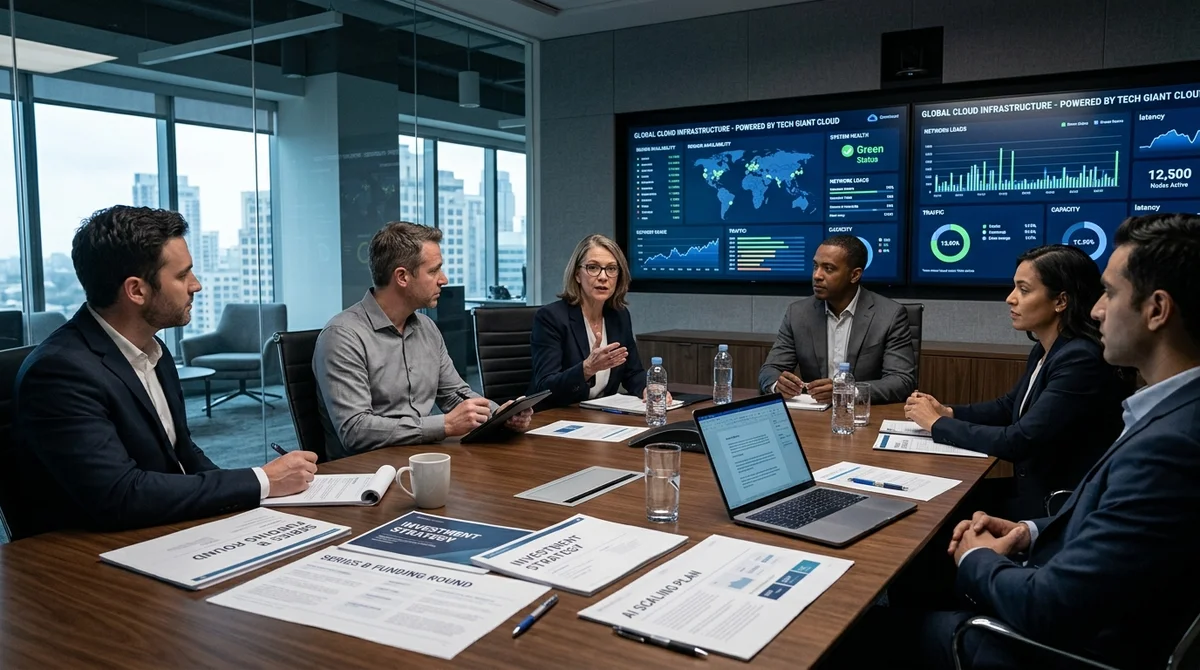
OpenAI has warned investors that its strong dependence on Microsoft could be a risk factor. The company has relied for many years not only on financial investment from its strategic partner, but also on Azure's computing power, and now directly states: this partnership accelerates growth, but makes the business more vulnerable.
What's the Risk
For OpenAI, the problem isn't the partnership with Microsoft itself, but its concentration. When one large company simultaneously provides financial help, grants access to the cloud, and essentially supports critical infrastructure, any change in conditions immediately affects the pace of development. This concerns the cost of computing, the speed of launching new services, the availability of resources, and OpenAI's own negotiating position.
The higher the dependence on a single counterparty, the more questions investors have about business sustainability. Such formulations typically appear not because relations between companies are breaking down, but because when attracting capital, one must honestly disclose the weak points of the model. For an investor, this is a standard signal: the company has a strong ally, but alongside that comes a point of concentration risk.
If too much depends on one ecosystem, then even without a conflict of interest, sensitivity arises to outside decisions, timelines, and priorities.
Why the Question Surfaced
Before actively attracting funds from a broader circle of strategic investors, OpenAI operated for a long time in a logic of close reliance on Microsoft. This applied both to financing and to infrastructure access through Azure. While this structure works, it looks convenient: the partner helps scale quickly and covers one of the most expensive line items in generative AI — computing.
For a young AI company, such an alliance lowers growth barriers and allows products to reach the market faster. But at the moment when a company expands its circle of investors, the same scheme begins to be viewed from a different angle. Potential round participants want to understand how operationally and financially independent OpenAI is.
For them, it's important not only the quality of models and the pace of audience growth, but also what will happen to the business if cooperation conditions change or if resources need to be reallocated. In other words, investors evaluate not only the technology but also the business model's safety margin.
- How easily can OpenAI scale computing outside the current partnership
- How changes in commercial terms will affect service economics
- Whether the company has room for negotiation on infrastructure
- Whether dependence will slow the launch of new products and features
- How sustainable the business is if one partner remains too important
What This Changes
The mere fact of such disclosure does not mean a break with Microsoft and does not indicate immediate problems. Rather, it's a sign of OpenAI maturing as a business that can no longer explain its growth solely through technological leadership. When a company enters a broader capital market, it must show not only advantages but also limitations: where the bottlenecks are, what scaling depends on, and what external factors can affect revenue and development.
For OpenAI itself, this is also an argument for greater flexibility. The larger a model developer becomes, the more important it is to have multiple sources of capital and to depend less on a single supplier of critical resources. Even if the partnership remains strategic and beneficial, diversification increases resilience.
It provides more freedom in negotiations, reduces the risk of delays, and makes the company more understandable to new investors who evaluate not only ambitions but also risk management. The signal matters for the entire market. Generative AI has long ceased to be a story only about model quality.
Now it's also a question of access to computing infrastructure, the cost of scaling, and the balance of power between labs and technology giants. Whoever controls the cloud and resources greatly influences the pace of industry development. Therefore, dependence on a major partner is now viewed not as a technical detail but as a full-fledged investment factor.
What This Means
OpenAI shows investors a more mature picture of the business: strong partnership with Microsoft remains an advantage, but simultaneously becomes a source of vulnerability. For the market, this is a reminder that the AI race is won not only by those with the best models, but also by those with enough capital, infrastructure, and maneuverability.
Want to stop reading about AI and start using it?
AI News is a curated feed of AI/tech news. Hamidun Academy teaches you to use AI systematically in your work.