Nvidia B300 servers in China surge to $1 million amid supply shortage and grey market imports
In China, grey market prices for Nvidia B300 servers have nearly doubled, reaching $1 million. Two factors are driving this: US export restrictions and…
AI-processed from 3DNews AI; edited by Hamidun News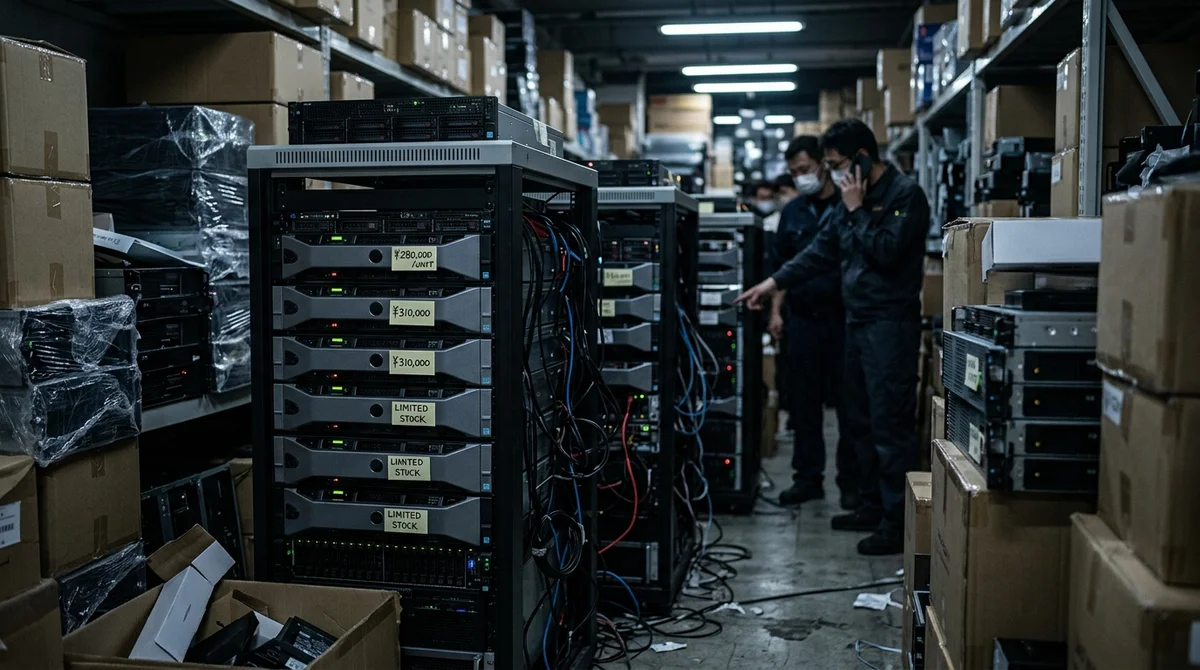
Nvidia B300 servers in China have surged in price to around $1 million amid US export restrictions and gray market supply shortages. For China's AI market, this is not merely a price spike, but a signal that access to computing infrastructure is becoming an increasingly critical bottleneck.
Why servers are becoming more expensive
The main driver of price increases is a combination of limited supply and extremely high demand. The US continues to tighten export rules for advanced AI chips, so direct and stable shipments of such equipment to China remain constrained. Against this backdrop, any server with current Nvidia accelerators automatically becomes a scarce commodity, and its price rises faster than the market can adjust.
This makes each available system an object of instant resale and markup. Additional pressure comes from the AI boom itself. Chinese companies need computing power for model training, inference, and launching new services, and demand for such resources remains frenzied.
Where once high prices looked like a temporary premium for rare goods, they now increasingly resemble a new normal for equipment whose access is limited not just by money, but by policy. For those who need scaling now, the choice often comes down to overpaying or delaying the project.
The gray market is shrinking
A critical portion of such equipment shipments to China went through the gray market. While these channels worked, companies could at least partially cover the deficit despite formal restrictions. But after crackdowns on smuggling intensified, the flow of equipment narrowed, and each available system became more valuable. As a result, the cost of Nvidia B300-based servers nearly doubled, reaching $1 million. The final price is now driven by several factors simultaneously:
- US export restrictions
- shortages of new supplies to China
- decline in gray market import volumes
- rising risks for intermediaries and logistics
- frenzied demand for AI computing power
The gray market has always been expensive and unstable, but now it is becoming even narrower. Buyers pay not only for hardware, but also for the very possibility of obtaining it within reasonable timeframes. The higher the risk to the supply chain, the more the markup grows at each stage—from sourcing equipment to its actual delivery to the end customer.
Consequences for Chinese AI
Such a price spike affects not only budgets but also development pace. Large players can still afford to overpay for computing access if it concerns strategic AI projects. For mid-sized companies, research teams, and startups, the situation looks tougher: launching new models, expanding clusters, and testing more complex scenarios become noticeably more expensive.
There is a second effect: the market is beginning to divide by infrastructure access. Where competition once ran mainly on model quality, product launch speed, and data, hardware availability is now increasingly decisive. In such an environment, advantage goes to those who secured supply channels in advance, have large budgets, or can transition faster to domestic alternatives.
The price increase also shows the problem has long transcended any single model or chip line. For China's AI sector, computing infrastructure is becoming a strategic resource, and any supply disruptions immediately affect price, timeline, and scale of development.
What this means
The Nvidia B300 story illustrates a simple truth: in the AI race, winners are not just those with better models, but those with access to hardware. As long as export barriers persist and gray channels narrow, the computing power deficit in China will remain a major constraint on market growth.
Want to stop reading about AI and start using it?
AI News is a curated feed of AI/tech news. Hamidun Academy teaches you to use AI systematically in your work.