Brad Lightcap from OpenAI: Memory Shortage and Energy Crisis Threaten AI Infrastructure
OpenAI's Chief Operating Officer Brad Lightcap identified two main bottlenecks for AI infrastructure growth: HBM memory chip shortages and insufficient power…
AI-processed from Bloomberg Tech; edited by Hamidun News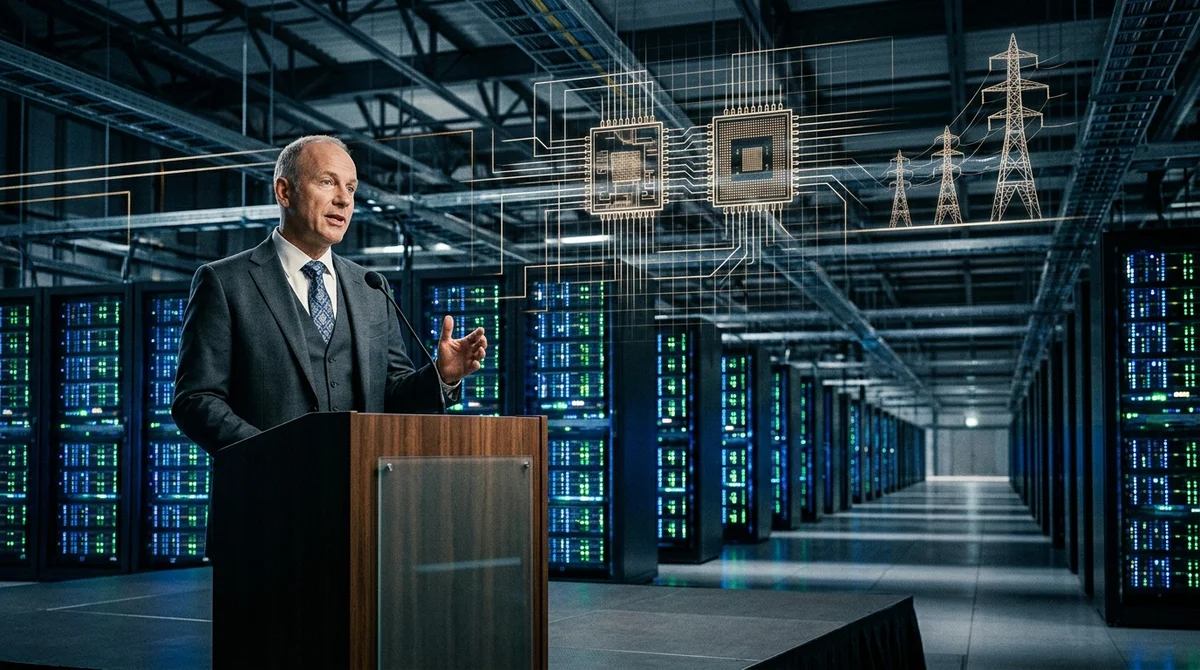
Brad Lightcap, Chief Operating Officer of OpenAI, has identified a deficit of memory chips and limited energy capacity in the United States as potential bottlenecks that could slow down AI infrastructure scaling for years to come.
Two Physical Limits
The race to build new data centers and deploy increasingly large models is already colliding with hard physical constraints — and Lightcap has publicly identified both for the first time. The first is a shortage of memory chips, especially HBM (High Bandwidth Memory). This is specialized memory with extremely high bandwidth, without which modern AI accelerators — NVIDIA H100, Blackwell, AMD Instinct — cannot process models at the required speed. HBM is currently produced by only three companies in the world: Samsung, SK Hynix, and Micron. Demand from OpenAI, Google, Microsoft, and Meta has already outpaced production capacity. Supply queues stretch 12–18 months, while building new factory lines takes 2–3 years.
The second factor is the state of US energy infrastructure. American data centers already consume about 4% of the country's total electricity — roughly as much as the entire state of California. According to Goldman Sachs analysts' forecasts, by 2030 this load will triple. Connecting new major facilities to the electrical grid takes 3 to 7 years: aging equipment, an acute shortage of industrial transformers, and multi-level regulatory approvals create backlogs that won't clear in any foreseeable timeframe.
Details of the Shortages
Each constraint has its own specific nature:
- HBM chips — production is growing, but significantly slower than demand from AI accelerator manufacturers
- Industrial transformers — manufacturing time has increased from one year to two to three years due to a global explosion in orders
- Sites near power nodes — in key states, there are literally no suitable locations with the necessary connection capacity
- Electrical engineers and power system specialists — an acute shortage of personnel is slowing construction just as much as equipment shortages
- ISO/RTO queues — energy grid operators are overwhelmed with data center requests and consider them for years
The combination of these factors means: even with sufficient capital and political will, building a large data center in the US today is extremely difficult.
Stargate and Resource Reality
In early 2025, OpenAI, along with SoftBank and Oracle, announced the Stargate project — an investment program of up to 500 billion dollars for deploying AI infrastructure in the US. The first phase was planned to invest 100 billion. It is precisely against the backdrop of these ambitions that the COO's statement carries particular weight: even an unprecedented financial plan does not remove the constraints of the physical world. If the HBM shortage persists, the cost of memory will continue to rise — and with it, the operating expenses of all AI platforms. If energy capacity is not deployed on schedule, some Stargate facilities will be delayed by years.
Lightcap is, in essence, publicly acknowledging: OpenAI's growth is now limited not only by algorithms and training data, but by hard physical resources — silicon and electricity.
What This Means
The words of the Chief Operating Officer of the world's largest AI company are a signal to the entire industry. Physical supply chains have become as strategic a resource as models and datasets. Memory manufacturers and energy companies are gaining compelling arguments for accelerating capital investments. For businesses dependent on AI services, this is an important reminder: the availability and cost of tools will be determined not only by progress in models themselves, but also by whether sufficient physical infrastructure exists to run them.
Want to stop reading about AI and start using it?
AI News is a curated feed of AI/tech news. Hamidun Academy teaches you to use AI systematically in your work.