Anthropic Sues Pentagon Over Claude Ban for U.S. Military and Contractors
Anthropic filed suit against the Pentagon in federal court, demanding to temporarily suspend the ban on Claude use by the U.S. military and contractors. The…
AI-processed from Guardian; edited by Hamidun News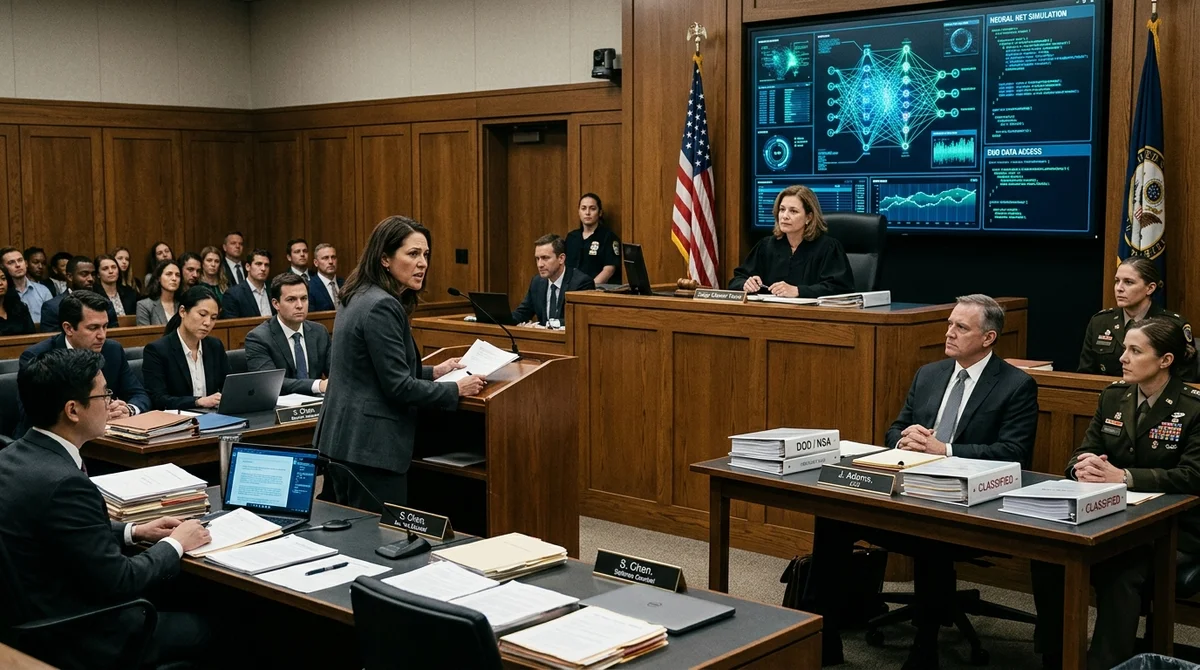
Anthropic has taken legal action in federal court against the Pentagon, seeking to stop the ban on using Claude by American military and defense contractors. The dispute has become a public flashpoint between a commercial AI company and a government that wants to more widely deploy models in sensitive military scenarios.
How the Conflict Began
The proceedings took place on Tuesday in the U.S. District Court for the Northern District of California, presided over by Judge Rita Lin. Anthropic is seeking to temporarily freeze the U.S. Department of Defense decision that prohibited the military and contractors from using the company's technologies. Essentially, this is not about a final ruling on the case, but rather a first attempt to quickly halt the consequences of the ban while the main lawsuit is being reviewed on its merits. For Anthropic, this is critical because restrictions are already affecting access to government contracts and defense deals.
The conflict escalated after Anthropic refused to allow Claude to be used for two categories of tasks: mass internal surveillance and fully autonomous lethal systems. Following this, the Trump administration, according to the lawsuit, ordered the cessation of using Anthropic's tools not only in the military sector but also in other federal agencies. The company argues that the government has punished it not for technical product risks, but for refusing to lift its own ethical restrictions on model deployment.
What Anthropic is Demanding
The lawsuit is directed at the decision made after Pentagon chief Pete Hegseth declared Anthropic a "supply chain risk." The company considers this designation unfounded and legally vulnerable. In court, it is seeking a temporary ban on applying this status, so military structures and contractors will not be forced to immediately abandon Claude before a full hearing on the merits. The company insists that such a status was assigned without transparent explanation, and its consequences take effect immediately: access to procurement and pilots could disappear even before a court ruling on the substance of the case.
- temporarily suspend the ban for military and contractors
- challenge the "supply chain risk" status
- reduce direct losses from contracts and revenue
- protect the right to restrict dangerous scenarios for its model usage
Anthropić warns that without prompt court intervention, the damage could amount to hundreds of millions of dollars and would impact the company's reputation as a government supplier. For the developer, this is also a question of precedent: if the government can pressure AI companies through procurement and defense mechanisms, any publicly stated restrictions on model use could quickly transform from a safety policy into a commercial risk. By its logic, this would hurt not only current deals but also future negotiations with agencies that typically avoid controversial suppliers.
Why This Dispute Matters
This case matters far beyond a single contract. Until now, many AI companies have tried to balance two lines: selling technology to the government while drawing red lines for scenarios they consider unacceptable. Anthropic's story shows how fragile such a balance can be when the customer is the world's largest defense apparatus. If the court does not support the company even temporarily, it will send a signal to the entire market: refusing military or surveillance use could cost access to government funds.
On the other hand, the dispute also raises a broader question about who ultimately determines the limits of using general-purpose models — their developer or the state that finances their deployment. For Washington, this is a matter of national security and supplier control. For the industry, it is a test of whether one can seriously speak of "responsible AI" if refusing to participate in autonomous weapons results in effective expulsion from the largest government programs.
What This Means
The legal battle between Anthropic and the Pentagon turns AI ethical restrictions from PR promises into a lawsuit with enormous stakes. The outcome of this story will determine whether model developers can actually prohibit the most dangerous usage scenarios or whether the government customer will ultimately dictate the rules more strongly than any internal principles. If temporary protection is not granted, pressure on suppliers of safety restrictions will only intensify and serve as a warning to other developers.
Want to stop reading about AI and start using it?
AI News is a curated feed of AI/tech news. Hamidun Academy teaches you to use AI systematically in your work.