US Court Questions Ban on Anthropic AI Use by Federal Agencies
A US court expressed skepticism toward the Trump administration's ban on federal agencies using Anthropic's AI. For Claude's developer, this is no mere…
AI-processed from Bloomberg Tech; edited by Hamidun News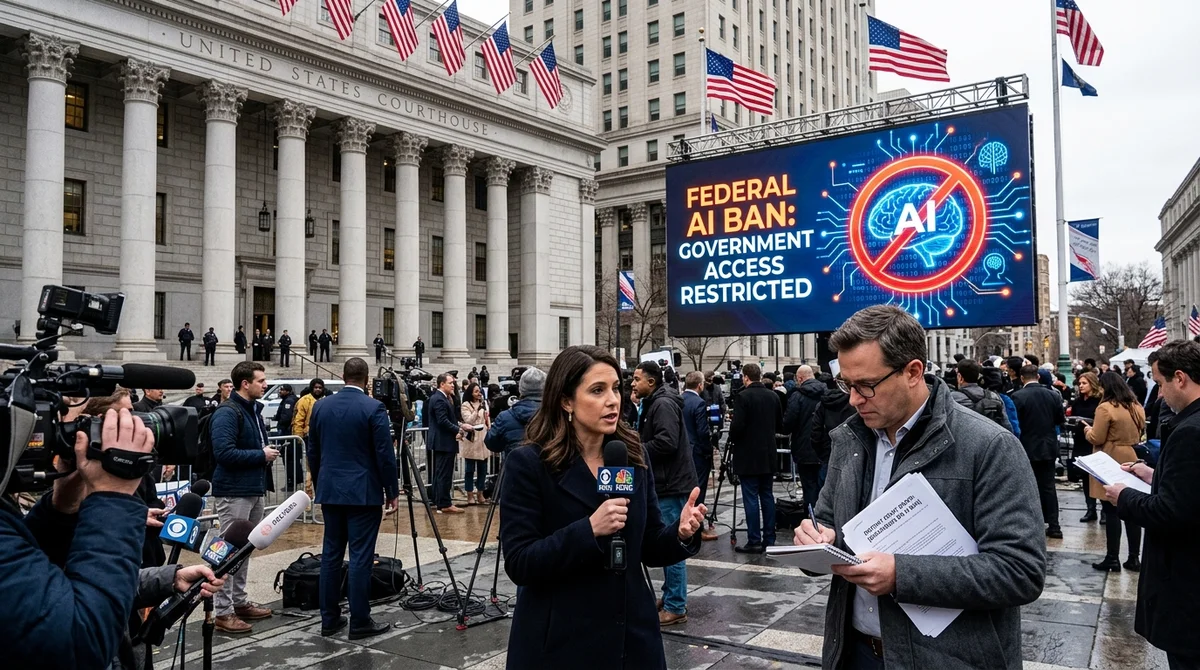
A U.S. court has cast doubt on the Trump administration's ban on the use of AI tools from Anthropic by federal agencies. For the developer of Claude, this is more than just a political dispute: the company argues that restrictions could cost it billions of dollars in future revenue.
The Nature of the Dispute
The proceeding was triggered by a ban preventing U.S. federal agencies from using Anthropic's technologies.
From the available case description, it appears the company is attempting to challenge not a single contract, but the administration's entire approach, which has effectively cut it off from access to an entire class of government buyers. For Anthropic, this is particularly sensitive: the U.S.
government sector has long been regarded as one of the largest and most stable purchasers of corporate software, cloud services, and automation tools. The dispute extends far beyond a single company. If federal agencies are prohibited from using products from a specific AI developer, it immediately affects both the market and how other clients perceive risks.
For private companies, such a signal can mean additional audits, purchase freezes, and more cautious pilots. This is why Anthropic speaks of potential losses in the billions of dollars: the issue is not only about current sales, but also about a long chain of future deals that could have followed government approval.
Signal from the Court
At the hearing, the judge clearly did not accept the administration's arguments without question. According to the case description, he was skeptical of the justification for the ban and called the situation troubling. This is an important signal, even if a final decision on the case has not yet been made.
In similar disputes, the court's position at an early stage often indicates how convincingly the government can defend its actions and how high the risk is that the ban will need to be reconsidered or explained anew. For Anthropic, such a tone from the court matters in several ways. First, the company gets a chance to shift the dispute from a political plane to a legal one, where specific reasons and evidence are required.
Second, even preliminary skepticism from the court helps reduce reputational damage: the market sees that the ban does not appear unquestionable. And third, the very fact of an open court discussion increases transparency around how authorities plan to regulate AI companies' access to government clients.
Stakes for the Market
The story around Anthropic matters not only for the company itself, but for the entire AI industry in the United States. Government procurement often becomes a marker of trust: if a product is allowed into agencies, it simplifies negotiations with banks, corporations, and major contractors. But if a supplier is cut off without logic that makes sense to the market, the consequences quickly spread far beyond the contract itself. This is why the case is closely followed not only by lawyers, but also by teams selling enterprise AI.
- for Anthropic, it is a risk of losing not just one sales channel, but an entire customer segment
- for other AI companies, it is a signal that access to the government sector may depend not only on product quality
- for corporate clients, it is a reason to look more carefully at regulatory risks when choosing a model
- for authorities, it is a test of whether they can explain restrictions through transparent criteria, rather than general statements
Another important point is timing. The AI market changes too rapidly, and even a few months of uncertainty can cost a company major contracts, partnerships, and integrations. If Anthropic is right in assessing the scale of the damage, the dispute with the government becomes not just a legal problem, but a factor that could affect the pace of business growth. For competitors, this is also not neutral news: any such decision shifts the balance of power in the enterprise AI market.
What This Means
The court dispute around Anthropic shows that the battle for the AI market is no longer taking place only in laboratories and clouds, but also in courts. If authorities want to restrict individual models' access to government structures, they will need to explain such decisions as specifically as possible. Otherwise, each such ban will turn into a precedent with major consequences for the entire industry. For Anthropic, the outcome of the case could be a test of its right to compete for one of the most valuable segments of the market.
Want to stop reading about AI and start using it?
AI News is a curated feed of AI/tech news. Hamidun Academy teaches you to use AI systematically in your work.