Arm launches its own AI processors and targets $15 billion in annual revenue
For the first time in 35 years, Arm is entering the server processor market directly. The company unveiled an AGI CPU for agentic AI and expects this…
AI-processed from 3DNews AI; edited by Hamidun News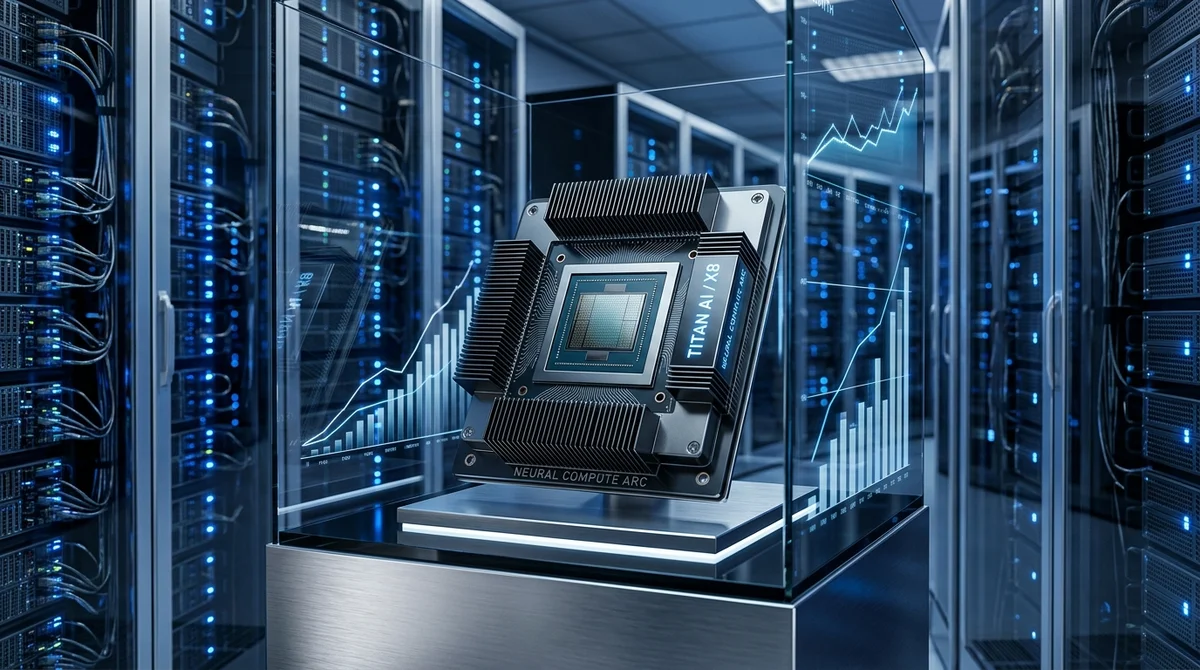
Arm decided for the first time in 35 years not to limit itself to licensing its architecture and is entering the server processor market itself. The company showcased the Arm AGI CPU chip for agentic AI and stated that in five years it wants to earn around $15 billion annually from its sales.
Why the Strategy is Changing
Until now, Arm's business was built around a different model: the company designed the architecture and computing blocks, while licensing and royalties from partners helped it earn money. Amazon, Google, Microsoft and dozens of other players have long operated on this basis. The new move changes Arm's very role in the market — now it wants to be not only a supplier of intellectual property, but also a seller of finished hardware.
Historically, this made Arm a more neutral player than direct chip manufacturers. The transition looks logical against the backdrop of the AI infrastructure boom. If growth previously came from smartphones and traditional servers, now big money is concentrating in data centers, where it's necessary to serve not only models, but also entire chains of agentic tasks.
For Arm, this is a chance to capture significantly more revenue from each deployment than with a typical licensing scheme. In such an architecture, the CPU becomes a critical node again, rather than a secondary component.
"This is a very pivotal moment for the company," — as
René Haas described the launch of the new direction.
Where the Billions Will Come From
Arm estimates its annual revenue for last year at approximately $4 billion and wants to increase it to $25 billion by 2031. Of this sum, around $15 billion, according to the company's plan, should come from its own AI processors. In other words, Arm expects this new hardware direction to become the source of roughly 60% of revenue and essentially restructure the economics of the entire business. For investors, this means betting on a rapid expansion of the total addressable market rather than gradual royalty growth. The market initially reacted positively: after the announcement, the company's stock gained about 6%.
The bet is on growing demand for CPU in the age of agentic AI. According to Arm management's estimates, the need for central processors for such tasks could increase at least fourfold. The logic is straightforward: the more agents, schedulers, memory, network operations, and data exchange between accelerators in a system, the more important the CPU becomes as a coordinating layer of infrastructure. This is exactly what Arm is trying to leverage for greater earnings than before.
- Target total revenue by 2031 — $25 billion
- Expected revenue from proprietary AI chips — $15 billion annually
- Share of new business in revenue structure — approximately 60%
- Profit margin target on the first chip — approximately 50% net margin
- Earnings per share forecast — up to $9
The product itself is important too. Arm AGI CPU is a server processor designed for agentic AI infrastructure. According to Arm, the chip is manufactured on a 3-nm process, features up to 136 Neoverse V3 cores, supports up to 6 TB of memory, and is designed for orchestration, scheduling, memory operations, and data movement within large AI clusters. In other words, Arm is not trying to replace GPU, but wants to occupy the management layer around them.
Who Can Buy
Arm directly states that it will not force its current partners to abandon their own Arm-compatible developments. Amazon, Google, and Microsoft already use Arm architecture in their server processors and are unlikely to want to completely change course. But the new chip opens the company to a different segment — those who want to quickly obtain a ready-made platform without years of their own development.
For many customers, this could be the fastest way to launch new AI infrastructure. Potential clients could include cloud providers, specialized AI systems developers, and companies that want to move away from Intel and AMD but lack resources for their own CPU project. Analysts expect such processors to cost thousands of dollars.
Meanwhile, Arm already has a strong ecosystem around the product: among confirmed partners and clients are Meta as a key co-developer, as well as OpenAI, Cloudflare, Cerebras, SAP, and SK Telecom.
What This Means
Arm is making the sharpest bet in its history: from the model of "we design for others" to the model of "we sell our own chips." If demand for agentic AI truly pushes the CPU market upward, the company will be able to transform itself from an infrastructure licensor into one of the most prominent suppliers of server hardware for AI. If the plan works, another heavyweight will appear on the market that will compete not only with its architecture but also with a finished product.
Want to stop reading about AI and start using it?
AI News is a curated feed of AI/tech news. Hamidun Academy teaches you to use AI systematically in your work.