OpenAI to raise another $10B from investors for data centers and training new models
OpenAI plans to raise another $10B in its current funding round, bringing the total to approximately $120B. Amazon, Nvidia, and SoftBank have already…
AI-processed from 3DNews AI; edited by Hamidun News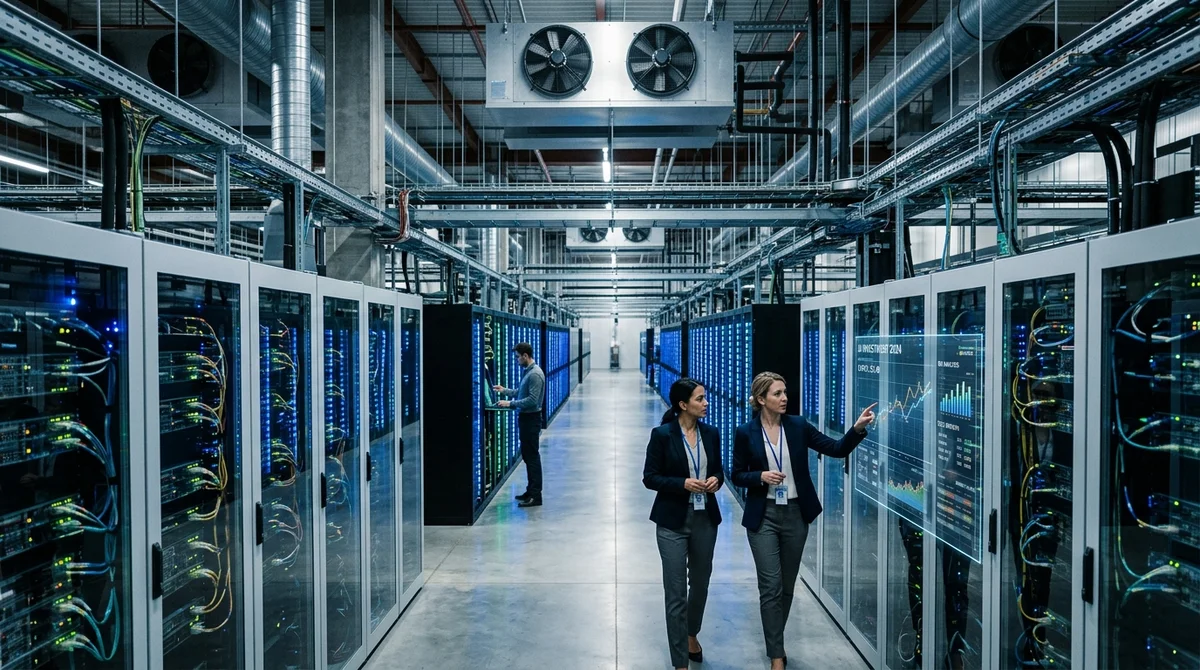
OpenAI is planning to attract another $10 billion as part of its current funding round. The bulk of the money has already come from Amazon, Nvidia, and SoftBank, and the company needs the new tranche to accelerate growth of computing power and train the next generations of language models.
Who Is Providing the Money
This is about closing out the remaining part of a round that should bring OpenAI approximately $120 billion in total. According to industry sources, the company has already received the lion's share from Amazon, Nvidia, and SoftBank — players for whom it is advantageous to be close to the largest consumer of AI hardware and cloud resources. Now OpenAI is closing the tail end of the deal through other institutional participants, that is, funds and large investment structures willing to enter the company at a late stage.
It is important to note that these are not retail investors and not a small intermediate round. For the market, such a tranche is a signal that demand for a stake in OpenAI remains high even after the massive investments of strategic partners. The wider the circle of participants, the less dependent the company is on a single group of donors, and the easier it is to build a long-term financial plan tied to expensive infrastructure rather than to a single model release.
This also strengthens OpenAI's position in future negotiations over loans and new investments.
Where the Money Will Go
The main expense at OpenAI today is not marketing and not expansion in the spirit of a typical startup, but computation. The company burns billions on training and deploying models, rents and reserves capacity, concludes long-term contracts with cloud providers and accelerator manufacturers. The new capital is needed to not slow down the launch of the next models while simultaneously handling the load from ChatGPT users, API clients, and corporate customers, including more powerful multimodal systems.
- expansion of data centers and rental of new clusters
- purchase and reservation of accelerators for model training
- inference for ChatGPT, API, and corporate services
- development of new generations of language and multimodal models
- reserve liquidity for long-term infrastructure contracts
These investments work with a long payback cycle: money goes out now, and returns come later — through subscriptions, corporate licenses, and API. Therefore, OpenAI is effectively becoming not only a model developer but also an operator of massive AI infrastructure. The faster the audience grows and the volume of requests increases, the tighter the link becomes between model quality, hardware availability, and the cost per response. This is exactly why the company tries to attract capital with a buffer, rather than just enough for the next release.
Why the Stakes Are Rising
The $120 billion round shows how dramatically the economics of generative AI have changed. Not long ago, large sums were raised primarily for hiring teams and research. Now the main deficit is energy, data centers, network equipment, and chips.
Investors are not simply investing in another chatbot, but in the foundational layer of future services: whoever controls the compute gets an advantage both in the speed of training models and in the cost of running them for end clients. For Amazon, Nvidia, and SoftBank, this is also a way to solidify their position within the hottest segment of the AI market. For smaller institutional funds, participation in such a round is a chance to enter a company that sets the pace for the entire industry.
At the same time, this raises the bar for competitors: Anthropic, xAI, Google, and others have to think not only about model quality but also about where to get comparable volumes of computing resources and capital without losing flexibility.
What This Means
If the deal closes in full, OpenAI will further strengthen its status as a company that builds not just a product but infrastructure for the next phase of the AI market. For users, this is a chance to see new models and features faster. For the industry, a reminder that the race is increasingly won by those who have simultaneous access to money, chips, and energy. For smaller startups, this is also a signal: competing on idea alone is no longer enough.
Want to stop reading about AI and start using it?
AI News is a curated feed of AI/tech news. Hamidun Academy teaches you to use AI systematically in your work.