Two skiers created the world's best snow forecast service — and outpaced government weather agencies
Two skiing enthusiasts without advanced degrees or government support created a snow forecast service that outperforms NOAA and major commercial apps. The…
AI-processed from MIT Technology Review; edited by Hamidun News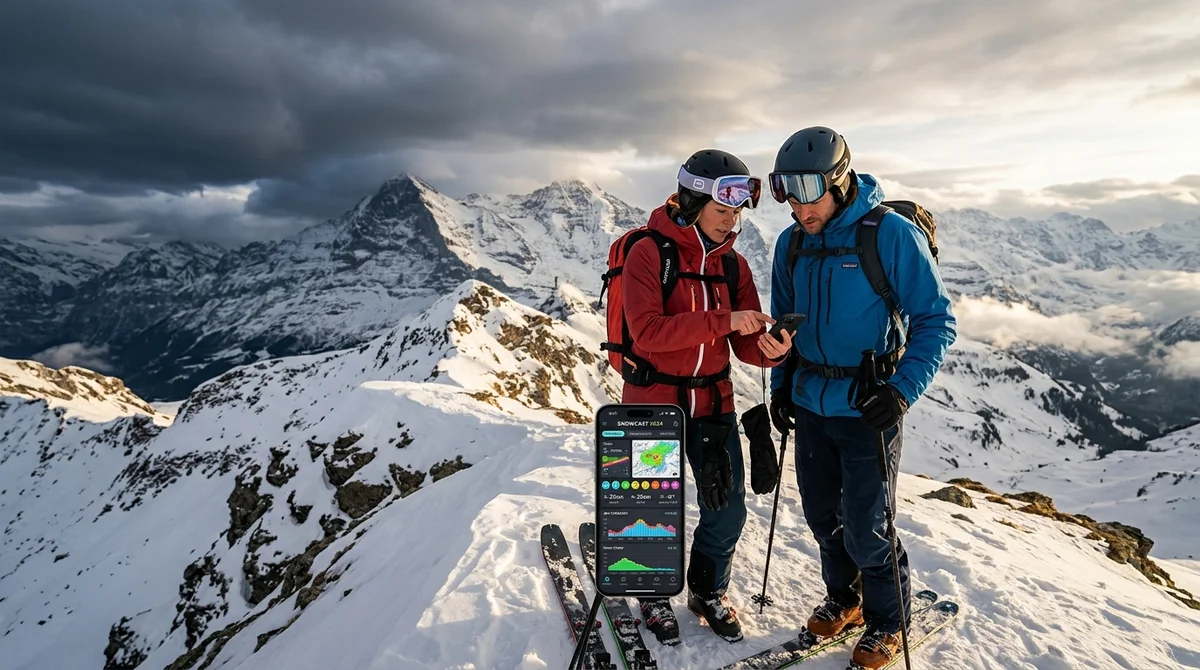
Two Skiers Created the World's Best Snow Forecast Service — and Outpaced State Weather Services
Two mountain skiing enthusiasts — not climatologists and not technology startup founders — built a snow forecast application that surpassed U.S. state services and major commercial brands. A story about how passion for the subject and proprietary AI models triumph where large budgets fail.
Where the Accuracy Comes From
The startup founders spent years on mountain slopes long before they started coding. Their approach fundamentally differs from what Weather.com or the state NWS offers. The startup relies on three sources.
First — open data from state weather services: NOAA, National Meteorological Service, satellite arrays, and data from mountain station networks. This data is free and available to everyone, but most applications use it directly — without adaptation to mountain terrain.
The second layer — proprietary AI models trained on the characteristics of specific mountain regions. Each ski zone has a unique microclimate: how clouds interact with the ridge, how wind redistributes snow, which slopes receive precipitation first. These patterns cannot be taken from a reference book — they accumulate over years of systematic on-site observations.
The third element — decades of personal experience from the founders. People who have spent thousands of days on slopes understand: a forecast of "20 centimeters" can mean dream powder or an icy crust depending on nighttime temperature and wind direction. This context is built directly into the algorithm.
Why Major Players Lose
State services provide broad coverage, but without mountain specialization. Major commercial brands have resources, but snow for them is one of hundreds of weather categories. As a result, a skier gets an averaged forecast for the nearest city, not data for a specific ridge and slope aspect.
- Standard applications don't account for micro-terrain and slope orientation
- State summaries are formatted by broad zones, not by ski points
- Major brands don't invest in niche mountain expertise
- An independent team updates models based on live feedback from skiers
- The founders have a personal stake — they'll be on the mountain next weekend themselves
"The best forecast is one you trust enough to change your route," —
such philosophy underlies every algorithmic decision.
For the ski community, the difference in accuracy is not an abstract percentage. It's the decision: drive three hours to the resort or not, choose a north or south-facing slope, set out early morning or after lunch. A forecast error costs time and money.
The Next Frontier — Avalanches
The team is working on avalanche danger forecasts — a logical and life-critical expansion. Avalanches kill several dozen people annually in the U.S. alone, and most victims are experienced freeriders who made decisions based on generalized data.
Avalanche forecasting requires exactly those competencies the startup is already strong in: granular data on snow layer composition, precipitation history over several preceding days, nighttime temperature fluctuations, and local microclimate. State avalanche centers operate by broad zones — the team is aiming for point forecasts for specific routes and passes.
What This Means
Niche AI startups with genuine domain expertise increasingly outcompete universal players. The source data is the same for everyone — the difference is who knows how to interpret it and why. A small team with a personal stake in the outcome builds a product that a corporation with a thousand employees cannot reproduce simply by increasing the budget.
Want to stop reading about AI and start using it?
AI News is a curated feed of AI/tech news. Hamidun Academy teaches you to use AI systematically in your work.