Walt Disney Abandons Nearly $1 Billion OpenAI Deal Following Sora Closure
Walt Disney withdrew from an approximately $1 billion OpenAI deal after Sora's video generation app shut down, The Hollywood Reporter reports. The story…
AI-processed from 3DNews AI; edited by Hamidun News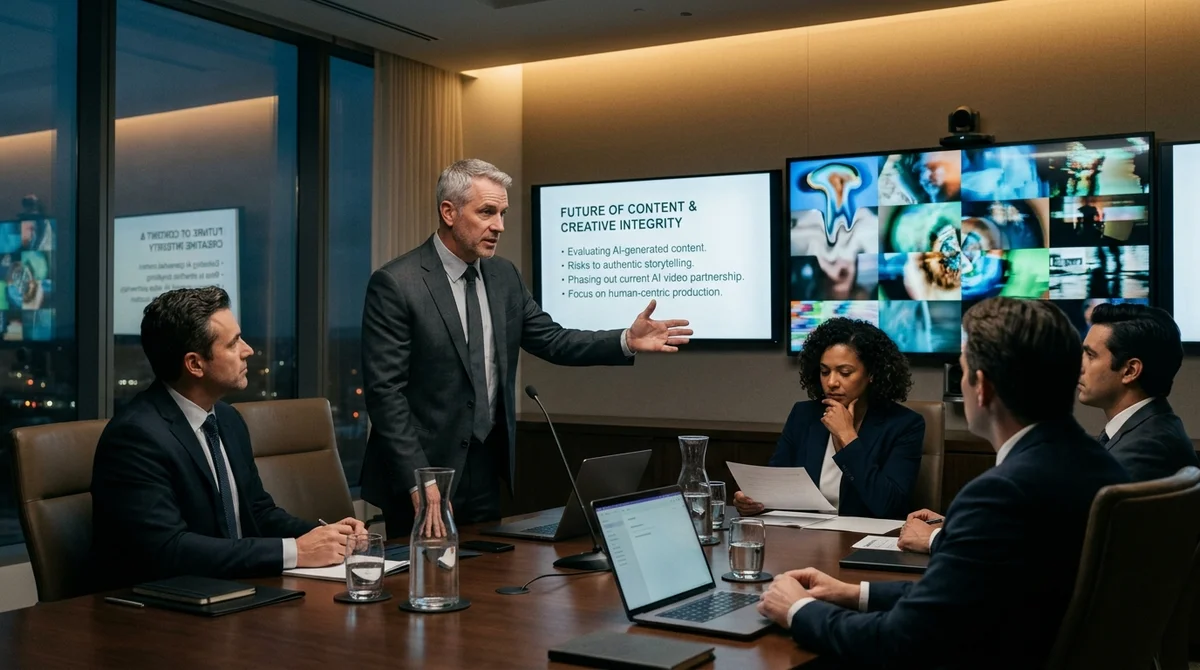
OpenAI faced a painful consequence of Sora's closure: Walt Disney, according to The Hollywood Reporter, abandoned a deal with the company for approximately $1 billion. The story quickly evolved from news about a single product into a signal for the entire generative video market.
Why the deal fell through
According to The Hollywood Reporter, it was precisely the closure of Sora, the AI-powered video generation application, that became a turning point for Disney. If the potential partnership was indeed built around access to this technology or around its commercial future, then the disappearance of the product drastically changes both the deal's value and its logic. For a major media company in such a situation, the question is no longer how impressive the demo looks, but whether the platform can be relied upon for a long-term strategy.
A sum of around $1 billion makes this story particularly instructive. At this level, discussions are not about an experiment for a press release, but about serious strategic alignment, which typically requires a clear roadmap, predictable product development, and confidence that a key service won't disappear at the moment of integration. If the central element of the offer closes, the partner faces a simple question: what exactly should he pay for and what assets does he actually receive with such an agreement.
What makes Sora important
Sora was one of OpenAI's most prominent projects in the generative video category. Even without public details of the alleged deal, it's clear why major studios show interest in such tools: they promise accelerated production, reduced costs for certain visual work, and new formats for testing ideas. But corporate interest turns into a contract only when the technology looks not like an experimental showcase, but like a product that can be integrated into processes without the risk of sudden disappearance.
For potential corporate partners, the closure of such a service changes not one detail, but the entire scope of negotiations. It's not just a specific tool that disappears, but the confidence that implementation, budget, and legal structure of the deal can be built on its basis. At the scale of companies like Disney, this immediately affects the financial model, internal approvals, and willingness to take on long-term commitments. This affects at least five sensitive points:
- a clear product around which implementation can be built disappears;
- it becomes harder to defend a large budget in front of the board of directors and lawyers;
- the risk of dependence on a supplier with unpredictable decisions increases;
- the roadmap and support conditions no longer look reliable;
- caution increases in negotiations over rights, licenses, and brand risks.
In the AI market, this is especially sensitive because almost all major deals now undergo double scrutiny. On one hand, companies evaluate the quality of the model itself. On the other — they assess the maturity of the supplier: how stable is it, how does it make product decisions, and is it able to maintain its course longer than one bright release. The Disney story shows that the second factor is now no less important than the first.
Signal for the market
For OpenAI, a possible Disney refusal is not only the loss of an almost billion-dollar deal, but also a reputational blow in the enterprise partnerships segment. Media and entertainment companies usually approach new technologies cautiously, because they face high risks in terms of copyright, brand, and production cycle predictability. If even the largest players see that an important product can be shut down, this strengthens skepticism and forces them to negotiate longer over any future agreement.
For the studios themselves, this situation also looks like a lesson. Dependence on a single AI vendor becomes too expensive if the customer has no guarantees about the product's lifespan, feature availability, and clear rules for changes. Therefore, the market will likely shift toward more cautious formats: pilots instead of mega-deals, short contracts instead of multi-year commitments, and parallel work with multiple suppliers at once, rather than betting on one high-profile leader.
What this means
The Disney and Sora story shows that the generative video market is rapidly maturing. Large companies no longer need just impressive videos and the developer's high-profile name: they need a living, stable, and predictable product. If the technology doesn't pass this test, it's not just a separate service that's at risk, but deals worth hundreds of millions or even billions of dollars around it. This means that in the coming months, the market will evaluate not promises, but product sustainability even more strictly.
Want to stop reading about AI and start using it?
AI News is a curated feed of AI/tech news. Hamidun Academy teaches you to use AI systematically in your work.