Google NotebookLM Helps Build a Personal AI Prompt Engineer in 15 Minutes
Google NotebookLM can be turned into a personal AI prompt engineer without API and complex agents. The scheme is simple: you load documentation, videos, and…
AI-processed from Habr AI; edited by Hamidun News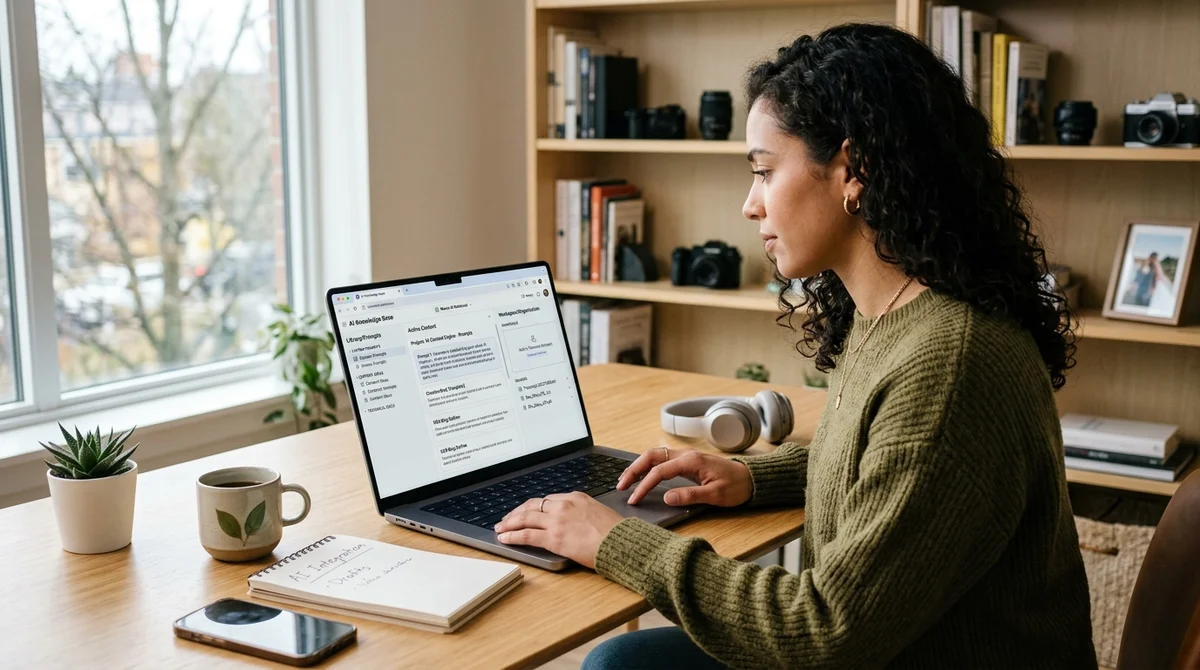
Google NotebookLM has been suggested to be used not as an ordinary note-taker, but as a personal AI prompt engineer. The idea is simple: instead of endlessly studying prompting techniques, build your own knowledge base and make the model respond only based on it.
Why Chatbots Miss the Mark
The main complaint about ordinary chatbots in such tasks is that they provide averaged-out answers. If you ask them to write a prompt for Sora, Veo, or 3D model generation, the model often mixes old advice, unverified parameters, and snippets from different guides.
In narrow scenarios, this quickly becomes a problem: a single extra parameter breaks an API call, and a single incorrect formulation changes the visual style or structure of the result.
Therefore, the task here is not about a "magical query," but about limiting the model to verified context. Essentially, the author suggests viewing prompt engineering as work with sources rather than as a competition in formulations.
The narrower the domain—video, images, JSON schemas, RAG configuration—the more important it is for the assistant to rely not on general knowledge but on specific documentation, examples, and your own working templates. This reduces hallucinations and makes answers reproducible.
How the Assistant Works
In this scheme, Google's NotebookLM acts as a lightweight RAG layer without code or API. The user creates a new notebook, uploads PDFs, websites, texts, and YouTube videos to it, and then assigns the model a clear system role.
After that, the assistant responds only based on the added materials and can not only provide a prompt but also explain why it chose specific camera, lighting, structure, or style parameters. For the user, this looks like a personal expert trained on their own library.
The key point is not to leave the service in "universal conversation partner" mode. The author recommends explicitly defining a senior prompt engineer profile and prohibiting fabrication of facts outside the sources.
The best part of this setup is the requirement to acknowledge gaps in knowledge rather than fill them with a confident tone. The formula is short but practical:
"If the information is not there—honestly say 'I don't know'."
This filter changes the quality of answers more than another list of "secret" prompting techniques.
What to Include Inside
The effectiveness of such an assistant depends not on a beautiful initial prompt but on the collection of materials within the notebook. The article recommends gathering not everything indiscriminately, but only those sources that the user is truly ready to rely on in their work.
If you upload random videos and contradictory advice, the service will simply neatly retell the chaos. If you assemble a narrow and high-quality corpus, it will start working like a disciplined editor.
The practical minimum looks like this:
- official documentation from OpenAI, Google, Anthropic, and other necessary platforms;
- video breakdowns of specific models that NotebookLM can transcribe;
- your own successful prompts, JSON schemas, and working templates;
- verified guides on images, videos, and other specialized tasks.
From there, the scenario is highly practical: the user writes a task like "create 10 prompt variations for vertical 9:16 video in a cyberpunk city," and NotebookLM returns not just a set of formulations but also the reasoning behind them.
It can suggest why a certain type of camera movement is needed, why a neon palette was chosen, what alternative approaches exist, and which parameters to avoid to prevent breaking the integration.
It is precisely this explainability that distinguishes the assistant from a folder of old notes and from an ordinary chatbot with broad but vague knowledge.
What This Means
The idea of a personal AI prompt engineer shows where everyday work with models is shifting: from hunting for the "perfect query" to building your own verified mini-RAG systems.
For content creators, marketers, and product teams, this is a quick way to standardize prompts, reduce errors, and keep expertise within a single managed knowledge base.
Want to stop reading about AI and start using it?
AI News is a curated feed of AI/tech news. Hamidun Academy teaches you to use AI systematically in your work.