Google Turns Gemini Into Smartphone Infrastructure as Apple Steps Back From Siri
Google could become the first company whose AI simultaneously shapes the future of both iPhone and Android. Apple maintains its interface and privacy but…
AI-processed from Habr AI; edited by Hamidun News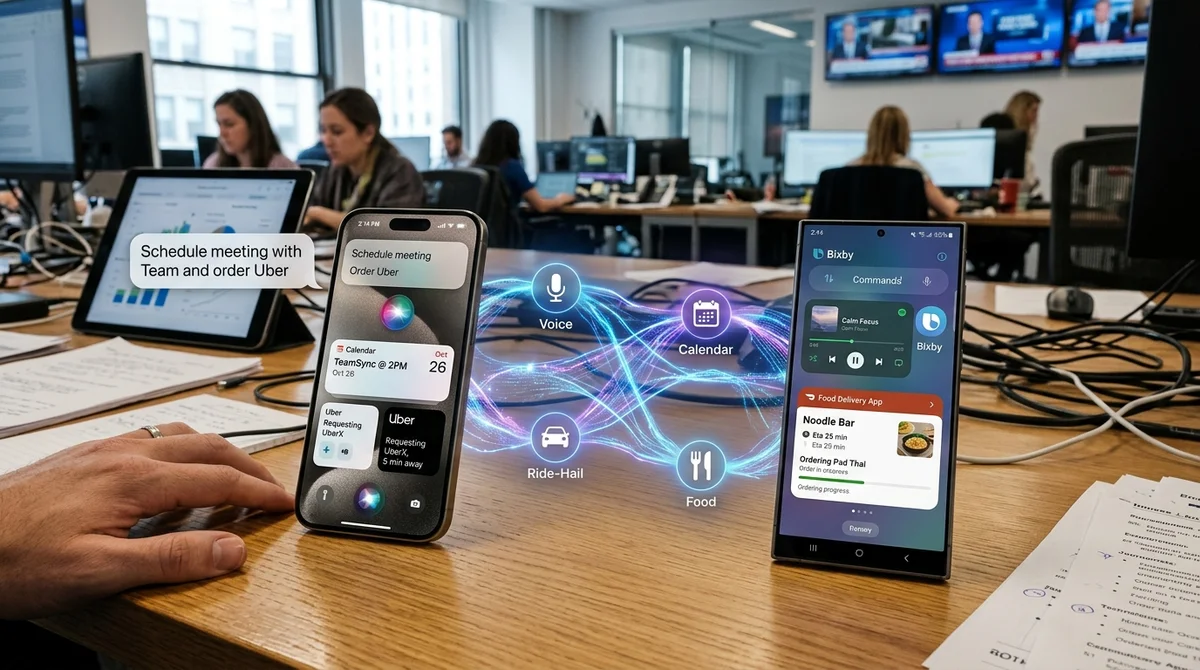
Google is trying to do something no mobile market player has managed before: turn its AI into a shared layer for two competing ecosystems at once. If this course holds, Gemini will become both the hidden "brain" for some Siri requests and a native action mechanism within Android.
Why Apple is Changing Course
Fifteen years after launching Siri, Apple still controls the world's most popular voice interface, but has never turned it into a truly intelligent assistant. On stage, Apple Intelligence showed a future where Siri connects email, calendar, messages, and personal context into a single answer. In practice, the company quickly compromised: first plugging in ChatGPT as an external crutch for complex questions, then began postponing the launch of the promised new Siri.
The core problem looks not product-based, but architectural: the old voice assistant stack doesn't align well with the logic of modern large language models. This is why a potential bet on Gemini looks not like an experiment, but like an admission of the limits of its own platform. Apple preserves what's critical to it: the interface, user data, privacy control, and the execution layer within its own infrastructure.
But the intelligence itself—the ability to understand context, reason, and assemble actions from multiple sources—is increasingly shifting outward. For a company accustomed to building key technologies itself, this is a painful turn. Essentially, Apple is admitting: in the new race for mobile assistants, the weak point isn't hardware design or the app ecosystem, but the base model.
How Google is Layering Things
While Apple solves the problem through partnerships, Google is simultaneously building infrastructure at home. The key element here is AppFunctions in Android. The idea is simple: an app publishes a set of self-describing functions, and Gemini understands on the fly what can be called, which parameters are needed, and how to link multiple actions into a single scenario. This is no longer a set of hardcoded voice commands or old intents with rigid templates. The assistant begins to work like an agent that can call the necessary tool on its own and bring the task to completion without manual navigation between screens.
- Order a taxi without opening the app
- Repeat a usual coffee or food order with one phrase
- Find a photo by contextual query
- Assemble a multi-step scenario from multiple services
"Integrate—or turn into an icon nobody taps."
Google's strongest move is that the company plays on both sides of the market simultaneously. On iPhone, Gemini can become the reasoning layer for those Siri requests where real AI is needed, while on Android, Google itself sets the standard for how the assistant interacts with apps. For developers, this changes the rules of distribution. Previously, an app fought for a spot on the home screen, convenient UX, and user retention. Now there's one more question: can the agent find this app's functions and call them without human involvement? If not, the product risks remaining just a pretty icon that users increasingly rarely tap by hand.
What This Means
Mobile AI is exiting the era of a chatbot in a browser tab and turning into an operating system interface. Victory will go not only to the one with the better model, but also to the one who embeds it into actions, permissions, privacy, and real scenarios between apps. If Google truly establishes itself both as a supplier of intelligence for some of Apple's capabilities and as the standard for agent calls on Android, the company will gain an advantage that has never existed in smartphone history. For product teams, the conclusion is direct: preparing apps to work with agents needs to happen now, not when users stop opening them by hand.
Want to stop reading about AI and start using it?
AI News is a curated feed of AI/tech news. Hamidun Academy teaches you to use AI systematically in your work.