Google simplified the transition to Gemini: you can transfer memory, chat history and settings
Google simplified the transition to Gemini for users of other AI services. Now you can transfer memory, chat history and personal settings without having to…
AI-processed from ZDNet AI; edited by Hamidun News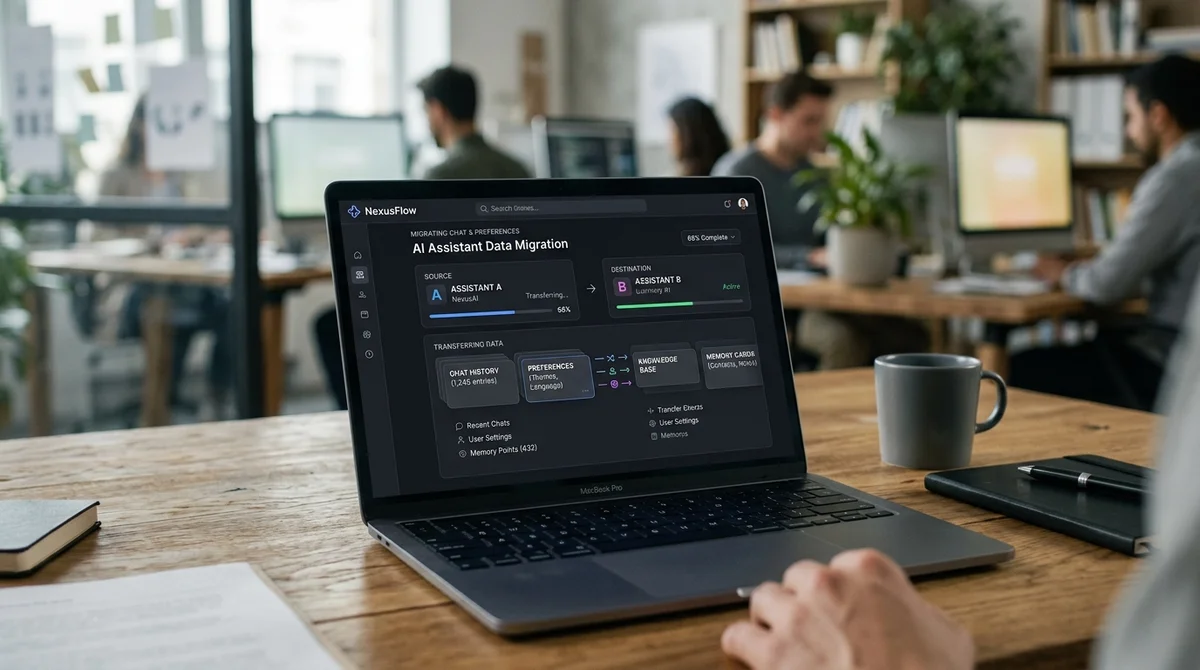
Google has added a data migration feature to Gemini that allows users to transfer data from other AI services. Users can now bring their saved memory, chat history, and personal settings to the new chatbot instead of starting from scratch.
What exactly is being transferred
The idea behind the update is straightforward: Gemini is trying to remove the most unpleasant barrier when switching AI assistants—the loss of accumulated context. For active users, this context typically builds up over months: preferred response style, work topics, recurring tasks, biographical details, and chains of past conversations. When all this remains in another service, even a good new product feels empty.
Google now offers to transfer this layer of context to Gemini without manually rebuilding your habits.
- Memory — facts about the user and their long-term preferences
- Chat history — past conversations that can be referenced in new queries
- Settings — response format, tone of communication, and other personal parameters
- Work context — topics and scenarios that the user regularly returns to
Essentially, Gemini wants to greet a new user not as a blank slate, but as an assistant that immediately understands basic expectations. This is especially important for those who use AI not occasionally, but daily: for work, learning, text generation, topic research, or project management. The more accumulated habits that can be preserved, the fewer reasons there are to delay switching or cling to an old service out of inertia.
Why this matters
Until now, competition between AI assistants has often come down to not just model quality, but also the cost of switching. Formally, it's easy to change services: open a new site, register, write your first prompt. In practice, you have to explain to the assistant again how you like to work, what tasks you solve, what constraints to keep in mind, and what style to respond in. It's not one click, but a hidden week of adaptation.
Gemini's new feature tackles exactly this problem. For Google, it's also an understandable way to simplify migrating users from competitors' ecosystems, especially from ChatGPT, which is directly mentioned in the headline of the original material. Instead of an abstract promise to "try our AI," the company offers a stronger argument: "come with your accumulated experience."
Such logic could work better than any comparison tables, because it reduces not a theoretical, but a very practical risk—losing your familiar work rhythm.
How the market is changing
This move shows that the generative AI market is gradually maturing. If services previously competed mainly on context window size, speed, and answer quality, now the portability of user experience is becoming important. Memory, history, and settings are turning into assets that users expect to control themselves.
The more valuable this asset, the higher the expectations that it can be transferred between platforms as easily as contacts or photos. If such a transfer really works reliably, it could change user behavior. People will be more willing to test new tools because the cost of experimentation drops. And AI product developers will have to compete not only for initial acquisition, but also for retaining an already "trained" user. Simply put, model quality will remain important, but retaining an audience with quality alone will become harder.
What does this mean
Google is betting not just on a new Gemini feature, but on reducing the cost of switching between AI services. For users, this is a chance to change assistants without losing accumulated context. For the market, it's a signal that the battle is no longer just over model power, but over the right to become the most convenient place for everyday work with AI.
Want to stop reading about AI and start using it?
AI News is a curated feed of AI/tech news. Hamidun Academy teaches you to use AI systematically in your work.