Meta to finance seven gas power plants for Hyperion data center in Louisiana
Meta plans to finance seven new gas power plants for the Hyperion data center in Louisiana. The story matters not only for the project's scale: it shows that…
AI-processed from Bloomberg Tech; edited by Hamidun News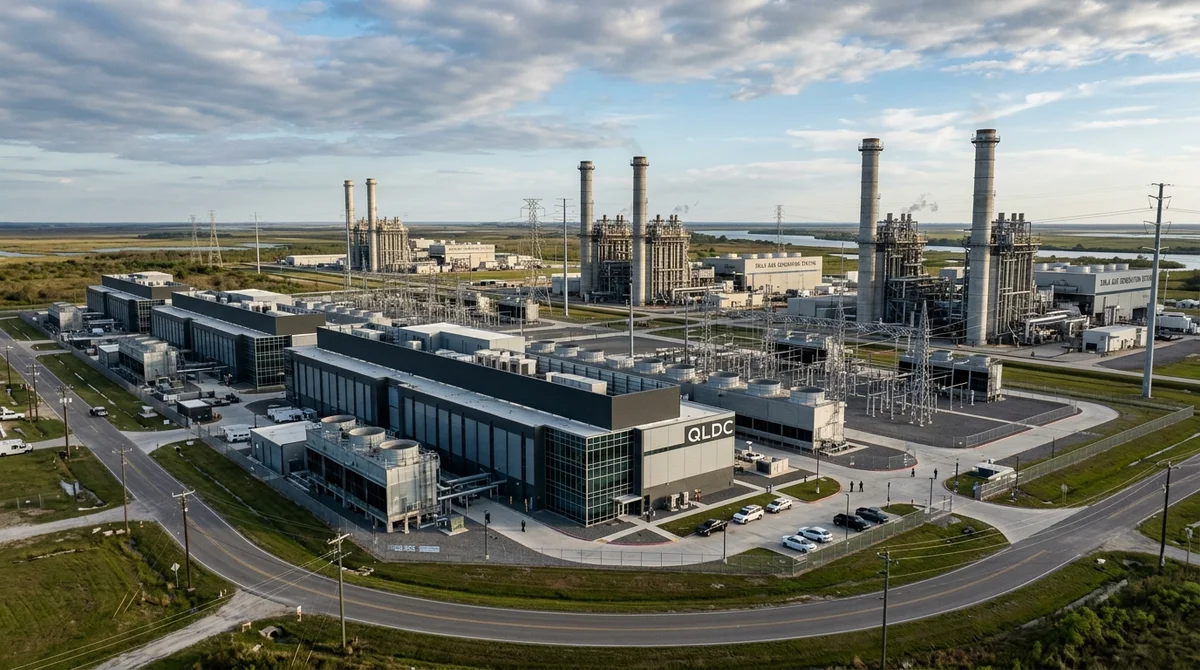
Meta is ready to finance the construction of seven new gas power stations to power the Hyperion data center in Louisiana. This is a rare case when AI infrastructure is so energy-intensive that a technology company is essentially ordering new energy generation for itself rather than simply leasing capacity from the grid.
Seven Stations for Hyperion
This is not about expanding an existing facility, but about creating a new energy base for a specific project. Hyperion is one of those mega-data centers around which the entire logic of AI capital investments is being restructured today: the more models, users, and computations, the less chance of getting by with standard grid connections. If Meta truly pays for seven gas stations, it will show that the question of energy for AI has already moved from the category of operating expenses to the category of strategic infrastructure.
For the market, this is an important shift. Not long ago, the main constraint for AI was considered to be chips and access to cutting-edge models, but now a third factor is becoming increasingly visible — electricity. When a company of Meta's level begins financing power generation next to a data center, it sends a signal not only to energy companies but also to competitors: the scale of new computing clusters is hitting against physical capacities that cannot be obtained overnight.
And this deficit can no longer be closed by simply purchasing servers.
Why the Bet on Gas
The choice of gas looks pragmatic. New AI centers require not abstract "green" power sometime in the future, but predictable energy supply on schedule. Gas stations in this logic are a compromise between launch speed, manageability, and fuel availability. Against the backdrop of the generative AI boom, tech giants are increasingly coming to the conclusion that without their own or semi-own energy base, deadlines for launching large projects start to slip. For companies with strict deadlines, this is critical.
- Faster launch than some major grid projects
- Clear, manageable generation for constant load
- Less dependence on an overloaded regional grid
- Ability to build a data center and power facilities as a unified system
But such a solution comes with a price. The more the AI business relies on gas, the sharper the conflict becomes between the speed of computing growth and the climate agenda that Big Tech itself has been pushing for years. For Meta, the Hyperion story is not just a construction project in Louisiana, but a public acknowledgment of the scale of energy consumption of the next generation of data centers. The question is no longer whether capacity is needed, but how many more separate power stations the industry will need.
Market and Competitors
News about Meta came out against a nerve-wracking background for the technology sector. Market discussion was centered around the impact of the Iran war: the Nasdaq 100 entered correction territory, and shares of major tech companies fell. At the same time, information emerged that Anthropic could go public as early as October.
Together, these stories paint a fairly accurate picture of 2026: AI companies are simultaneously fighting for capital, infrastructure, and investor trust, and each next turn of growth requires increasingly heavy offline expenses. Against this backdrop, Meta's move looks especially telling. While the market is revaluing Big Tech valuations and assessing sector sensitivity to geopolitics, the largest players continue to make long-term infrastructure decisions that pay off not in quarters but in years.
And if Anthropic is truly preparing for an IPO, investors will almost certainly look not only at revenue and models, but also at how the AI business plans to provide itself with energy at industrial scales.
What This Means
The Hyperion story shows that the next phase of the AI race will be determined not only by the quality of models but also by access to real megawatts. Winners will not be those who simply have more GPUs, but those who can quickly turn capital into sustainable computing and energy infrastructure. For the market, this is also a reminder: AI has long since stopped being a purely software story. This is changing the rules of competition across the entire industry.
Want to stop reading about AI and start using it?
AI News is a curated feed of AI/tech news. Hamidun Academy teaches you to use AI systematically in your work.