OpenAI shut down Sora due to resource shortage, breaking major Disney deal
OpenAI shut down Sora support, and the reason proved mundane: the service was too expensive and consumed scarce computing resources. According to WSJ, video…
AI-processed from 3DNews AI; edited by Hamidun News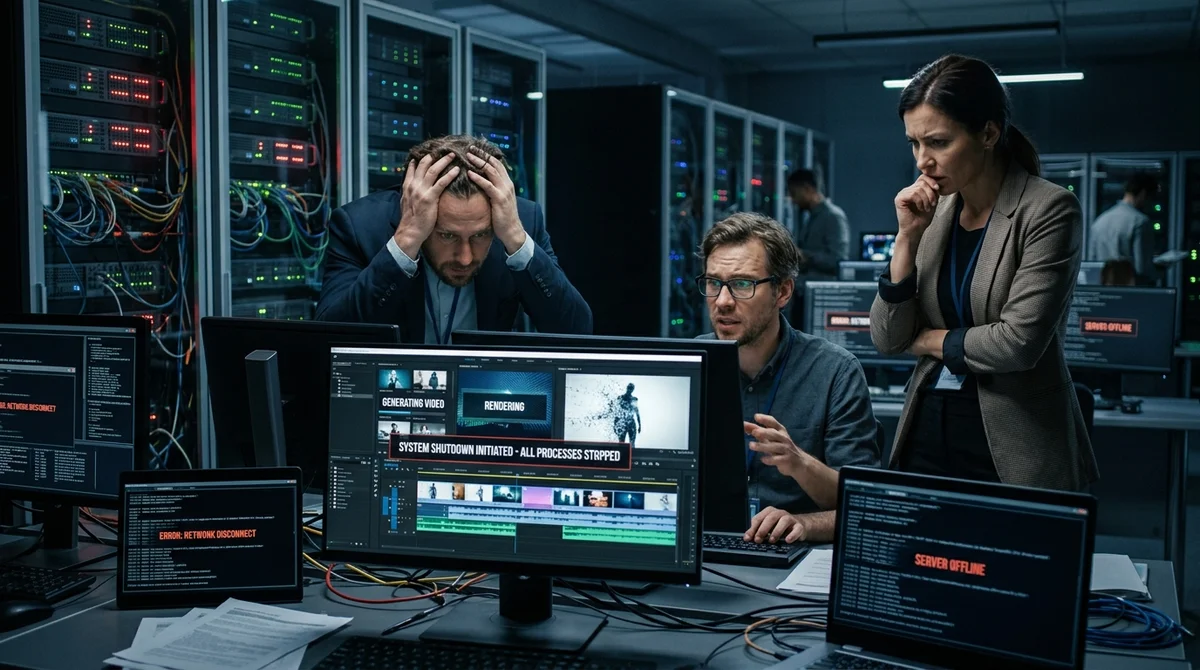
OpenAI shut down support for the Sora video generator, and the main reason has now become clear: not a change of direction, but a shortage of money and computing power. According to The Wall Street Journal, the project proved too expensive to operate and began interfering with other directions within the company.
Why Sora Was Closed
The main problem with Sora was not the quality of the technology and not weak audience interest. According to WSJ sources, OpenAI ran into a banal shortage of resources. Video generation requires significantly more computation than text models or even image processing, which means it costs more to operate on a daily basis. For the company, this became especially acute at a moment when those same accelerators and server capacity were needed for other products that management considered more important.
Inside OpenAI, Sora long developed as a relatively independent direction and received a notable share of the infrastructure. But the stronger the competition for computing resources became, the harder it was to justify such expenditure. The company had already limited the duration of videos that a single user could generate to ten seconds — precisely so the system wouldn't be overwhelmed by the load. OpenAI was unable to quickly transform the service into a sustainable source of revenue, so the balance between costs and benefits began to collapse.
Price and Load
According to sources, operating Sora could cost OpenAI approximately $1 million per day. At launch, the service quickly attracted about 1 million users, but later the audience shrank to approximately 500 thousand. Even at this scale, each user continued to consume expensive computing resources that were in demand by other teams.
OpenAI has an internal monitoring system that shows how accelerators are being used, and it was this system that helped clearly see just how expensive it had become to maintain Sora.
- Estimated daily costs — approximately $1 million
- Peak audience — roughly 1 million users
- Later the user base shrank — to approximately 500 thousand
- Early video length limitation — to 10 seconds
- The idea of paid access through ChatGPT was ultimately canceled
Based on the published data, the issue came down not only to direct expenses but also to missed opportunities. While Sora occupied a significant portion of the infrastructure, other priority projects were undernourished in resources. For OpenAI this meant a simple choice: continue subsidizing an expensive video generator or redirect capacity to where the return would be higher. Based on the company's decision, the second option proved more rational for them, despite the reputational costs and partner dissatisfaction.
Collapse of the Disney Deal
The closure of Sora hit not only users but also partnerships. According to 3DNews citing WSJ, OpenAI had an agreement with Disney worth $1 billion. It was assumed that the media company would invest this sum in OpenAI's capital, and Sora users would have the right to use licensed characters from Disney franchises when creating videos.
Against the backdrop of the AI video boom, such a combination looked like a clear path to commercialization: famous IP, mass demand, and a tool that had already become viral. But the problem is that Disney itself learned about the discontinuation of Sora support roughly an hour before it became known to the general public. Such a format of notifying a partner about such a major turnaround is hard to call normal preparation.
Now Disney, according to sources, is already negotiating with more than ten alternative AI service providers. Formally, the company thanked OpenAI for the collaboration experience, but in essence it means one thing: the studio is quickly looking for a replacement for the platform on which it recently made a serious bet.
What This Means
The Sora story shows that even a high-profile AI product with millions of users may not survive internal competition for resources. For the market, this is a signal: the era of flashy demos is ending, and the economics of operation comes to the fore. If a service does not pay for expensive computation and interferes with key business directions, it can be shut down even against the backdrop of a recognizable brand, viral popularity, high-profile partnerships, and billion-dollar negotiations on the market.
Want to stop reading about AI and start using it?
AI News is a curated feed of AI/tech news. Hamidun Academy teaches you to use AI systematically in your work.