Mistral raises $830M for data center with Nvidia chips, intensifies AI race in Europe
Mistral AI has raised $830M in debt financing for a data center outside Paris to host Nvidia chips. For the French startup, this is the first debt financing…
AI-processed from Bloomberg Tech; edited by Hamidun News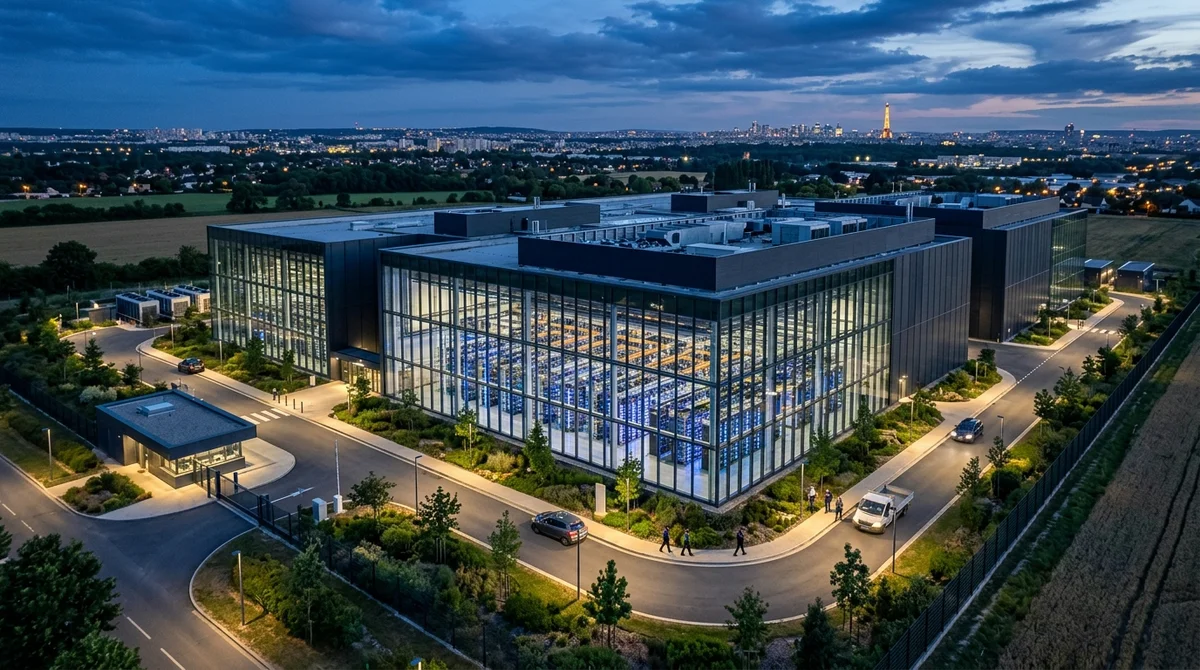
French startup Mistral AI attracted $830 million in debt financing to build a data center outside Paris. The money will go toward deploying Nvidia chips — this is one of the most notable signals that Europe's AI race is shifting from models and demos to expensive proprietary infrastructure.
Why This Matters
For Mistral, this is not just another funding round, but its first debt deal of this scale. The company, often called a European alternative to OpenAI, is showing that the status of a model developer is no longer enough for it. To compete with American players over the long term, you need to control the computational base, training schedule, and access to GPUs. In generative AI, hardware has stopped being a back-office function: it directly affects release velocity, cost structure, and product quality.
The deal format itself is also telling. Instead of another equity round, Mistral is turning to credit markets to finance a capital-intensive asset. This is an important shift for the sector: infrastructure requires massive upfront investment, and debt instruments allow you to build it without immediately diluting existing investors' stakes. In essence, the market is beginning to view strong AI companies not just as software startups, but as future operators of critical digital infrastructure.
Betting on Hardware
The Paris-area data center project isn't about image. It should become a platform for deploying Nvidia chips — the effective heart of the entire computational system. The more proprietary or dedicated compute capacity a developer controls, the less dependent it becomes on external cloud provider queues. This provides control over model launch timelines, computation costs, task prioritization, and service quality for clients expecting stable performance.
The practical effect of such a project is immediate:
- Greater predictability in accessing scarce GPUs
- Ability to train and fine-tune proprietary models faster
- Reduced dependence on American cloud platforms
- Stronger negotiating position with corporate clients
- Strengthened European narrative around technological sovereignty
The geographic factor is separately important. Locating the project near Paris helps Mistral build its image as a European AI player not just at the brand level, but at the infrastructure level. For clients, regulators, and partners, this sends a clear signal: the company wants to keep critically important capacity closer to home, rather than relying entirely on external platforms. In an era of talk about technological sovereignty, this is no longer marketing — it's a concrete architectural decision.
Why Debt Makes Sense
Mistral's deal fits into a broader trend: technology companies are increasingly turning to credit markets to finance unprecedented AI infrastructure buildout. The reason is clear: generative AI requires ever more computation, and data centers, power supply, cooling, and accelerator procurement are too expensive to fund solely through traditional venture rounds. The money is needed not in two years, but now, while demand for models and services is growing rapidly.
For investors and lenders, this is also a new type of bet. They are financing not abstract audience growth, but a physical asset designed to support demand for AI services in the coming years. Such logic is closer to infrastructure deals than to the familiar venture market. If the approach takes hold, AI startups will increasingly be valued not only on model quality and revenue, but on how quickly they can commission computational capacity and turn it into product.
What This Means
Mistral shows that competition in AI is now about more than just building the best models — it's about access to hardware, energy, and facilities. For Europe, this is an important precedent: homegrown AI champions are attempting to build not a showroom, but a full-fledged industrial ecosystem around artificial intelligence, where models, data centers, and capital work as a unified system.
Want to stop reading about AI and start using it?
AI News is a curated feed of AI/tech news. Hamidun Academy teaches you to use AI systematically in your work.