General Motors to Replace Google Assistant with Gemini in 4 Million US Vehicles
GM is launching one of the auto industry's largest AI updates: Gemini will arrive over-the-air in roughly 4 million vehicles from Cadillac, Chevrolet, Buick…
AI-processed from TNW; edited by Hamidun News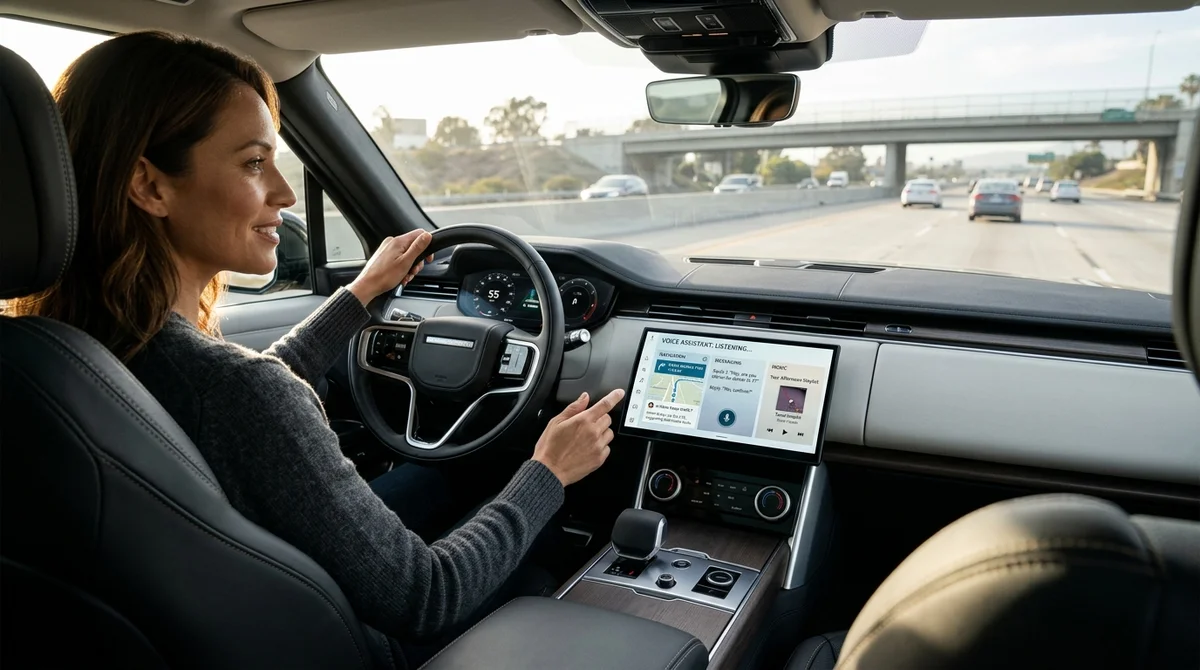
General Motors has begun rolling out Google Gemini to approximately 4 million vehicles in the USA. The OTA update for 2022 model year and newer replaces Google Assistant and represents one of the largest deployments of generative AI in production vehicles.
How the rollout is happening
General Motors announced the rollout on April 28, 2026. The update will arrive over the air to Cadillac, Chevrolet, Buick and GMC model year 2022 and newer, provided the vehicle already has the Google Built-in package installed. The rollout will take several months, with the feature initially available only in the USA. For Gemini to appear in a vehicle, the owner needs to be connected to OnStar, sign into Google Play Store on the multimedia system, select US English as the assistant language, and separately consent to enabling Gemini.
For the company, this is more than just switching one voice assistant for another. General Motors has spent years building a stack of Android Automotive, its own services and OnStar infrastructure, enabling it to update millions of vehicles over the air without a service visit. In parallel, it is already preparing the next layer: later in 2026, a more deeply integrated assistant trained on data specific to individual vehicles and OnStar services is promised. Gemini here serves as an intermediate, but very large-scale step.
What changes in the cabin
The main difference from the current Google Assistant is the conversational style. The old assistant in the car worked primarily as a command set: the phrase had to be pronounced precisely, or the scenario would break. Gemini is designed for free dialogue, can maintain context, understand clarifications, and does not require restarting the request each time.
In a real driving scenario, this looks like: a driver asks to route to the nearest coffee shop, simultaneously send a message to a relative, then clarifies they need a coffee shop with outdoor seating — and the conversation continues in one stream.
- You can ask Gemini to summarize incoming messages, draft a response, edit it, and even translate it into another language.
- The assistant can work with media services in the car, including Spotify, YouTube, Amazon Music, Apple Music, Hulu, Prime Video and other apps.
- The driver can request a playlist based on mood or trip duration, a short summary of a podcast, and answers to questions along the route.
- For commercial transport, the company demonstrates more practical scenarios: finding cheap fuel along the way, planning multiple stops, and selecting parking suitable for a trailer.
"Later this year, GM will release a more deeply integrated AI experience based on
OnStar."
The data question
Against this backdrop, the rollout inevitably comes down to trust. On January 14, 2026, the FTC finalized an agreement with General Motors and OnStar regarding the collection and sale of precise geolocation and driving behavior data without sufficiently clear and informed user consent. The complaint was publicly announced in January 2025.
Under the final order, the company is prohibited for five years from transmitting such information to consumer reporting agencies, and is required to obtain explicit consent for collecting, using and sharing connected vehicle data, provide people access to a copy of their data, allow them to request deletion, and disable precise geolocation collection where technically feasible.
This is particularly sensitive right now because the new assistant by definition works better the more it knows about the car, routes, and owner's habits. General Motors claims it has made the integration privacy-focused and that drivers will be able to control which data the assistant can access. But the real assessment will depend not on the language in press releases, but on how transparent the consent process is, how the settings work, and how clearly it's explained what exactly is being processed after the OTA update in already-sold vehicles.
What this means
The automotive industry is rapidly moving from basic voice commands to full conversational AI interfaces, and General Motors is trying to secure a strong position through scale. For the market, this signals that future competition in cars will not only be about batteries, screens and autopilot, but also the quality of the built-in assistant. For drivers themselves, the question is now twofold: how much more useful the car will become after Gemini, and whether they are ready to trust it with even more data about themselves.
Want to stop reading about AI and start using it?
AI News is a curated feed of AI/tech news. Hamidun Academy teaches you to use AI systematically in your work.