The nuances of human-like intelligence: how machines "think"
Professor Phillip Isola investigates the "thinking" processes of intelligent machines. The goal is the safe integration of AI into human society. His work is aimed at understanding and controlling the development of artificial intelligence and minimizing risks.
AI-processed from MIT News; edited by Hamidun News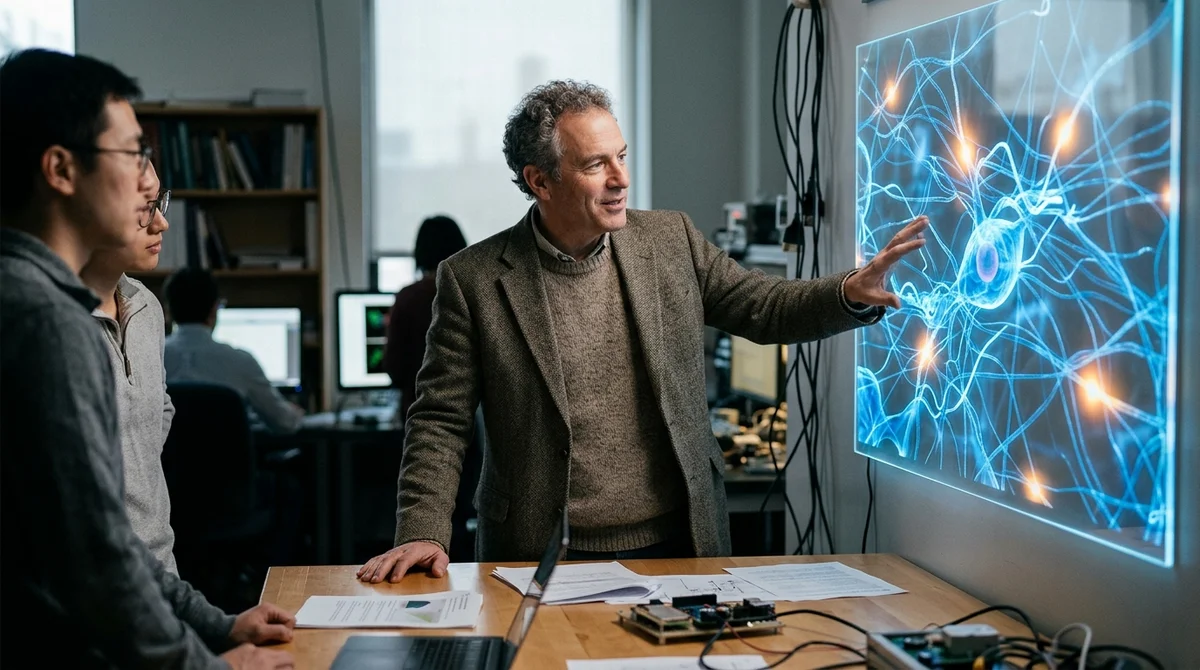
In the era of rapid artificial intelligence development, the question of how machines "think" is becoming increasingly relevant. Professor Philipp Isola, a leading researcher in this field, has dedicated his work to studying the cognitive processes underlying artificial intelligence, with the goal of ensuring its safe and harmonious integration into human society.
The context of Professor Isola's research is driven by exponential growth in AI capabilities. From machine learning algorithms capable of analyzing vast amounts of data to neural networks that mimic the structure of the human brain, artificial intelligence is penetrating all spheres of our life. However, alongside potential benefits, there are serious concerns related to the unpredictability of AI behavior and possible negative consequences of its application.
Professor Isola's work aims to unlock the "black box" of machine thinking. He uses advanced methods from neurobiology and cognitive psychology to analyze the functioning of artificial neural networks, seeking to understand how they make decisions and form their beliefs. This includes studying the architecture of neural networks, analyzing information flows between neurons, and developing methods for visualizing and interpreting the internal processes of AI.
One of the key aspects of the research is identifying and eliminating potential sources of bias and discrimination in AI algorithms. Professor Isola develops methods for training AI on diverse and representative datasets, as well as tools for detecting and correcting errors in machine reasoning logic. This makes it possible to create more fair and ethical artificial intelligence systems that do not reproduce or exacerbate existing social inequalities.
The results of Professor Isola's research have far-reaching consequences for the entire artificial intelligence industry. They enable developers to create more reliable, secure, and predictable AI systems that can be effectively used in various fields, from medicine and education to transportation and finance. Furthermore, his work contributes to the development of a more conscious and responsible approach to AI development and implementation, which is a necessary condition for its harmonious integration into human society.
Ultimately, Professor Isola's research is an important step toward creating artificial intelligence that will serve the interests of humanity. Understanding how machines "think" will allow us not only to leverage their potential to solve complex problems, but also to ensure their safe and ethical application, minimizing risks and maximizing benefits for all.
Want to stop reading about AI and start using it?
AI News is a curated feed of AI/tech news. Hamidun Academy teaches you to use AI systematically in your work.
The AI world, distilled — once a week
Seven stories that actually mattered, hand-picked. No noise, no reposts, no press releases.
Done! Check your inbox for a confirmation.