Anthropic wants to expand access to Mythos, but White House blocks plan for 120 organizations
Anthropic plans to expand access to Mythos — its proprietary model for discovering and exploiting vulnerabilities — from approximately 50 to 120…
AI-processed from 3DNews AI; edited by Hamidun News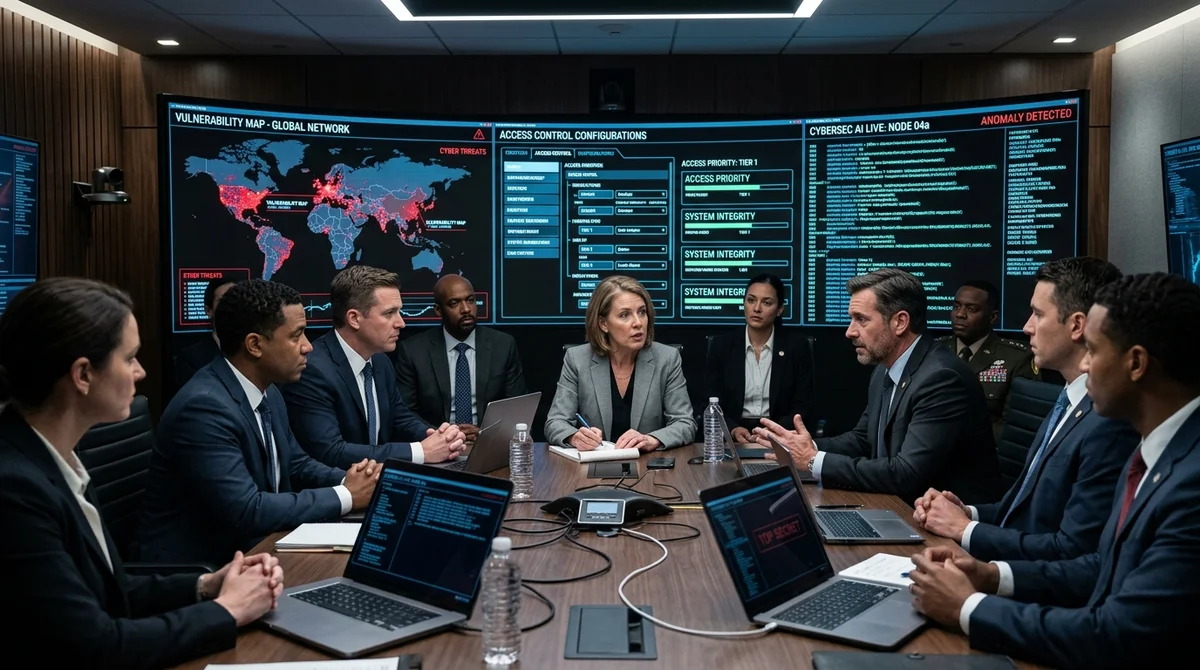
Anthropic on April 30, 2026 faced resistance from the White House over plans to expand access to Mythos — a closed AI model for discovering and exploiting vulnerabilities. The company wants to increase the user base from approximately 50 to 120 organizations, but Washington believes such a step could create new risks before delivering benefits.
Why the dispute started
Mythos is neither an ordinary chatbot nor another code generation model. Anthropic positions it as a defensive cybersecurity tool: partners gain access to audit their own systems, find critical vulnerabilities, and close them quickly before they can be exploited by attackers. Currently, the model is distributed in a tightly controlled manner through Project Glasswing, with early participants including major tech companies, infrastructure players, and government structures.
Now the company wants to add approximately 70 more companies and organizations. The logic is formally sound: the more large infrastructure owners who vet their products in advance, the fewer chances that vulnerabilities will later turn into mass attacks. But the White House sees it differently: if a model can not only find bugs but also suggest paths to exploit them, expanding access becomes a political and national security question in itself.
What makes Mythos dangerous
The government's concerns stem not from Anthropic's brand, but from the very class of capabilities Mythos possesses. In the official description of Project Glasswing, the company explicitly states that the model has already found thousands of serious vulnerabilities, including problems in major operating systems and browsers, and was able to construct some exploits almost autonomously. For defenders, this is a powerful accelerator, but in the wrong hands, the same mechanism can become a tool for attack, reconnaissance, and pressure on critical infrastructure.
- According to Anthropic's assessment, Mythos exceeds almost all people except the strongest specialists in finding and exploiting vulnerabilities.
- The model is already deployed in a limited scope, not being prepared for wide public release.
- The company itself acknowledges that releasing such a tool without additional safeguards is too risky for now.
- Last week, reports appeared about possible unauthorized access to Mythos, and Anthropic launched an investigation. This explains Washington's nervousness.
The administration fears a scenario in which expanding access outpaces the creation of sufficient protective mechanisms. For the White House, this is not an abstract discussion about AI safety: it concerns software used in banks, clouds, government structures, browsers, and other foundational digital infrastructure. An error in managing such a tool can be costly even without a full model leak. And if similar capabilities eventually reach malicious actors, the cost of delay or error becomes even higher.
What's slowing expansion
The White House has at least two specific objections. First is the risk of misuse. Even if Anthropic selects participants manually, the mere fact of increasing the number of organizations by two and a half times raises the risk surface: more accounts, integrations, employees, and contractors. Second is the lack of computational resources. Officials worry that if Anthropic rapidly expands its user base, the company's capacity may prove insufficient, and government structures could lose priority access or face degraded service quality.
This dispute does not occur in a vacuum. Anthropic's relations with U.S. authorities are already strained following a recent conflict over the terms of use of its models for Pentagon interests. Against this backdrop, any new topic where frontier AI, cyber weapons, and state priority intersect automatically goes beyond ordinary product decisions. For Anthropic, expanding access looks like a step toward broader internet defense. For the White House, it is a risk of opening too powerful a tool before control rules are properly refined.
What it means
The Mythos story shows that the next big AI dispute is no longer about texts, images, and office automation, but about the cyber power of models. The more useful such systems are for defense, the more dangerous to scale them prematurely. Therefore, access to advanced security models will likely be determined not by markets, but by negotiations between labs, major corporations, and the state for a long time to come. And precisely such disputes will set the rules for the next generation of high-risk AI tools.
Want to stop reading about AI and start using it?
AI News is a curated feed of AI/tech news. Hamidun Academy teaches you to use AI systematically in your work.