Elon Musk Pressures OpenAI in Court, While Sam Altman Defends Company Structure
The lawsuit between Elon Musk and OpenAI has intensified: on the second day of hearings, company lawyers questioned Musk about correspondence and internal…
AI-processed from Guardian; edited by Hamidun News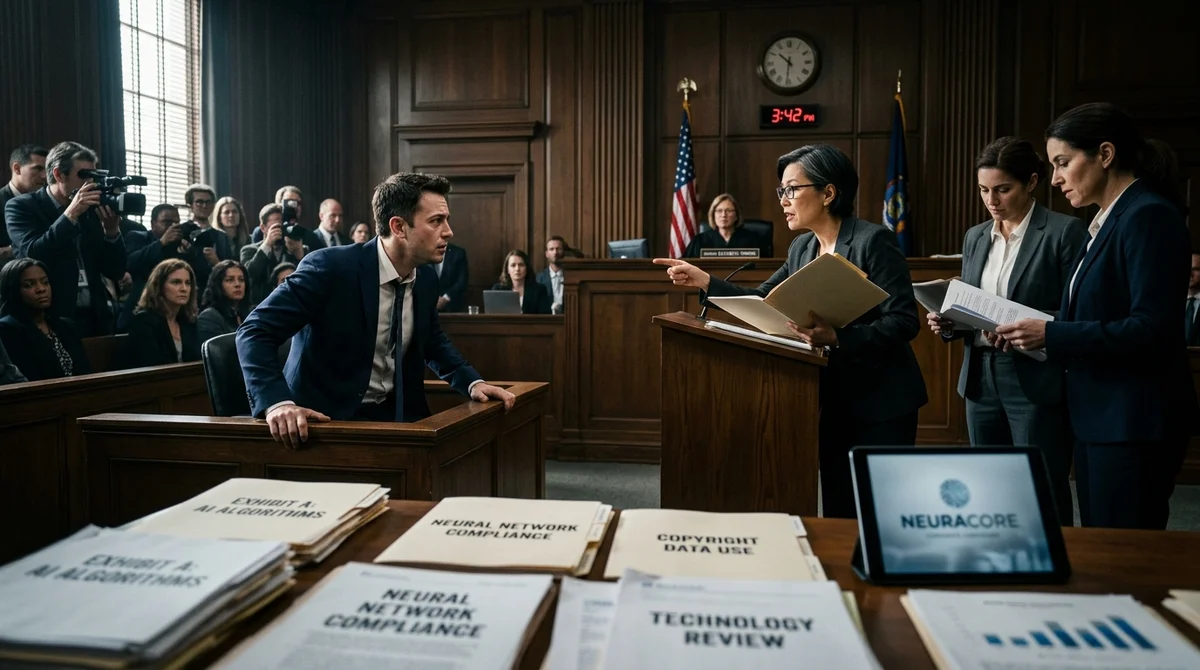
The legal battle between Elon Musk and OpenAI has entered its harshest phase: on the second day of the trial, the company's lawyers subjected the billionaire to an aggressive cross-examination. At the center of the dispute are the promises made when OpenAI was founded, and the question of whether the company had the right to build a for-profit structure around a nonprofit core.
How the Cross-Examination Went
On April 29 in Oakland federal court, Musk again repeated his main line: Sam Altman, in his version, "stole the charitable mission" of OpenAI and led the project toward a model that threatens both the original principles and AI safety. But within minutes, the initiative was seized by OpenAI's lawyers. They walked Musk through old emails and notes, trying to show that he himself discussed a commercial form and knew about such plans long before the conflict.
The cross-examination quickly became tense. Musk argued with the wording, dodged direct answers, and said several times that the questions were designed to trap him. Judge Yvonne Gonzalez Rogers intervened repeatedly, demanding simple "yes" or "no" answers.
One of the most striking moments came when Musk tried to challenge the very format of the closed question and went into a lengthy comparison, after which the judge cut him off.
"Your questions are designed to confuse me,"
Musk told OpenAI's lawyers.
What the Parties Are Disputing
Musk's lawsuit is built around the idea that when OpenAI was founded in 2015, it was about a nonprofit organization that should develop strong AI in the interests of humanity, not investors. According to Musk, Altman and Greg Brockman violated this understanding, moved the project into a profitable orbit, and gained personal benefit. OpenAI responds harshly: the company claims that Musk knew about possible commercialization, left the organization after a failed attempt to take control of it, and is now acting out of jealousy and calculation.
- Musk demands the removal of Sam Altman and Greg Brockman from leadership
- He wants to overturn the current profitable structure around OpenAI
- The lawsuit includes $134 billion in compensation in favor of the nonprofit arm
- OpenAI's defense insists that Musk's $38 million investment was a donation, not a stake in power
OpenAI's lawyers also raised uncomfortable episodes from Musk's past: correspondence about creating a commercial superstructure, discussions within Neuralink, and his attempts to lure OpenAI employees to Tesla. A 2017 letter surfaced in court in which Musk admitted that a nonprofit form might have been the wrong decision. For the defense, this is a key argument: if Musk himself admitted such a turn was possible, the current lawsuit looks not like a defense of ideals, but rather a dispute over power and control.
Why the Stakes Are High
This trial is being watched closely by all of Silicon Valley because what's at stake is not only the reputation of two of the most prominent figures in the AI industry. The court's decision could strike at OpenAI's governance structure at a moment when the company is preparing to go public in the U.S.
later in 2026 at a valuation of around $1 trillion. Any forced restructuring, leadership change, or limitation on the commercial model could dramatically alter the company's trajectory, its relationships with investors, and the pace of product releases. A separate layer of conflict is the struggle over how to interpret OpenAI's history.
Musk says he believed Altman's promises for a long time, paying rent and continuing funding, until he realized after ChatGPT's launch in late 2022 that he had been deceived. OpenAI recalls a different version: Musk left the board back in 2018, when he failed to push through a merger with Tesla and gain more influence. For the jury, this fork in the road will be one of the key issues.
According to the court's estimate, the proceedings should take about three weeks.
What This Means
For the market, this is not just Musk and Altman's personal war. The court is testing whether you can simultaneously speak of a mission in humanity's interests and build an extremely expensive AI company with a near-trillion-dollar valuation. Whatever the verdict, it will become a benchmark for the entire industry: investors, founders, and regulators will look differently at how to structure AI projects that promise public benefit.
Want to stop reading about AI and start using it?
AI News is a curated feed of AI/tech news. Hamidun Academy teaches you to use AI systematically in your work.