Operation Renewed Hope: AI Helped Identify 100 Abuse Victims in 29 Countries
International investigators from 29 countries identified 100 child sexual abuse victims as part of Operation Renewed Hope—using AI image analysis tools. But…
AI-processed from Bloomberg Tech; edited by Hamidun News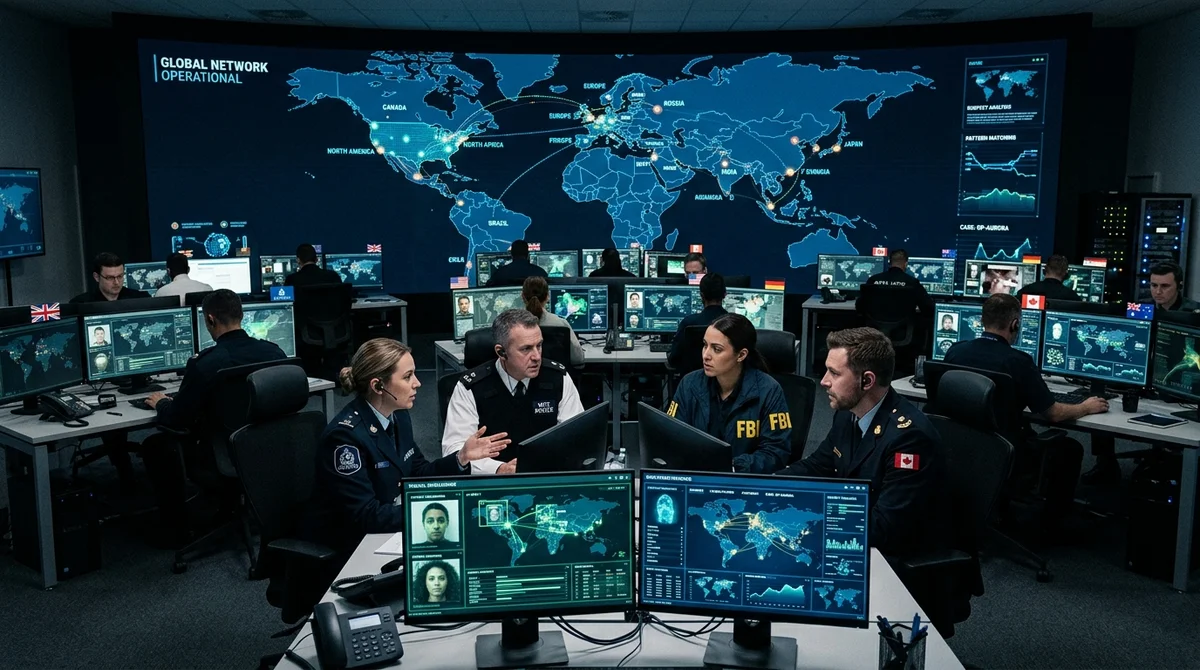
International investigators from 29 countries established the identities of a hundred victims of child sexual abuse — and simultaneously encountered an unexpected downside of AI assistance: the technology literally floods investigative cases with thousands of automatically generated versions.
What is Operation Renewed Hope
Operation Renewed Hope is an international initiative for victim identification that has brought together specialists from 29 countries. Its format reflects the nature of the problem: criminals cross borders, materials are distributed globally, and no single country sees the full picture. Collaborative work with archives of child sexual abuse material (CSAM) makes it possible to cross-reference data that is inaccessible to each country individually.
Specialists in victim identification are a narrow and rare profession. These are analysts who can, based on indirect details — background, furniture, type of room, lighting characteristics — put forward hypotheses about a child's identity and the location where footage was taken. Before widespread AI adoption, such work was conducted almost entirely by hand and required enormous person-hours.
Burnout in this specialization has been a long-standing systemic problem for law enforcement agencies worldwide. During the operation, investigators managed to identify a hundred victims previously listed as unidentified. Behind each number lies a concrete child who can now receive help, and a criminal case with an evidentiary foundation for court.
How AI Accelerates the Search for Victims
Modern image analysis systems do what a human physically cannot accomplish: they review millions of files in minutes and cross-reference barely perceptible details across different images. What exactly does AI analyze in such cases:
- background patterns and architectural elements for geolocation
- type of furniture, clothing, toys as indirect identifiers
- lighting characteristics and color profile of the room
- biometric parameters: height, proportions, age-related features
- clustering of materials to link cases across different jurisdictions
Tools like PhotoDNA have long worked with hashes of already documented images. The new generation of systems tackles a more difficult task: it analyzes previously unknown materials and builds hypotheses about their origin based on indirect signs. This makes it possible to uncover completely new cases, not just confirm already documented ones.
The Paradox: More AI — More Work
The headline of the Bloomberg report precisely captures the paradox: AI literally floods cases. Each system generates hundreds of "potential matches" — and each one requires verification by a live analyst. Specialists in victim identification are extremely rare: this is a rare and psychologically exhausting specialization.
As a result, analysts spend significant portions of their work time not searching for new evidence, but filtering out versions that the algorithm automatically generated. International child protection organizations have been discussing "analytical fatigue" for several years — professional burnout among specialists working with the most severe categories of material. AI promised to reduce the burden, but so far has rather redistributed it: less manual review, more verification of algorithmic hypotheses.
The accuracy of neural networks on unfamiliar data remains imperfect. Algorithms are deliberately tuned for maximum sensitivity — missing a victim is worse than spending time on a false signal. This is the right choice for the task, but it creates real pressure: each false signal costs hours of someone's work.
What This Means
A hundred identified children is a concrete result that cannot be overstated. Operation Renewed Hope confirms: AI has already become a standard tool in the most complex investigative tasks. The next challenge is not only the accuracy of algorithms, but the infrastructure around them: we need significantly more analysts capable of working with AI conclusions in some of the most demanding professional conditions.
Want to stop reading about AI and start using it?
AI News is a curated feed of AI/tech news. Hamidun Academy teaches you to use AI systematically in your work.