Elon Musk told the court that OpenAI abandoned its public mission for profit
Elon Musk spoke before the jury for several hours and said he stopped trusting other OpenAI leaders. According to him, the organization, conceived as a…
AI-processed from Bloomberg Tech; edited by Hamidun News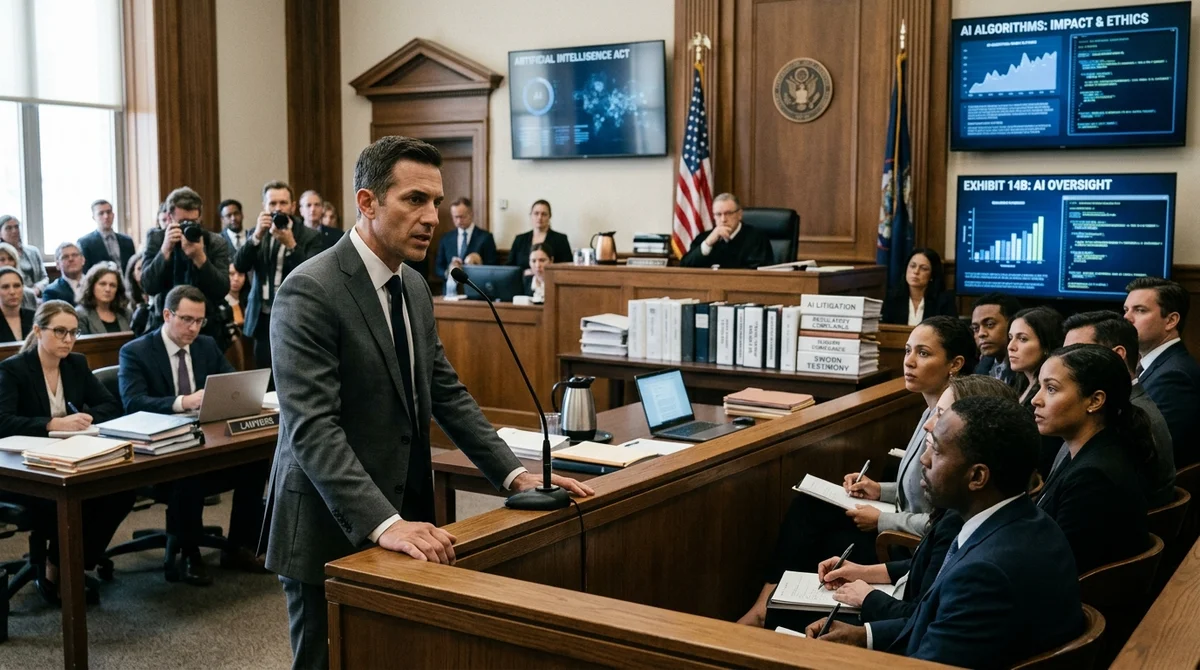
Elon Musk testified in court for several hours on April 29, recounting how he lost trust in other OpenAI leaders. In his account, a project created for the public good gradually shifted toward commercial profit.
What
Musk Said The main line of his testimony was not about technical details, but about the motivations of those who led OpenAI. Musk described the split as a values conflict: he expected the organization to work in society's interest, but instead saw a desire to turn it into a source of large profits. This shift, he claims, undermined trust between him and the other leaders.
"get rich"
With this short formula, Musk outlined the essence of his complaint against the other project leaders. For the court, this is not just an emotional remark, but a compressed description of his version of the conflict: he is trying to show that this is not merely a personal dispute, but a fundamental disagreement about why OpenAI was created in the first place. If the jury accepts this logic, the dispute will appear as a clash between mission and commercial calculation.
Where the
Split Came From According to his testimony, Musk links the loss of trust to a moment when OpenAI's priorities changed, in his view. In this interpretation, the dispute is not about whether it is possible to profit from powerful AI systems in general, but whether it is permissible to change the rules for a project originally presented as work for the public good. The issue is not the business model itself, but whether promises matched actual motives.
If we reduce his argument to a few key points, it looks like this: OpenAI was conceived as a project with a public mission the key turning point came when, in Musk's account, money took center stage the problem for him was not just profit, but a change in the initial goal disagreement escalated into a loss of trust between the organization's leaders Even in this brief form, it is clear that Musk builds his position around trust. For such structures, trust is critical currency: when participants stop believing in a shared goal, any agreements begin to look temporary. Therefore, the court testimony is important not only as another dramatic episode, but also as an attempt to establish his own version of OpenAI's history before the jury and a broad public audience.
Why
This Matters This dispute extends far beyond personal relationships between famous Silicon Valley figures. OpenAI has long been one of the most influential organizations in the artificial intelligence industry, and any questions about its goals automatically become questions about power, money, and public control over technology. When the court discusses why leaders lost trust in each other, the market hears not only the internal drama of the project, but also a signal about how one of the key AI structures was formed.
For investors, developers, and regulators, such testimony matters because it returns to the center of discussion an old question: can an organization simultaneously promise a public mission and build an extremely expensive technological platform requiring enormous resources and capital? Musk is essentially reminding us that AI debates are not just about the speed of progress, but also about who has the right to set the rules of that progress. This is precisely why even a single court testimony quickly becomes part of a broader market and political agenda.
What
This Means Musk's testimony amplifies the core conflict of the generative AI era: who controls the technology presented as publicly beneficial while simultaneously attracting enormous sums of money. For the entire industry, this is another reminder that trust in a company's mission can be just as important an asset as the model itself, infrastructure, and access to capital.
Want to stop reading about AI and start using it?
AI News is a curated feed of AI/tech news. Hamidun Academy teaches you to use AI systematically in your work.