Meta tumbles after raising 2026 AI and data center capex forecast
Meta shares plunged after the company raised its 2026 capital expenditure forecast to $125–145 billion. The revised guidance exceeded analyst expectations…
AI-processed from Bloomberg Tech; edited by Hamidun News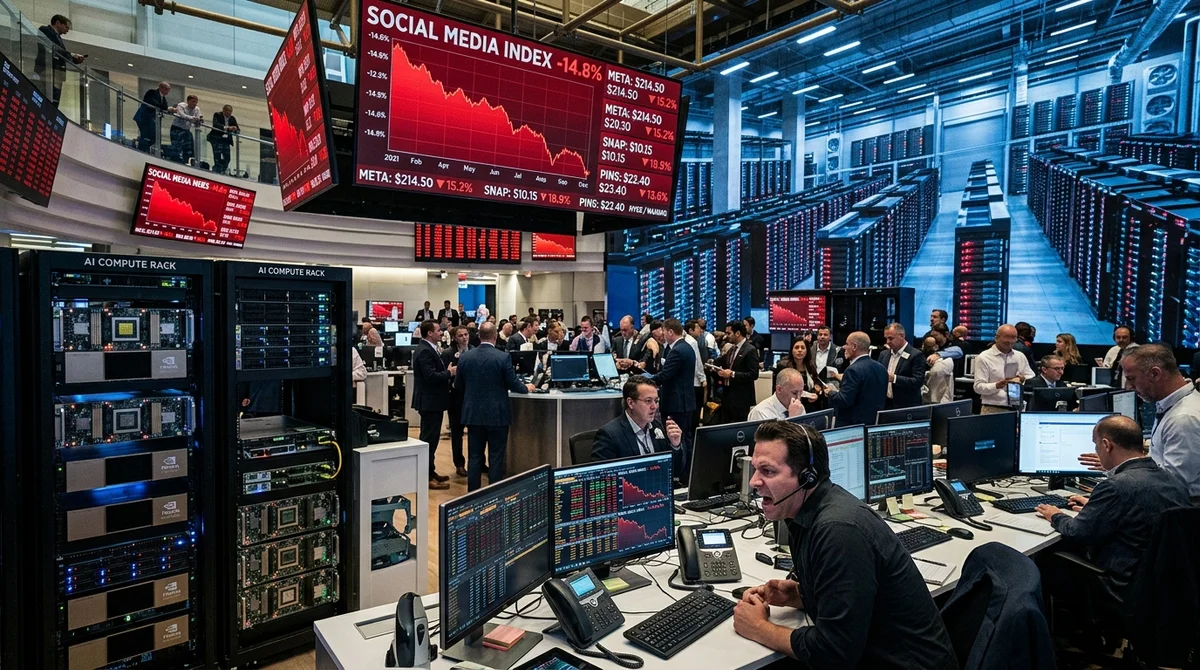
Meta's stock dropped sharply after the company raised its forecast for capital expenditures in 2026 to $125–145 billion. The market perceived this as a signal: the race for AI leadership is becoming even more expensive, and the return on these investments for investors remains unclear.
Why the Stock Fell
What alarmed investors was not Meta's desire to spend more on artificial intelligence itself, but the scale of the plan revision. The company now expects capital expenditures in the range of $125 billion to $145 billion by year-end. This is notably above analyst expectations and approximately 7.
4% higher than the previous guidance. For the market, this is a painful signal. Meta is already among companies spending historically large sums on AI: on model training, computational infrastructure, and data center construction.
While such spending is easily explained by growth strategy, it's far more difficult to show when exactly it will turn into profit. That's why any budget expansion quickly brings back the old question: will this bet pay off? This reaction shows that investors have become noticeably stricter about AI spending.
If a company raises its cost forecast faster than it explains future monetization, the stock immediately comes under pressure. For Meta, this is especially sensitive because it needs to simultaneously maintain a strong advertising business and finance an extremely expensive technological leap.
What's Driving the Spending
Meta's Chief Financial Officer Susan Li explained the forecast revision with several reasons at once. It's not just about the scale of Meta's ambitions, but also about the rising cost of the infrastructure itself, without which modern AI simply doesn't work.
The company faces "higher component prices" and additional data center expenses.
Behind this brief formulation lies fairly clear economics of the AI boom:
- accelerators and server components are rising in price amid massive demand;
- building and expanding data centers requires more capital than was budgeted before;
- launching and training large models increases the need for electricity, cooling, and network infrastructure;
- competition among tech giants pushes companies to reserve capacity in advance, even if there's no immediate payoff.
That's precisely why the forecast revision looks not like a one-time accounting adjustment, but as a sign of a more expensive phase of the AI race. The more aggressively Meta scales up capacity, the higher the risk that spending will grow faster than advertising and product revenue, which the market is accustomed to seeing from the company.
Betting on the Long Game
From Meta's own perspective, the logic is clear. If the company wants to remain among AI leaders, it needs to invest not only in models, but also in basic infrastructure—compute, data storage, and physical facilities. The problem is that the stock market evaluates not strategic intentions, but the balance between spending today and results tomorrow.
Right now, investors see precisely the first part of the equation. They understand that Meta is forced to compete for chips, capacity, and talent, but so far they're not getting a clear enough answer to when these investments will turn into new cash flows of comparable scale. Against this backdrop, even a strong operating business doesn't always protect stocks from sharp reactions: the bigger the AI bill, the higher the demands for proof of effectiveness.
On the other hand, the risk of under-investing is also high for Meta. If demand for AI infrastructure continues to grow, falling behind on capacity could cost the company no less than overspending. It seems management is choosing a more aggressive scenario: invest more now, so later they won't have to catch up with competitors in an even more expensive market.
What This Means
The reaction to Meta's report shows that the market no longer applauds any AI spending by default. Now investors want to see not only ambitions, but also a clear path to profitability: whoever can prove the return on infrastructure race will win not only technologically, but also on the stock market.
Want to stop reading about AI and start using it?
AI News is a curated feed of AI/tech news. Hamidun Academy teaches you to use AI systematically in your work.