Ara Darzi: AI could accelerate fight against antibiotic resistance, but market obstacles stand in the way
At WIRED Health, Ara Darzi said AI could dramatically accelerate the fight against resistant infections: diagnostics already show accuracy above 99%, and…
AI-processed from Wired; edited by Hamidun News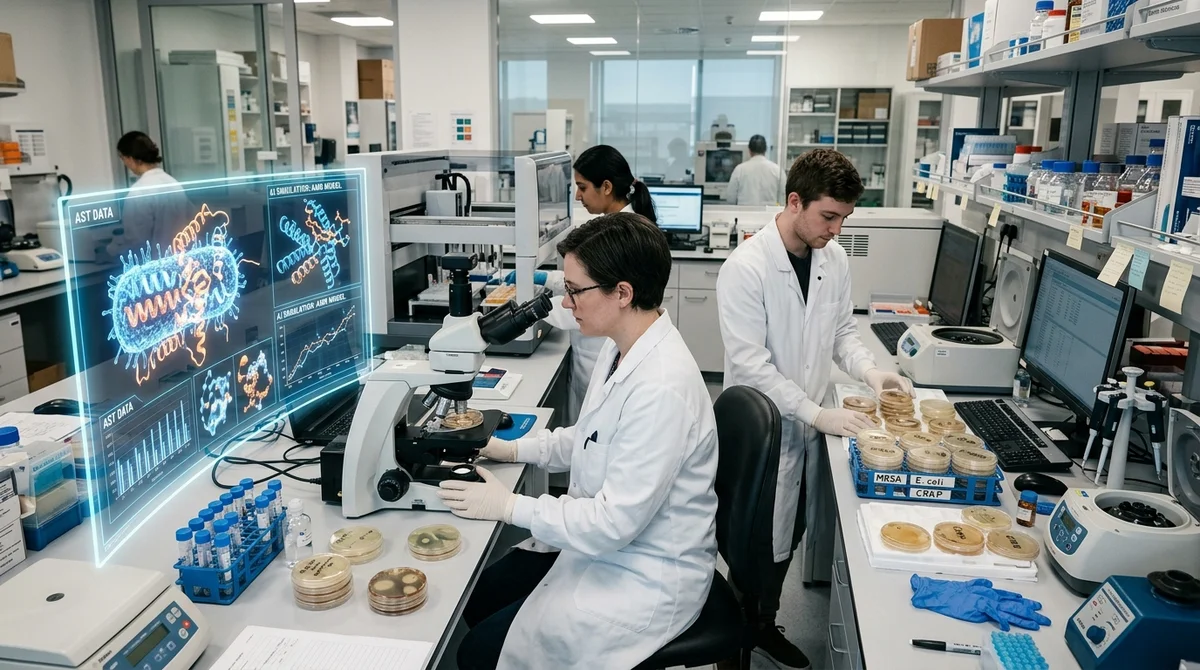
British surgeon Ara Darzi has stated that artificial intelligence can significantly accelerate the diagnosis of antibiotic-resistant infections and the search for new drugs. But this is not enough: if the economics of the industry do not change, many developments will never reach real clinical practice.
Why the crisis is accelerating
Antibiotic resistance has already ceased to be a narrow problem for infectious disease specialists. According to Darzi, it causes over one million deaths worldwide annually and plays an important role as a contributing factor in almost five million additional cases. Such infections are harder and more expensive to treat, patients stay in hospitals longer, and healthcare facilities bear additional costs.
The pressure on the system is intensified by two things simultaneously: excessive and improper use of antibiotics, as well as weak flows of new drugs to the market. Darzi named 2026 as the first real turning point in this story, because the scale of the threat is now difficult to ignore. The Lancet forecast published in 2024 expects up to 40 million deaths due to drug-resistant infections by 2050.
Meanwhile, in everyday practice, doctors still often act almost blindly. Classical diagnostics usually takes two to three days: you need to grow bacteria from a sample and check which drugs will work. For conditions like sepsis, this is too long — each hour of treatment delay increases the risk of death by 4–9 percent.
Where AI is already useful
This is precisely where AI can have the fastest impact. Darzi says that AI diagnostics already demonstrates accuracy above 99 percent without additional laboratory infrastructure. This is especially important not only for large clinics but also for remote regions where access to rapid tests is limited. According to WHO estimates, in 2023, the highest levels of antibiotic resistance were recorded in Southeast Asia and the Eastern Mediterranean, where every third registered infection was resistant. In Africa — every fifth one.
- Faster at distinguishing resistant infections from ordinary ones
- Suggesting the doctor a more precise therapeutic choice in the first hours
- Finding new mechanisms of bacterial resistance
- Accelerating the search and design of molecules that do not exist in nature
Another example is the work of the British NHS with Google DeepMind. In one demonstration, the system identified previously unknown resistance mechanisms in 48 hours, which took researchers at Imperial College London approximately ten years to understand. Combined with an automated laboratory, such systems already allow running hundreds of parallel experiments around the clock. Deep learning models can scan billions of molecular structures in just days, and generative models can propose new compounds that simply did not exist before.
Why the market is a barrier
The main bottleneck, according to Darzi, is not in the laboratory but in the pharmaceutical business model. New antibiotics cannot be sold as a mass-market drug: the more actively they are used, the faster bacteria learn to bypass the defense. This creates a paradox.
From a medical perspective, the best new drugs need to be preserved and prescribed rarely, but from a commercial perspective, companies earn from sales volumes. Because of this, major pharmaceutical companies in recent years have been shutting down antibiotic programs, even as scientific progress in this area continued. To break this logic, different payment schemes are needed.
Darzi reminded that in 2024, the United Kingdom launched a pilot model in Netflix style: the state pays pharmaceutical companies a fixed annual amount for access to a new antibiotic, rather than for the number of doses prescribed. Sweden is also testing a partially volume-independent model. The idea is simple: reward not for mass sales, but for the very fact of introducing a vital tool into the healthcare system.
"We already have the tools.
The question is whether we have the courage to take seriously what we see."
What this means
The story with antibiotic resistance demonstrates an important thing: for medical AI, the bottleneck is becoming not only the quality of models but also the healthcare system's ability to integrate them into practice. If diagnostics truly shrinks from several days to hours, and the search for new antibiotics accelerates several times over, the winners will be not only doctors but also patients. But without new procurement rules and incentives, AI risks remaining a beautiful demonstration at conferences rather than a working tool in hospitals.
Want to stop reading about AI and start using it?
AI News is a curated feed of AI/tech news. Hamidun Academy teaches you to use AI systematically in your work.