Runway bets on world models, sees AI video as just the first stage
Runway no longer wants to be associated solely with AI video. The company's head says video generation is only the first stage, with the next major bet being…
AI-processed from TechCrunch; edited by Hamidun News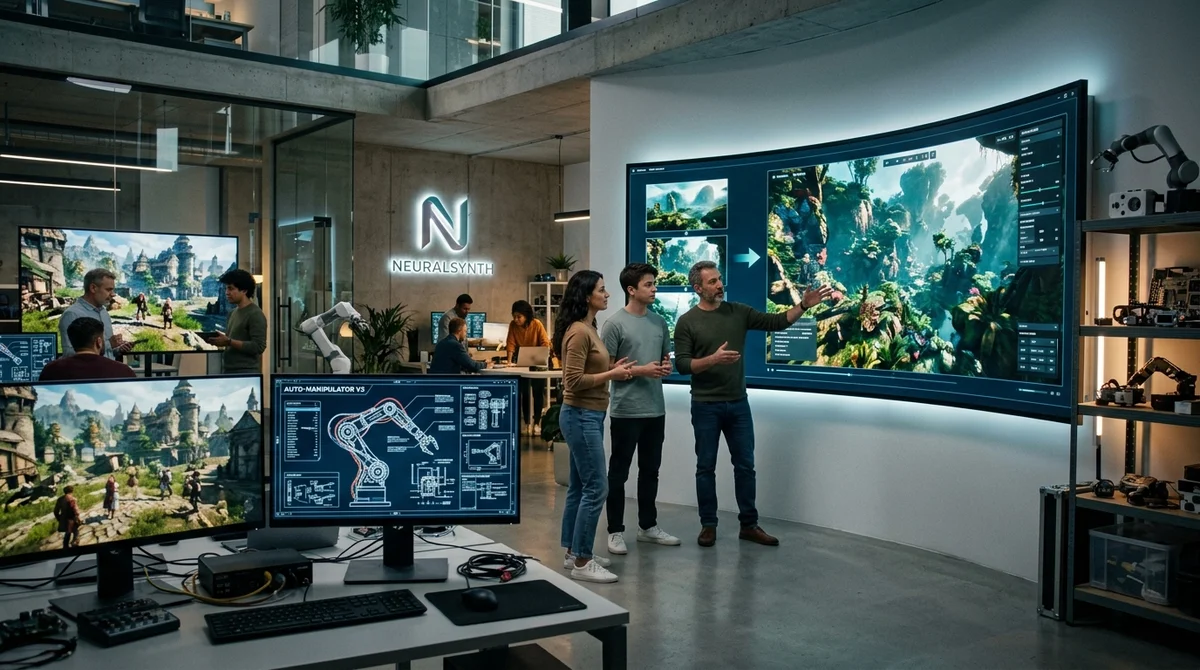
Runway increasingly describes itself not as a video generation service, but as a company teaching AI to model the world itself. According to the startup's head, video has become only the first visible product on the path to a larger goal — world models.
Video Became a Product
Until recently, AI video was perceived as an impressive demo: short, strange clips that showed model progress but were rarely used in real work. The situation has changed now. Runway is one of the main beneficiaries of this shift: the New York company has raised nearly $860 million at a valuation of around $5.
3 billion and competes on model quality with Google and OpenAI. For the market, this is an important signal: video generation stops being a laboratory entertainment and becomes a production tool, especially where speed, previz, editing drafts, and fast visual iterations matter. In Runway's logic, this is not the final point but confirmation that the chosen technical stack works.
If a model can already assemble plausible motion, maintain scene logic, and preserve visual consistency between frames, the next step is not simply to make longer or prettier videos. The next step is to make the system understand space, causality, and how events develop over time so well that it can not only generate images but also simulate how the environment behaves.
The Next Step — Worlds
This is where Runway bets on world models. The company calls these systems that build an internal representation of the environment and on that basis predict what will happen next. Essentially, it's about transitioning from "make me a video based on a prompt" to "show me how this world behaves if I move in it, change conditions, or give an agent an action".
Such an approach is needed not just for film. It opens the door to simulations where continuity, physics, scene memory, and reaction to user or machine actions matter. From here also grows Runway's interest in what the company calls non-linear media.
Based on the description of this idea, we're talking not about a fixed video with a beginning and end, but about an environment that is generated in real time and changes as interaction progresses. It could be a game, an educational simulator, an interactive film, or a space for testing AI agents. In such a scenario, video becomes not a final export but an interface to the world model, which must maintain the coherence of the scene, movements, lighting, and consequences of actions.
Where Runway Is Heading Next
Moving beyond Hollywood for Runway looks not like a side experiment but as the main business bet. The company already directly connects world models with game worlds, robotics, agent training, and real-time avatars. This aligns well with how its video models developed: first as tools for creative teams, then as more universal technology suited for simulation and testing. The better a model holds geometry, physics, and object permanence, the higher its value not just for a director but for an engineer, researcher, or developer of interactive systems. In practice, Runway is already breaking down this strategy into several directions:
- interactive game spaces without manual assembly of each scene
- simulators for training and testing AI agents
- models for robotics where you can run scenarios without real hardware
- photorealistic avatars for training, support, and dialogue interfaces
Against this backdrop, competition with Google, OpenAI, and other major labs looks for Runway not just as a race for the prettiest video. The stakes are higher: whoever first turns video generation into a reliable world model gets access to much larger markets than content production. That's why interest in world models is now shifting so quickly from media into games, robotics, and infrastructure for future agent systems.
What This Means
Runway is trying to rewrite its own category: from a company for AI video to a supplier of models that can be used as simulators of reality. If this transition works, the generative video market will turn out not to be a separate niche but an entry point into a much broader layer of AI products — from interactive media to robot training and digital agents.
Want to stop reading about AI and start using it?
AI News is a curated feed of AI/tech news. Hamidun Academy teaches you to use AI systematically in your work.