Elon Musk accused Sam Altman in court of 'stealing' nonprofit OpenAI
Elon Musk filed a lawsuit in federal court against OpenAI and Sam Altman, accusing leadership of deviating from the original nonprofit mission. He demands…
AI-processed from 3DNews AI; edited by Hamidun News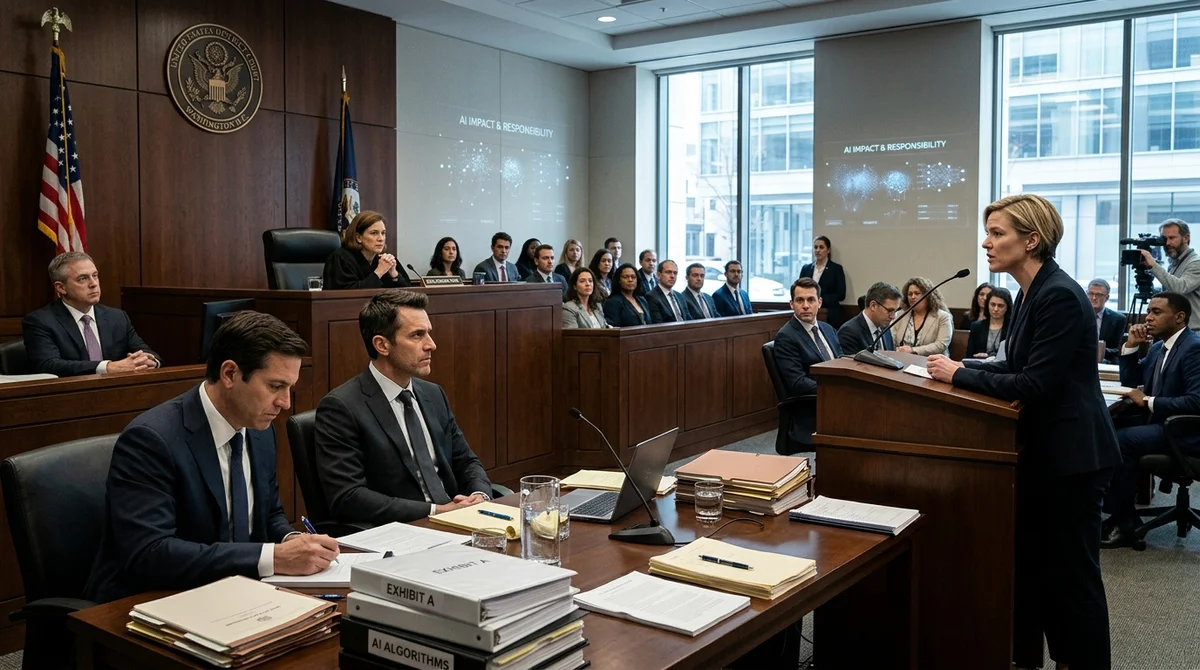
On April 28, 2026, Elon Musk testified in federal court in Oakland in the case against OpenAI and its leadership. On the first day of hearings, he attempted to portray the conflict with Sam Altman not as a typical corporate dispute, but as a debate about what OpenAI should have become: a non-profit laboratory in the interests of humanity or a giant commercial AI business.
What the dispute is about
The proceedings grew out of Musk's lawsuit filed in 2024. The businessman claims that OpenAI abandoned its original mission — to develop artificial intelligence for the benefit of people, not for the enrichment of specific shareholders and top executives. According to Musk, the company, which he helped launch as a non-profit organization, gradually transformed into a structure where investments, scaling, and commercial returns became the priority.
Currently, the lawsuit's demands are far broader than the public feud between the two famous industry figures. Musk is seeking to have OpenAI returned to non-profit status and to remove Sam Altman and Greg Brockman from leadership roles. He is also demanding $150 billion in compensation, and wants these funds, should the court award them, to go to OpenAI's charitable arm. The case is also unpleasant for the company itself because it raises the question: can an AI laboratory created as a non-profit be painlessly repackaged into a multi-billion dollar business.
How Musk presented his case
Musk began his testimony not with documents and correspondence, but with a long biographical narrative. He recalled life in South Africa, moving to Canada with traveler's checks for 2,500 Canadian dollars, and then sequentially went through Zip2, PayPal, SpaceX, and Tesla. The logic of this part was transparent: to convince the court that he launched key projects not for personal gain, but in response to major risks facing humanity — from dependence on fossil fuels to threats associated with artificial intelligence.
In court, Musk reiterated his customary position on AI as a "double-edged sword." According to him, the technology can either dramatically improve quality of life and solve a huge range of problems, or lead to catastrophic consequences. This is precisely why, Musk claims, he helped create OpenAI: as a counterweight to major technology players and as a platform where the development of powerful AI would not be subordinated to purely commercial incentives.
Within this logic, he presented the conflict with Altman as a conflict between mission and profit.
"You can't steal a charitable organization,"
Musk declared in court.
The rhetoric then became even harsher. Musk said he came up with the very idea of OpenAI, the name, attracted key people, and provided initial funding. He particularly emphasized that the project was conceived from the start as a structure that should not bring profit to individuals. Meanwhile, Judge Yvonne Gonzalez Rogers asked both Musk and Altman to conduct themselves more restrainedly on social media: OpenAI's lawyers complained about Musk's posts on X, where he was attacking his opponent even before the hearing.
What OpenAI says
OpenAI's defense describes the history differently. According to the company's lawyers, it was actually Musk who at one time pushed the organization toward a more commercial model, because without it was impossible to purchase computing power and retain expensive researchers amid competition with Google DeepMind and other major laboratories.
Against this background, OpenAI presents Musk's current claims not as a defense of principles, but as an attempt to rewrite his own role in the company's history. OpenAI's lawyers also stated in court that Musk wanted more control over the organization and became dissatisfied when he didn't get it. According to their version, the lawsuit appeared only after Musk failed to achieve the desired influence, and then launched his own AI company, xAI.
For jurors, the dispute now looks like this: one side speaks of betrayal of the original mission, the other — of a struggle for power and influence at the center of the AI market.
- Musk demands that OpenAI be returned to non-profit status
- He wants Sam Altman and Greg Brockman removed from office
- The declared compensation amount is $150 billion
- Possible payments, according to the plaintiff, should go to OpenAI's charitable arm
- OpenAI insists that the commercial restructuring was necessary for computing resources and hiring researchers
What this means
This case is important not only because of the personal feud between Musk and Altman. The court is essentially testing whether an AI initiative with a public mission can be transformed into a commercial giant without destroying confidence in the very idea of "safe AI for everyone." Whatever the court's decision, the dispute has already become a test for the entire industry: where does the mission end and corporate control begin.
Want to stop reading about AI and start using it?
AI News is a curated feed of AI/tech news. Hamidun Academy teaches you to use AI systematically in your work.