Laboratory Over Six Years: From USB Drives and Notebooks to AI That Finds Hidden Equipment Defects
How a laboratory spent six years on a long journey from notebooks and USB drives to a complete digital infrastructure — and ultimately integrated AI that…
AI-processed from Habr AI; edited by Hamidun News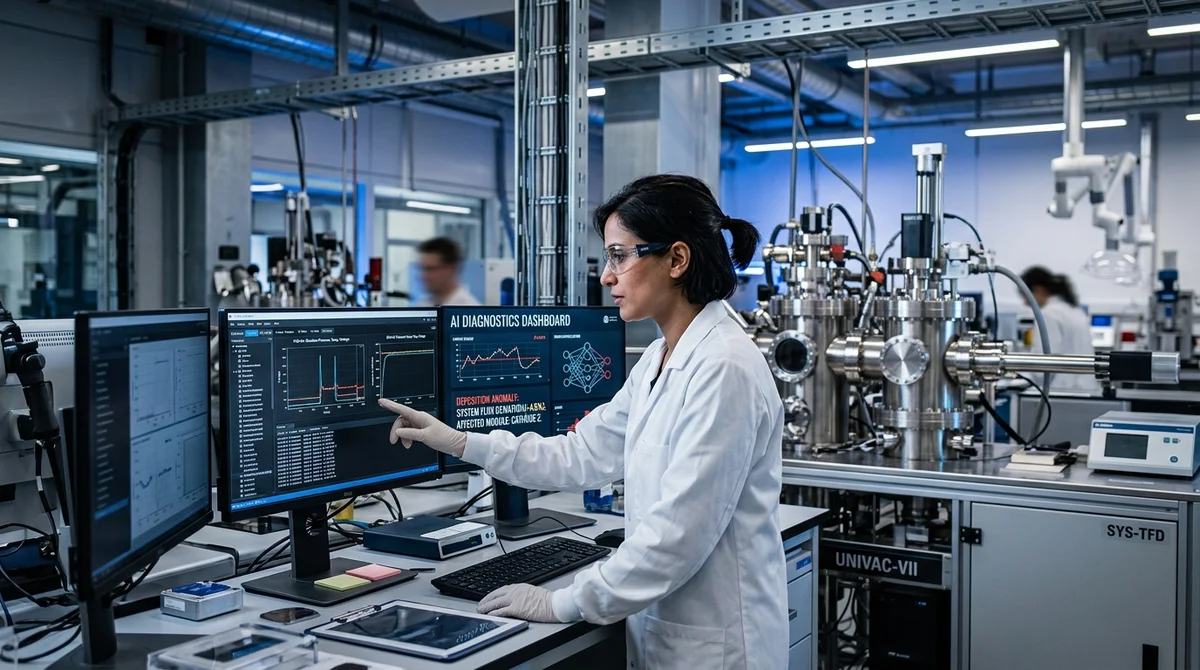
A Laboratory in Six Years: From Flash Drives and Notebooks to AI That Finds Hidden Equipment Defects
Six years — that's how long it took one research laboratory to travel from the chaos of notebooks and flash drives to a system where AI independently analyzes technology process logs and detects hidden equipment defects before they become a problem.
How We Started
A picture familiar to any research or manufacturing organization: experimental data is stored in paper journals, results are on the flash drives of individual employees, diagrams and protocols are scattered in folders on local computers. When you need to find parameters from an experiment two years ago, a detective quest begins: who recorded it, where did they keep it, is that file still alive. The problem becomes even more acute during personnel changes.
When a researcher who "remembers everything" leaves, part of the accumulated knowledge of the laboratory leaves with them — not out of malice, but because the data existed only in their head and notebooks, not in a centralized system. The next generation of employees starts from scratch on things that have already been done.
The authors began from exactly this state. They didn't try to solve everything with one big implementation project — they built the digital infrastructure sequentially, step by step, focusing on real value rather than pretty demos for reports.
Six Years Step by Step
Digitizing a laboratory is not about implementing one smart system. It's a long chain of dependencies, where each next step is only possible after the previous one:
- Digitizing primary records and standardizing protocols
- A unified database for storing parameters of all experiments
- Automatic collection of equipment readings in real time
- Systematic logging of technological processes, including deposition
- Accumulation of sufficient historical data
- Connecting AI analysis on top of structured data
Without a proper database, you can't train a model. Without automatic logging of processes, there's nothing to analyze. Without years of history, there's no baseline to compare current readings against to distinguish normal from anomaly. That's why the honest answer to the question "how long does real digitization take" is years, not quarters. Six years in this case is not a planning failure, but the honest cost of a quality result.
AI Reads Deposition Logs
The final and most technically interesting stage is connecting AI analysis to the accumulated data. The model receives as input the logs of the deposition technology process: time series of parameters, pressure and temperature sensor readings, deviations from set technological modes. The task is not just to flag deviations, but to identify patterns that precede problems before they happen.
The key phrase in the description is "hidden equipment defects." These are not visible breakdowns that any operator would immediately notice. These are patterns of gradual degradation: microdeviations in parameters that individually look within normal range, but in aggregate over time signal an impending failure or process breakdown.
This is classic industrial ML application: not replacing the operator
at the console, but expanding their ability to notice what matters in a data stream that humans physically cannot handle manually in real time.
The result is a transition from reactive maintenance to predictive maintenance. Problems are identified and fixed before they lead to unplanned equipment downtime, batch defects, or loss of expensive materials.
What This Means
This case is remarkable not for the technologies — they're quite standard. It's remarkable for the approach: an honest assessment of the work horizon, a systematic refusal to skip infrastructure stages, and sequential data accumulation as the main foundation for AI. As a result, the laboratory got not a pretty pilot for presentation slides at a meeting, but a real working tool in daily production processes.
This is what successful AI transformation in science looks like: long, methodical, without hype — and with concrete measurable results.
Want to stop reading about AI and start using it?
AI News is a curated feed of AI/tech news. Hamidun Academy teaches you to use AI systematically in your work.