Zine Creators Battle AI: Independent Publishers Defend DIY Culture
AI has infiltrated zine culture — one of the most manual and independent forms of self-publishing. Some authors use it for layout, HTML, and digital…
AI-processed from Guardian; edited by Hamidun News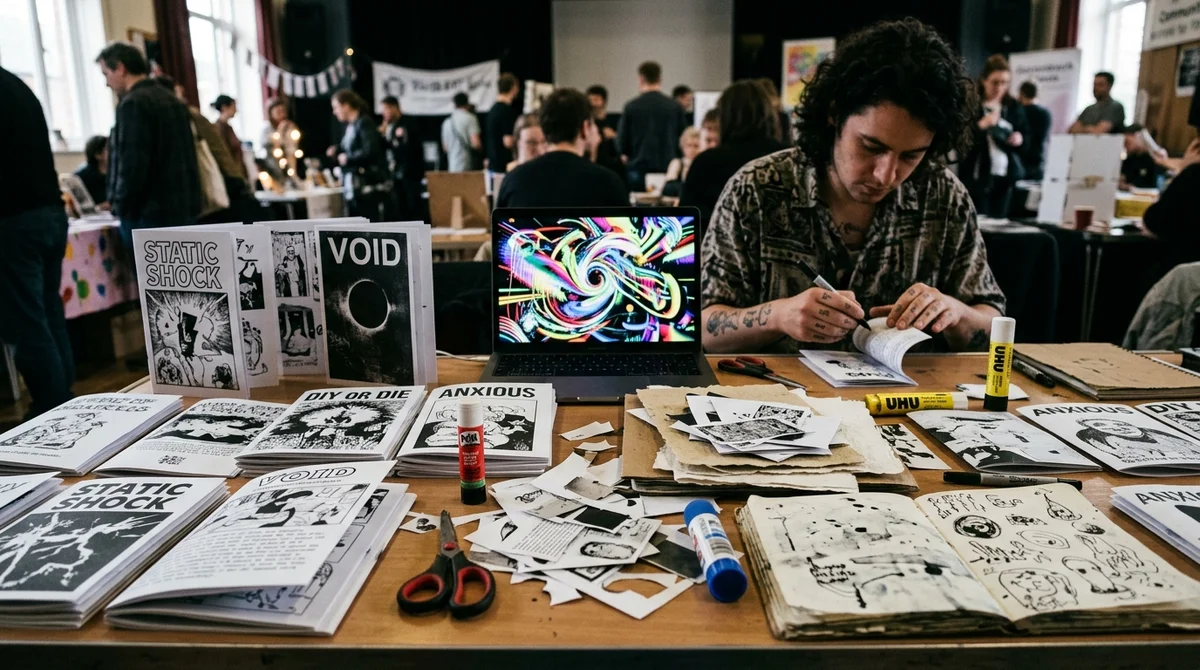
# Zines and AI: The New Frontier of DIY Culture
Artificial intelligence is transforming the landscape of creative work, and zines—the legendary printed publications of DIY culture—are no exception. From small-circulation magazines to large independent projects, creators are increasingly experimenting with generative AI tools to accelerate their production workflows.
AI as a Creative Tool
Generative AI models like ChatGPT, Claude, and other large language models (LLMs) are capable of producing text, images, and entire layouts in minutes. For zine creators, this represents both an opportunity and a challenge:
- Opportunity: Faster content generation, reduced production time, lower costs
- Challenge: Concerns about authenticity, copyright, and the devaluation of manual creative labor
Artists and writers are exploring different approaches. Some use AI to generate initial drafts or visual concepts, then refine them manually. Others create entirely AI-generated zines as conceptual art projects, deliberately highlighting the uncanny nature of machine-generated content.
How Authors Respond
The Australian artist Maddie Marshall spent a year on a 92-page zine exploring how generative AI tools can be integrated into traditional zine-making workflows. Her conclusion: "AI is a tool like any other. What matters is intentionality."
Other creators take a more skeptical stance. Writers on platforms like Habr AI and in zine communities argue that over-reliance on generative tools risks homogenizing creative output. When everyone uses the same models with similar prompts, the result is predictable, safe, and ultimately bland.
The Economics of Creativity
One of the most pressing questions is economic: if AI can generate content faster and cheaper, what happens to the value of human creative work? Zine creators—who typically work for love rather than profit—are particularly vulnerable to this shift.
Some argue that AI enables new creators to enter the space by reducing technical barriers. Others worry that it erodes the cachet of handmade, artisanal work that has always defined zine culture.
The Future
The integration of AI into zine culture is still nascent. What seems clear is that zines—born from a DIY ethos and commitment to hands-on creation—will continue to adapt and evolve. Whether that evolution embraces, rejects, or cautiously incorporates AI remains an open question.
For now, the most interesting zines are those that engage thoughtfully with the question: what does it mean to create in an age of generative AI?
Want to stop reading about AI and start using it?
AI News is a curated feed of AI/tech news. Hamidun Academy teaches you to use AI systematically in your work.