Elon Musk's Lawsuit Against OpenAI: AI Safety Dispute Turns Into Personal War
Elon Musk's lawsuit against OpenAI started in Oakland and already resembles a personal war more than a debate over AI safety principles. Musk demands the…
AI-processed from Guardian; edited by Hamidun News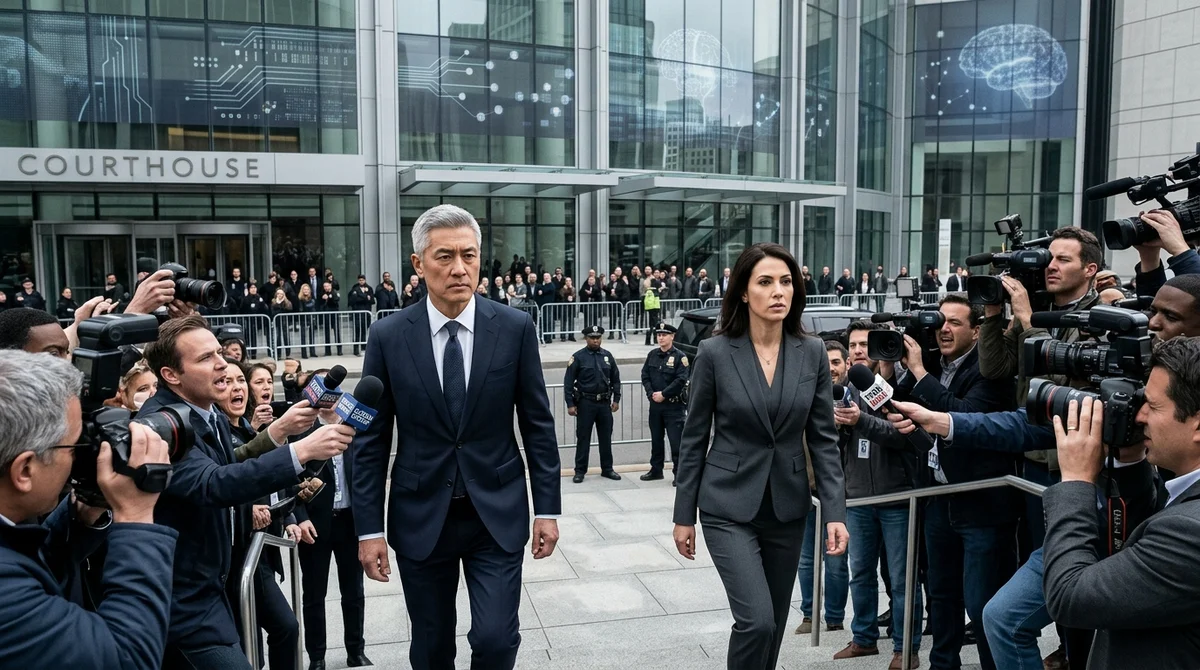
The lawsuit between Elon Musk and OpenAI, which began on April 27, 2026 in Oakland, could have been a landmark proceeding about who AI industry should serve and for what purpose. Instead, the trial appears to be more like a prolonged struggle for control, money, and old grievances between people who once launched OpenAI together.
What Musk Demands
Musk filed a lawsuit against OpenAI and Sam Altman, claiming that the company departed from its original mandate and violated founder agreements by restructuring around a commercial business. In his version, the project that was created as an organization for humanity's benefit became a player focused on scaling profits and competing for investments. Among Musk's demands are the removal of Altman and OpenAI president Greg Brockman, as well as compensation exceeding $134 billion. These funds, according to the plaintiff's side, should be directed not to Musk personally, but to OpenAI's nonprofit wing.
The company denies the accusations and responds that Musk left the project in 2018 after internal conflicts and is now attempting to weaken a competitor while simultaneously developing his own AI company, xAI. If one looks only at the lawsuit's wording, the case does indeed appear historic. It raises an uncomfortable question: can a laboratory that promised to work in humanity's interests simultaneously build ultra-expensive infrastructure, attract tens of billions of dollars, and maintain its original mission? But as the trial unfolds, this larger question quickly gets lost.
Why This Is Not a Dispute About Safety
The main takeaway emerging from the trial's first days is simple: the matter is not so much about AI safety as it is about competition and personal feud. Musk tries to position himself as a defender of OpenAI's original principles, but his own reputation on this issue is far from spotless. The chatbot Grok, associated with his ecosystem, was already involved in one of the most troubling scandals around generative AI, when users used it to "undress" real women and underage girls in images.
There is another argument against Musk's image as a champion of the public good: accusations against xAI for environmental pollution near data centers. Therefore, the thesis that Musk's victory would automatically return OpenAI to a more ethical trajectory looks weak.
Even if the lawsuit is formally built around the company's mission, its practical effect would be quite mundane—a blow to the business model of one of xAI's main competitors. At stake in this proceeding are several things:
- possible change of OpenAI's leadership;
- pressure on the company's commercial structure;
- a dispute over who owns the original founder agreements;
- more than $134 billion in potential claims;
- strategic weakening of one of the AI market leaders.
If OpenAI prevails, Altman and Brockman would essentially get confirmation of their current course: development through the commercial wing, massive investments, and further strengthening in the model race. In other words, neither outcome promises the emergence of a new, more publicly oriented AI governance model.
What Emerged in the Proceedings
A separate line of the case involves documents and testimony that transform the lawsuit into a public examination of relationships between former allies. The materials revealed passages from Greg Brockman's diary from 2017, where he directly linked what was happening to future billions and warned that transitioning OpenAI to commercial form would almost inevitably trigger serious conflict with Musk.
"There's no getting into commerce without a very unpleasant fight."
This part of the proceedings, it seems, will give the public the most fodder: not a new understanding of how to regulate AI, but corporate and personal dirty laundry. During the discovery process, questions have already been raised about Musk's personal correspondence, his behavior outside of business, and his relationships with people in OpenAI's inner circle. The court, which could have been a platform for discussing the boundaries and purposes of artificial intelligence, increasingly resembles an expensive and very public settling of scores between tech heavyweights.
What It Means
For now, Musk's lawsuit against OpenAI does not appear to be a turning point for AI safety. Rather, it shows that the fate of key AI companies is still determined by a mix of ideology, ego, capital, and struggle for influence—which means that real rules for the industry will have to be developed separately from the personal feuds of its most prominent players.
Want to stop reading about AI and start using it?
AI News is a curated feed of AI/tech news. Hamidun Academy teaches you to use AI systematically in your work.