US Data Center Bonds Decline After Warning Signal on OpenAI Growth
OpenAI fell short of its own growth targets for users and revenue, and the market responded immediately. US bonds of data-center-related companies declined…
AI-processed from Bloomberg Tech; edited by Hamidun News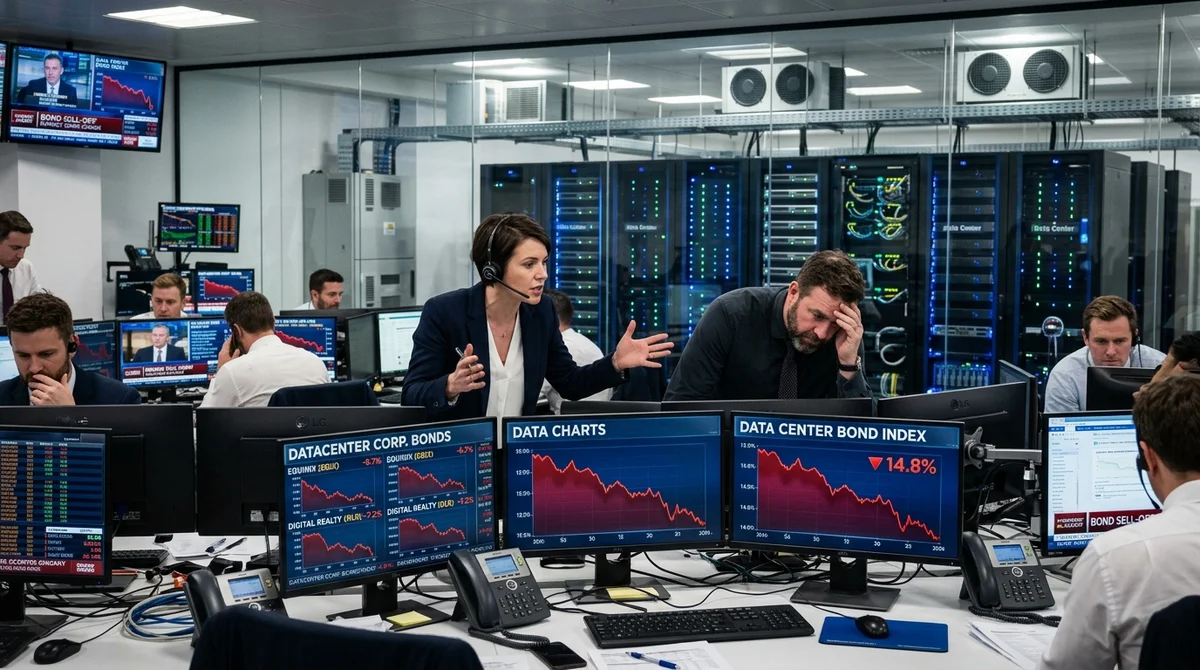
On Tuesday, April 28, US corporate bonds of data center-related companies declined following reports that OpenAI failed to meet its own targets for user and revenue growth. For the market, this became a signal: if demand for AI services is growing slower than expected, the pace of profitability for the entire infrastructure race comes into question.
Why the market reacted
The trigger was a Wall Street Journal report that OpenAI has recently failed to meet internal benchmarks for attracting new users and revenue. Against this backdrop, as Bloomberg writes, investors began selling bonds of American companies whose valuations are closely tied to building and operating data centers. The logic is straightforward: if one of the main drivers of AI demand grows slower than anticipated, then the cash flow across the entire chain could be weaker than the models predicted.
The bond market usually reacts more calmly than equities, so even moderate movements here are read as an important signal. Investors don't dispute that computing power for AI is needed right now. But they quickly reassess the risk when doubt arises about whether the largest buyers of these resources can maintain the previous spending pace without problems.
For the credit market, this is not a question of hype, but a question of the ability to service debt and attract new financing on acceptable terms.
Where the weak point is
The story hits the most vulnerable part of the AI boom of the past two years: the expectation that demand for models, assistants, and enterprise AI services would almost automatically justify any capital investment in infrastructure. However, data centers, accelerators, power supply, and networking equipment pay for themselves not through slogans, but through regular customer revenue. If user growth and sales at a major customer begin to fall behind plan, investors immediately ask an uncomfortable question: did the market believe too early in endless demand? Currently, creditors and bondholders are watching several things particularly closely:
- the rate of growth of paying users at AI platforms;
- the ability to monetize enterprise and consumer products;
- the sustainability of spending on computing capacity rentals and construction of new facilities;
- how quickly infrastructure projects begin to generate predictable cash flow.
It's important to note that this isn't yet about a proven reversal in the AI market. The publication merely amplified existing concerns around OpenAI and reminded investors that there is no instant connection between the popularity of AI products and infrastructure profitability. Even with high user interest, companies still need to demonstrate sales, margins, and spending discipline. When one of the sector's leaders gives reason to doubt this formula, pressure quickly spreads to those standing nearby.
Impact on the chain
The sell-off affects not only companies directly building or operating data centers for the largest AI players. Nervousness spreads more widely—to the entire segment where debt loads were justified by expectations of a prolonged boom. This affects facility operators, engineering infrastructure suppliers, and those who borrowed money to expand capacity in anticipation of almost guaranteed demand from major models and cloud services.
For such issuers, the problem isn't really one specific OpenAI report, but a shift in overall sentiment. When the market begins to doubt the growth rates of a leader, it automatically raises requirements for all other participants in the chain. It becomes harder for them to borrow cheaply, and every new project must be explained in more detail: who will be the tenant, when will payments begin, how sustainable is demand, and what happens if client forecasts prove too optimistic again.
What this means
The news is important not because it puts AI infrastructure to rest, but because it returns the market to basic arithmetic. Expectation of strong demand alone is no longer enough: creditors want to see demonstrable economics. For OpenAI, this intensifies pressure for growth and monetization, and for data centers and their investors, it means stricter scrutiny of each new round of spending.
Want to stop reading about AI and start using it?
AI News is a curated feed of AI/tech news. Hamidun Academy teaches you to use AI systematically in your work.