Anthropic removes Claude Code from $20 plan, SpaceX prepares Cursor acquisition
The AI market had a turbulent week. Anthropic removed Claude Code from the $20 plan for some new users and is investigating access to the closed Mythos via a…
AI-processed from Habr AI; edited by Hamidun News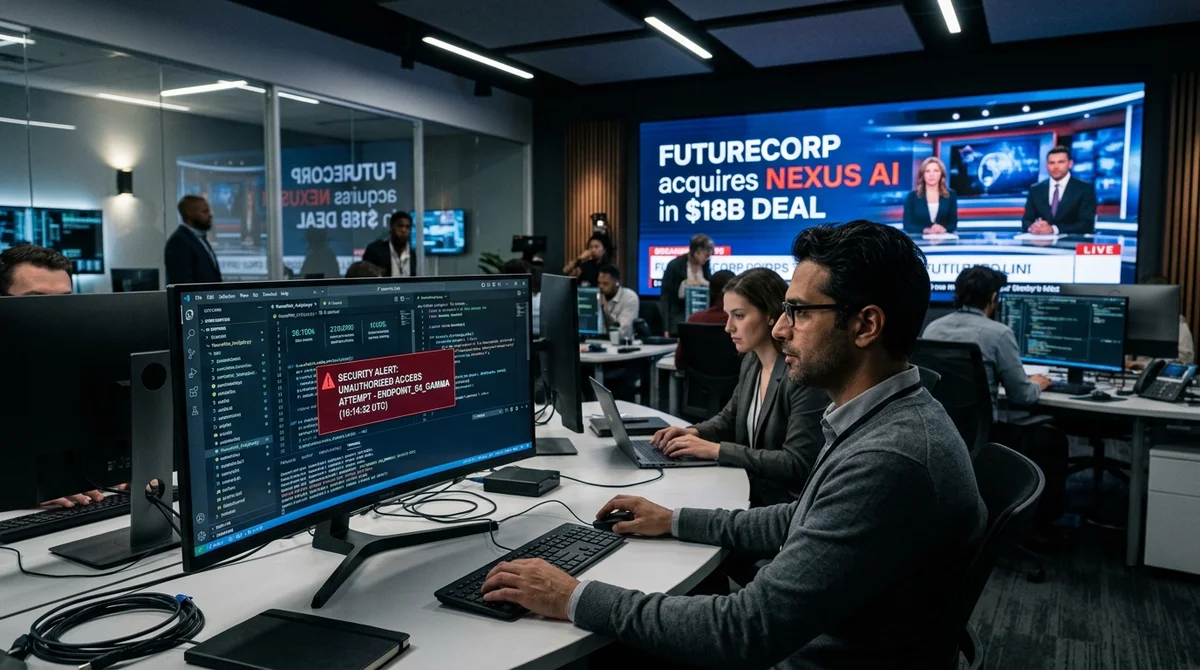
Another week in AI shows that the market is simultaneously maturing and breaking its own rules. Anthropic is testing a sharp price increase for Claude Code, Duolingo is changing its approach to internal AI metrics, and a closed Claude Mythos model was discovered through a guessed endpoint address.
Anthropic Raises the Stakes
Anthropic quietly removed Claude Code from the Pro plan for $20 per month. The minimum tier with access to the tool is now Max 5x at $100. For existing subscribers, terms haven't changed yet, but for new users it looks like a clear test of market readiness to pay more for agent-based development. According to company employees on social media, this is an A/B test covering about 2% of new users, but the gesture itself is telling: even basic AI coding tools are quickly moving out of the mass subscription category.
An even more awkward situation for Anthropic involves Claude Mythos. The model was launched in closed preview for roughly 40 companies, including Microsoft, Apple, and Google. On the same day, four members of a private Discord community searching for unreleased models gained access through a vendor endpoint. The scenario played out almost like a textbook case: one person had legitimate contractor credentials, the others reconstructed the URL format from data leaked by Mercor and old model naming patterns. Anthropic confirmed an investigation and stated it found no signs of breach beyond the vendor environment.
Companies Change Policy
Duolingo, which recently loudly declared itself an AI-first company, stopped counting AI tool usage in employee performance reviews. Against the backdrop of March's pivot to AI and contractor cuts, this is an important signal. It seems business quickly understood that counting API requests or hours in AI services is meaningless: such metrics are easy to game, but they tell us almost nothing about result quality. The next stage of AI adoption within companies isn't consumption control, but a new system of expectations for team speed, output volume, and autonomy.
Alongside this, the financial logic of the market is shifting. According to the digest, Google is ready to invest $40 billion in Anthropic at a $350 billion valuation while assembling an internal team that will compete with Claude. For Big Tech, this is already a normal structure: invest in a partner, use their technologies, and simultaneously build your own alternative. Against this backdrop, bubble talk doesn't disappear, but the market is currently betting on continued growth. According to Polymarket estimates, the probability of a sharp AI bubble collapse by the end of 2026 remains relatively low.
Model Race Accelerates
The models section this week was especially packed. Nearly every release focused on one of two things: either how to make AI agents more useful in real development or how to dramatically cut their usage costs. This is an important shift because the market is no longer debating whether such models are needed at all, but rather which solves practical tasks faster and how much it costs in production.
- Kimi K2.6 has drawn closer to closed leaders on code benchmarks and is betting on proactive agents capable of working in the background for long periods without human intervention.
- GPT-5.5 showed 58.6% on SWE-Bench Pro, and internally at OpenAI it's already running on Codex production traffic, where new heuristics have increased token generation speed by 20%.
- DeepSeek V4-Pro and V4-Flash received 1 million token context and are significantly pressuring the market with price: Flash is tens of times cheaper than top closed models.
- SpaceX received an option to purchase Anysphere, the parent company of Cursor, for $60 billion with the ability to close the deal by the end of 2026 and with a record breakup fee of $10 billion.
The Cursor story is particularly telling. If the deal is indeed closed after SpaceX's IPO, AI coding will finally stop being a niche for developer startups and become a strategic layer of large technological infrastructure. Cursor's access to the Colossus supercomputer and work on the next generation of Composer models show that the competition is no longer just about editor interface, but about computation, data, and speed of market iterations.
What This Means
The main conclusion of the week is simple: the AI market is becoming more expensive, harsher, and less naive. Companies are simultaneously intensifying commercialization, reassessing internal AI work rules, and increasingly confronting the fact that the main risk is no longer model quality, but access management, infrastructure, and implementation speed.
Want to stop reading about AI and start using it?
AI News is a curated feed of AI/tech news. Hamidun Academy teaches you to use AI systematically in your work.