Elon Musk vs OpenAI: Lawsuit Begins Over 'Theft of Charitable Mission'
One of the biggest tech trials of the year has begun in Oakland: Elon Musk accuses OpenAI and Sam Altman of turning a non-profit project into a…
AI-processed from TNW; edited by Hamidun News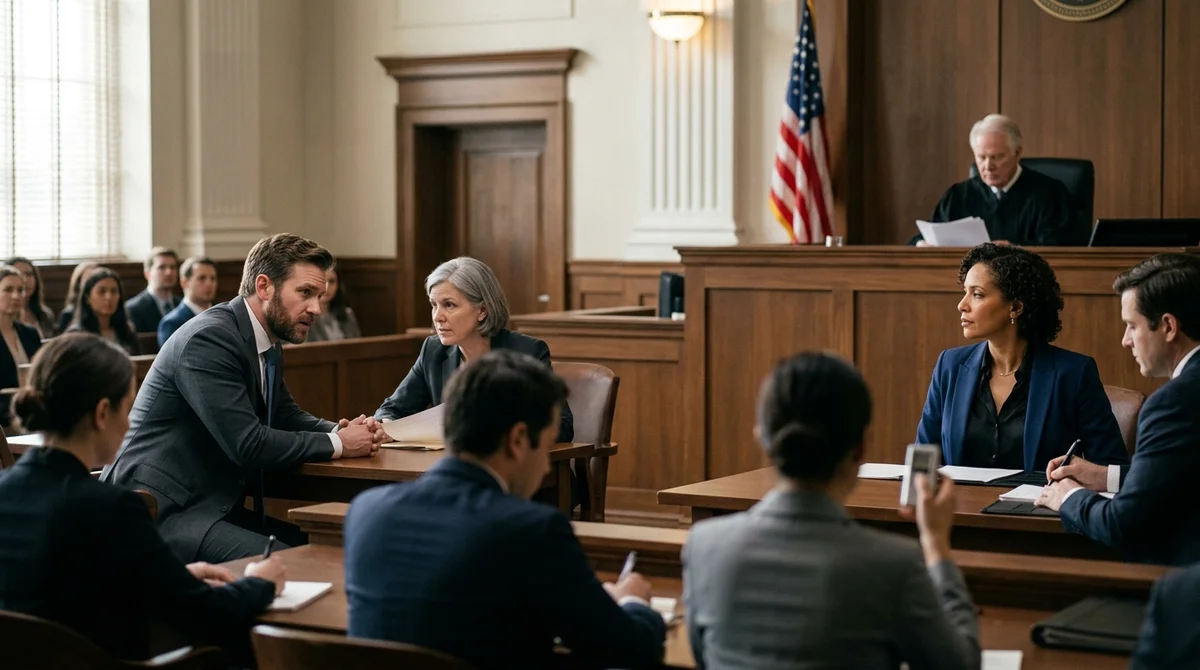
On April 28, 2026, opening hearings began in federal court in Oakland in Elon Musk's case against OpenAI, Sam Altman, Greg Brockman, and Microsoft. On the very first day, the parties presented the jury with two incompatible versions of the company's history: "stolen charity" versus a conflict over lost control.
Two Versions of OpenAI
Musk's attorney Steven Molo simplified the dispute into a moral formula from the outset. According to his version, OpenAI was created as a nonprofit organization for the safe development of artificial intelligence, but the company's leadership then transformed it into a profit extraction mechanism. Molo reminded the jury of Musk's donations, which he valued at approximately $38 million, and compared the situation to a museum that opened a gift shop and then began selling off its own collection. The prosecution's main thesis: the shift to a commercial model violated the original obligations not only to the cofounder but also to society.
"We are here because the defendants stole a charity."
OpenAI's defense responded equally forcefully. Attorney William Savitt argued that this is not about mission but about control: Musk allegedly attempted to subordinate OpenAI to himself as early as 2017 and wanted to merge the company with Tesla. When that failed, he left, predicted the project would fail, and now is challenging the success of his former partners through the courts.
To support this version, the defense presented a letter from Shivon Zilis to Musk's employee Sam Teller, in which various options for corporate restructuring with a commercial component were discussed. The meaning of the argument is simple: Musk knew that such schemes were being considered and did not object to them as long as he retained a chance at influence.
What Is at Stake
Immediately after opening statements, Musk himself took the witness stand and became the first witness in the trial. He told the jury that for him, this case is not about personal gain but about a dangerous precedent: if one can "plunder a charity," it will strike at the very logic of philanthropy.
The lawsuit is now focused on two remaining claims—unjust enrichment and breach of charitable trust. However, Musk has forgone personal financial claims and stated that any potential damages should go back into OpenAI's nonprofit structure.
- Return of up to $134 billion in alleged improper profits to the OpenAI nonprofit foundation
- Removal of Sam Altman from the board of directors and CEO position
- Removal of Greg Brockman from the role of company president
- Possible rollback of OpenAI to its original nonprofit structure
- Transition to a separate remedies phase after May 18, 2026, if the court finds grounds for liability
The trial itself is divided into two phases. First comes the liability phase, where a verdict from an advisory jury of nine will be a recommendation for Judge Yvonne Gonzalez Rogers. Only then, if Musk's position gains support, will a separate discussion of specific remedies begin. The court has already allotted limited time to both sides, and among potential witnesses are Satya Nadella, Ilya Sutskever, Mira Muraty, and experts in AI safety and charitable law. According to the schedule, the proceedings could take around four weeks.
Background and Stakes
This trial matters not merely because of a conflict between two public figures. In essence, the court must answer whether it is possible to preserve the original public mission of an AI laboratory after the arrival of tens of billions of dollars and complex corporate restructuring. Musk's side considers Microsoft's $10 billion investment in January 2023 to be a turning point, after which OpenAI, in their view, became definitively a "wealth machine."
OpenAI, conversely, builds its defense around the thesis that the commercial structure was known in advance, and the current lawsuit is primarily related to competition and the launch of xAI. Additional tension is created by Musk's own behavior. Before the hearings began, OpenAI's lawyers complained to the judge about his social media posts, in which he called Altman a fraudster and repeated the thesis about "stolen charity."
The judge publicly asked Musk not to worsen the situation with comments outside the courtroom. This is an important detail: the dispute concerns not only documents, letters, and corporate structure but also trust in a person who simultaneously demands limits on the concentration of power in AI while being known for his desire for strict control over his own companies.
What This Means
If the court determines that OpenAI violated its original nonprofit mission, it will send a strong legal signal throughout the AI industry: capital and public purpose can no longer be separated merely by beautiful rhetoric. If the defense prevails, the market will receive the opposite conclusion—founders and donors will not be able to reassemble the rules of the game years later when the company has already grown into a giant.
Want to stop reading about AI and start using it?
AI News is a curated feed of AI/tech news. Hamidun Academy teaches you to use AI systematically in your work.