Claude for Science: Anthropic Accelerates Research at Stanford and MIT
Anthropic сообщает об успешном применении своей модели Claude в Стэнфорде и MIT для научных исследований. Claude помогает анализировать данные, автоматизировать
AI-processed from Jiqizhixin (机器之心); edited by Hamidun News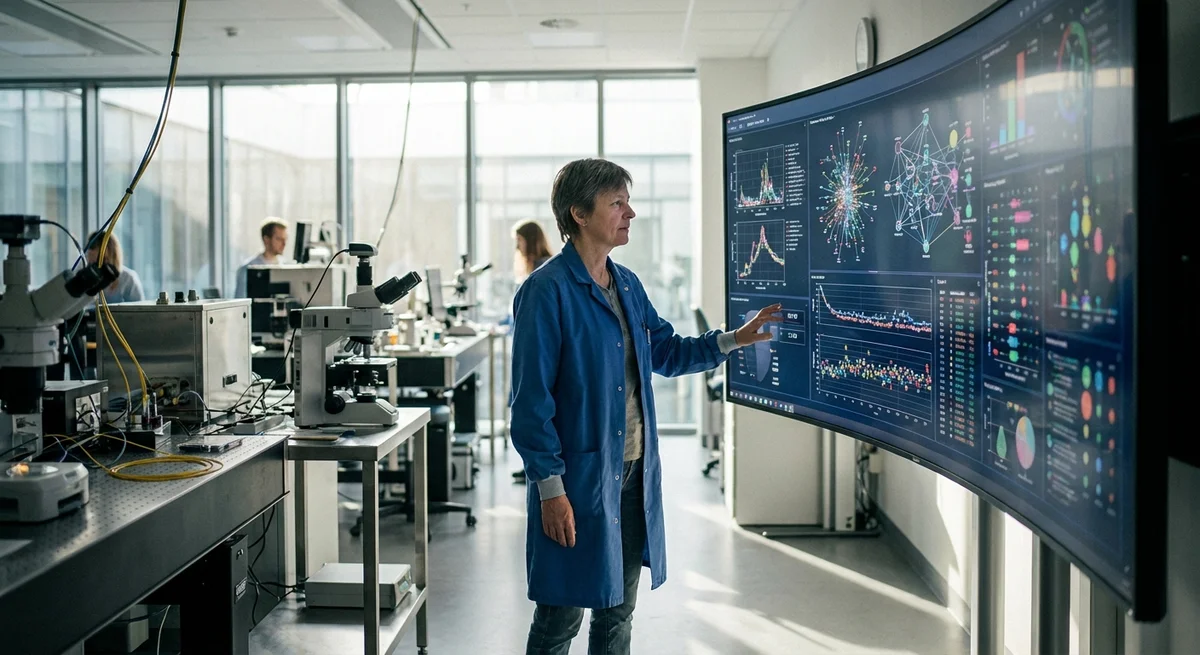
In the world of artificial intelligence, there is a constant search for models capable not only of generating text or images, but also of solving complex scientific tasks. Anthropic has announced that their large language model (LLM) Claude is actively used in leading universities around the world, such as Stanford and the Massachusetts Institute of Technology (MIT), to accelerate scientific research. This announcement raises an important question: what makes Claude so suitable for scientific work and what specific advantages does it provide to scientists?
Until recently, the use of large language models in science was limited mainly to analyzing large volumes of textual data, such as scientific articles and reports. However, Claude, according to Anthropic, goes beyond simple text analysis. The model is capable of automating routine tasks such as information retrieval, processing experimental data, and even generating new hypotheses. This opens up new opportunities for scientists, allowing them to focus on more creative and strategic aspects of their work.
One of Claude's key advantages is its ability to understand and process complex scientific concepts. The model is trained on a vast amount of scientific texts, which allows it to grasp specialized terminology and understand the relationships between different scientific fields. Additionally, Claude possesses well-developed logical reasoning and data analysis capabilities, which allow it to identify patterns and make predictions based on available information.
The application of Claude at Stanford and MIT demonstrates the potential of large language models to transform scientific research. Scientists use Claude for analyzing genomic data, modeling climate change, developing new drugs, and solving other complex tasks. Automating routine tasks and accelerating the data analysis process allow scientists to significantly reduce the time needed to conduct research and obtain results. This, in turn, contributes to accelerating scientific progress and the emergence of new discoveries.
However, it is important to remember that large language models such as Claude are not a replacement for scientists. They are a powerful tool that can assist scientists in their work, but cannot replace their knowledge, experience, and intuition. It is important to critically evaluate the results obtained with Claude and verify their compliance with scientific methodology.
In conclusion, the use of Claude at Stanford and MIT is a prime example of how large language models can be used to accelerate scientific research. The Claude model possesses unique capabilities that allow it to automate routine tasks, analyze data, and generate new hypotheses. This opens up new perspectives for scientific progress and allows scientists to focus on more creative and strategic aspects of their work. In the future, we will likely see more examples of successful application of large language models in various fields of science.
Want to stop reading about AI and start using it?
AI News is a curated feed of AI/tech news. Hamidun Academy teaches you to use AI systematically in your work.