OpenAI-Musk Lawsuit Begins: Company Mission Dispute Clouds IPO Plans
A key trial between Elon Musk and OpenAI has started in California: the jury has been seated and both sides have moved to arguments. Musk argues the company…
AI-processed from Bloomberg Tech; edited by Hamidun News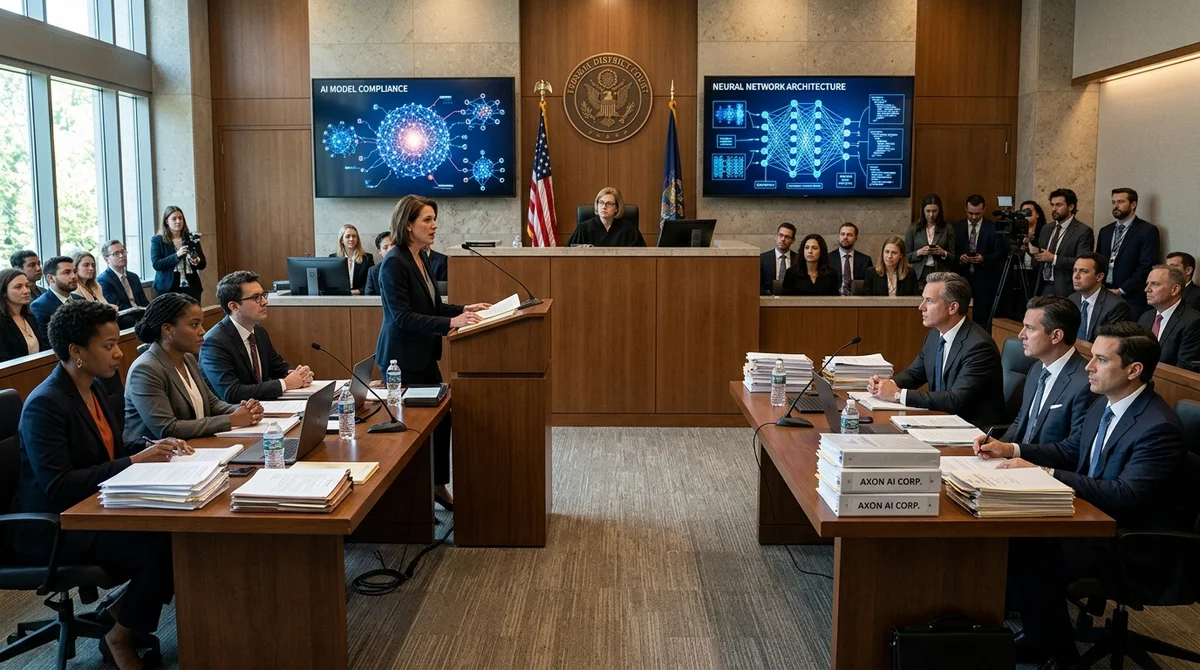
In Oakland, one of the most important trials for the AI market has begun: after jury selection, the dispute between Elon Musk and OpenAI has moved into full-scale proceedings. For the company, this is no longer just a conflict between co-founders — the outcome could affect its structure, relationships with partners, and preparations for a potential IPO.
The dispute
Elon Musk, one of OpenAI's co-founders, argues that the company has strayed too far from its original model. According to him, the project was created as a non-profit organization that should develop artificial intelligence in the interests of society, not transform into a closed commercial business. The lawsuit was filed back in 2024, but now the case has reached a jury and public phase, where sworn testimony will discuss old agreements, correspondence, and the motives of key figures.
Musk's side demands not only compensation, but also stricter measures: a review of OpenAI's corporate logic, a return to its original mission, and the removal of Sam Altman from his leadership role. In court, Musk framed his position bluntly, stating that this is not about a complex corporate dispute, but about substituting the basic rules on which the organization was founded. This is why the case quickly went beyond a typical shareholder conflict and turned into a dispute about the legitimacy of OpenAI's entire transformation.
"You can't just steal a charitable organization."
OpenAI responds that Musk's claims are not about principles, but about fighting for influence in the AI race. The company's lawyers say that Musk himself promoted a more commercial format, tried to strengthen his control over OpenAI, and wanted the structure to compete better with Google. So the central question of the trial is: did OpenAI violate its original mission — or is the former co-founder simply disputing the path he once supported?
Risks for IPO
The main effect of this trial — it's not just legal. At the moment when OpenAI is preparing for the next stage of corporate growth and, according to American media reports, is considering going public no earlier than late 2026, the court creates an inconvenient backdrop. Potential investors need a clear narrative about control, rights, partnerships, and the sustainability of the structure. But here, precisely, the promises the company was built on and how well the current model aligns with what was declared at the start are being called into question. For a potential IPO, this means several risks at once:
- it will have to disclose more internal documents and discussions than the company would like to show the market;
- any decision to revise the structure could hurt the investment thesis;
- a prolonged trial strengthens questions about the role of the non-profit structure and the powers of management;
- a public conflict with a co-founder hinders the ability to sell a story of stable governance;
- additional regulatory questions may slow down preparations for the offering.
Even if OpenAI wins, the trial itself has already raised the cost of uncertainty. For a fast-growing company, this is particularly unpleasant: pre-IPO investors typically assess not only revenue and technology, but also the likelihood of future legal restrictions, conflicts with minority shareholders, and corporate governance problems. The longer the dispute remains in the spotlight, the harder it is to convince the market that the legal framework of the business is fully predictable.
Parallel changes
The context surrounding the case is also important. Almost simultaneously, OpenAI began rewriting the terms of its partnership with Microsoft, making the relationship less exclusive and expanding space for other distribution channels. Such a move seems logical: before a potential IPO, the company benefits from showing that it is not critically dependent on a single partner and can build a more independent commercial model.
But against the backdrop of the trial, this maneuver also reads as an attempt to address some of the questions the market will inevitably ask about OpenAI's dependence on external players. Because of this, Musk's case becomes not just a rehashing of an old story about a startup's mission. It turns into a public audit of OpenAI's entire evolution: from a research lab with a charitable framework to one of the most valuable players in the AI market.
The court will have to assess where the natural transformation of a technology company ends and the violation of original principles begins. And this answer will be heard not only by lawyers, but by the entire market.
What this means
For the industry, this is a test of whether you can rewrite the original mission of an AI company without serious consequences when hundreds of billions of dollars are already at stake. For OpenAI, the coming weeks matter as much as any product release: right now, what's being decided is not only the dispute with Musk, but also how convincingly the company can explain to the market who it has become and why it can be trusted as a future public business. The answer to this question will determine what discount the market will apply to any future OpenAI IPO plans.
Want to stop reading about AI and start using it?
AI News is a curated feed of AI/tech news. Hamidun Academy teaches you to use AI systematically in your work.